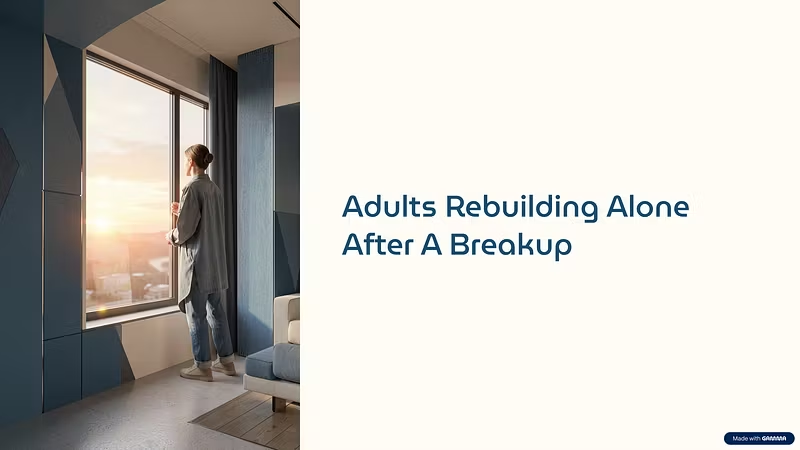
Adults Rebuilding Alone After A Break-up

A self‑guided digital ebook offering a clear, supportive 14‑day reset for adults adjusting to living alone after a breakup. It walks you...
Location hidden
•
•Created byProfile pictureAmos Ashore
1 joined
Profile picture
Amos AshoreProfile picture@lifecrafthq07·Jun 14

Rebuilding Alone After a Breakup
Why it feels so unstable—and what actually helps

After a breakup, it’s not just your heart that’s shaken—it’s your whole system.

You might feel fine during the day. You stay busy, do the “right” things.
But at night… everything shifts. Silence hits. Thoughts loop. You start replaying, questioning, wanting to reach out.

That’s not weakness. It’s wiring.

Your brain learned that connection = safety.
Now it’s gone—and your system is still searching for it.

The problem isn’t that you’re not trying hard enough.
It’s that your life lost its structure.

And without structure, your mind stays restless.

You don’t need more venting.
You don’t need fake positivity.

You need stability again.

Here’s what actually works:

  • Structured evenings → clear routines that stop overthinking and impulsive contact

  • Grounded anchors → simple physical habits that calm your body faster than thoughts

  • Time‑boxed reflection → feel it, process it… then move forward

I built a 14‑Day Reset for Living Alone After a Breakup around this.

No therapy talk. No chasing closure.
Just a simple system to help you feel steady again.

If this is where you are right now… this will help.

Not numb.
Not spiraling.
Just… stable enough to keep going.

Profile picture
Amos AshoreProfile picture@lifecrafthq07·May 23

Adults Rebuilding Alone After a Breakup

Why the first stretch feels so unstable (and what actually works)

After a breakup, your system doesn’t just settle because the relationship ended.

Most adults describe the same thing: they handle the days fine, stay busy, and make the “right” choices—then the evenings hit, routines fall apart, and doubt creeps in. Sleep gets lighter. Thoughts loop. The urge to check, replay, or reach out shows up unexpectedly.

Here’s why.

Your nervous system learned that connection meant safety. Losing it doesn’t just hurt emotionally—it removes structure. Without that structure, your brain stays alert, scanning for reassurance, answers, or closure. That vigilance once helped you stay attached. Now it’s keeping you unsettled.

The fix isn’t venting more.
It’s not forcing positivity.
It’s rebuilding a predictable structure so your system knows what comes next.

Three things that actually move the needle:

1. Structured evenings—Not “keep busy.” A clear sequence for nights and weekends that removes decision fatigue and protects you from impulsive contact.

2. Grounded anchors—Using tangible routines—meals, sleep cues, physical actions—to bring your attention out of your head and back into the present. Your body stabilizes faster than your thoughts.

3. Time‑boxed check‑ins—Giving reflection, grief, and planning a defined window. Open‑ended processing keeps you stuck. You need a start and a stop—a container that helps you move forward.

I built a 14‑Day Reset for Living Alone After a Breakup around these principles. It’s a practical system focused on the first stretch alone—no therapy language, no chasing closure. Just structure that helps you regain footing.

If this feels like the phase you’re in, this approach will help you rebuild steadily—without rushing or backsliding.

Not numb.
Not spiraling.
Just stable enough to continue.