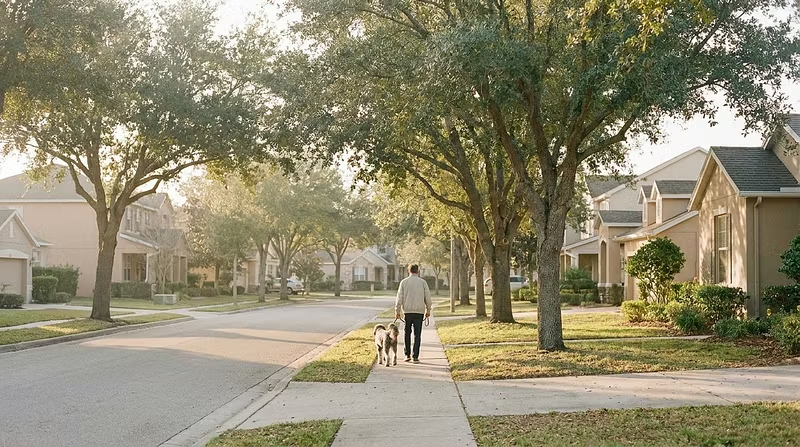


The first 5 minutes of your walk decide the next 30
Most reactive-dog advice starts with "what to do when your dog barks." But by that point, you're already three steps behind.
Here's what I've learned walking reactive dogs for years: the walk is won or lost before you see the first trigger.
The front-door moment matters more than any correction.
When you rush out the door — leash tight, treats fumbled, no route in mind — your dog reads that energy instantly. You're already tense. They're already scanning. And the first bark isn't a behavior problem. It's a confirmation of what you both already felt: this is going to be hard.
Try this instead:
1. Harness on, not collar. A harness distributes pressure. Your dog isn't fighting against their throat, and you're not white-knuckling a thin strap. Everyone starts calmer.
2. Treat check. Treats accessible, not buried. You need them in the first 10 seconds outside, not after 5 minutes of fumbling.
3. The 30-second pause. Step outside. Stop. Let your dog sniff the doorway. Let the door close. Stand there for 30 seconds. This single act resets the pace of the entire walk. You're not rushing. You're not reacting. You're setting the rhythm.
4. Pick your distance before you pick your route. Decide now: how far will you stay from other dogs today? 20 feet? Across the street? That's not avoidance. That's choosing where you have control instead of hoping it works out up close.
The wrong pace in the first 5 minutes can turn one barking moment into three blocks of tension. The right pace — harness on, treats ready, a pause at the door, a plan for distance — means you recover from moments faster. The next turn doesn't carry the last one.
If this sounds like your walk, I put together a free guide that covers the full framework. It's called "Calm Before Contact" and it walks through the front-door sequence, distance strategy, and recovery timing step by step. You can grab it here for free.