ContractGauge

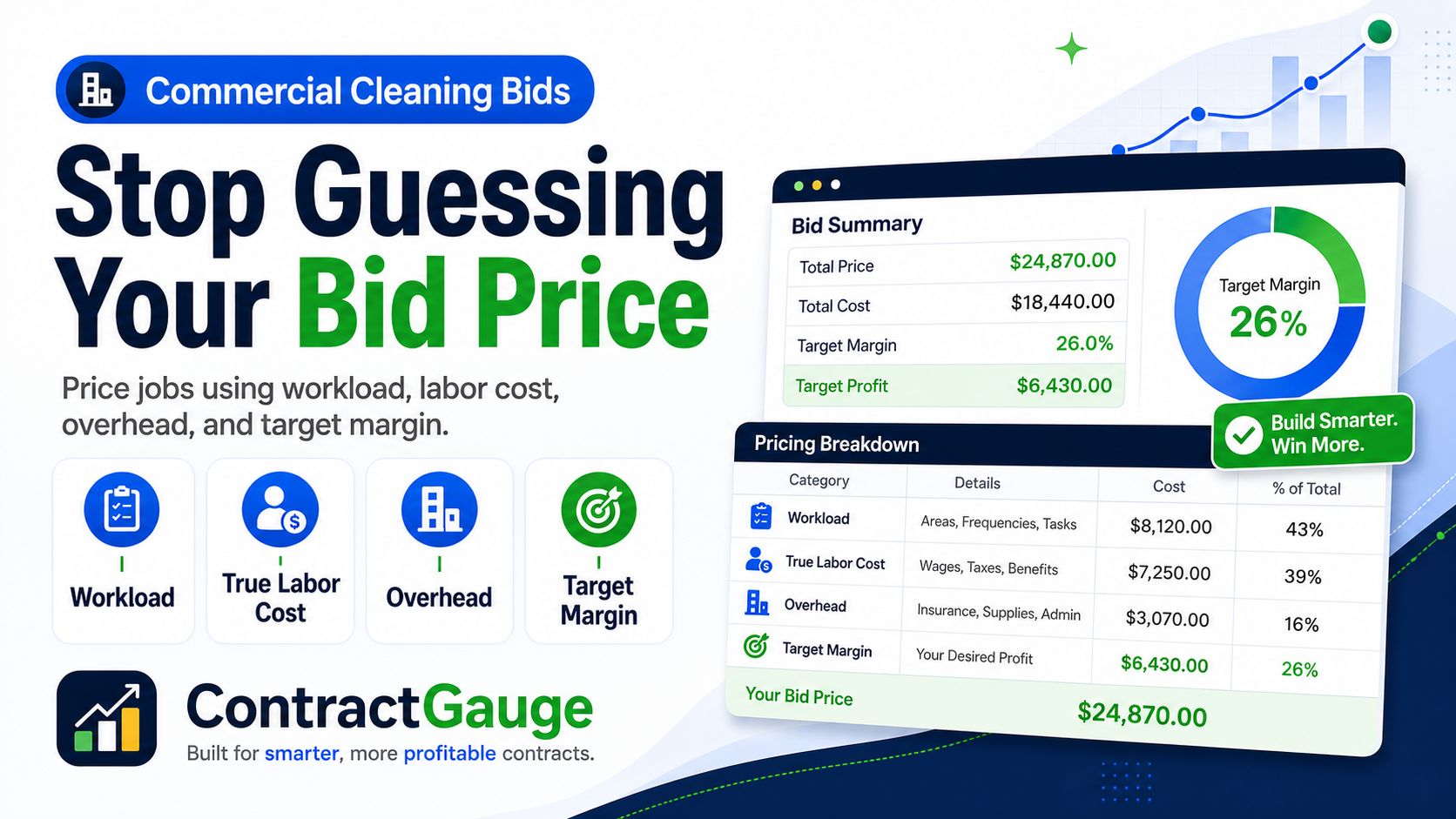
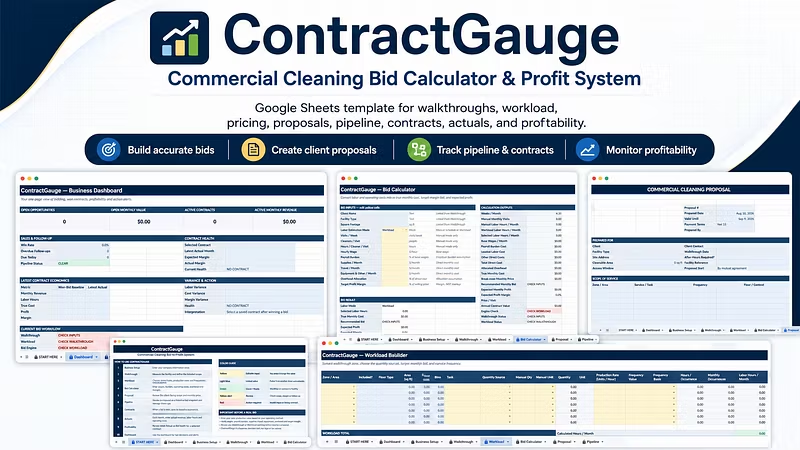
ContractGauge helps commercial cleaning businesses price jobs accurately, create professional proposals, track bids and contracts, and monit...
1 joined
Profile picture
ContractGaugeProfile picture@contractgauge·Aug 16

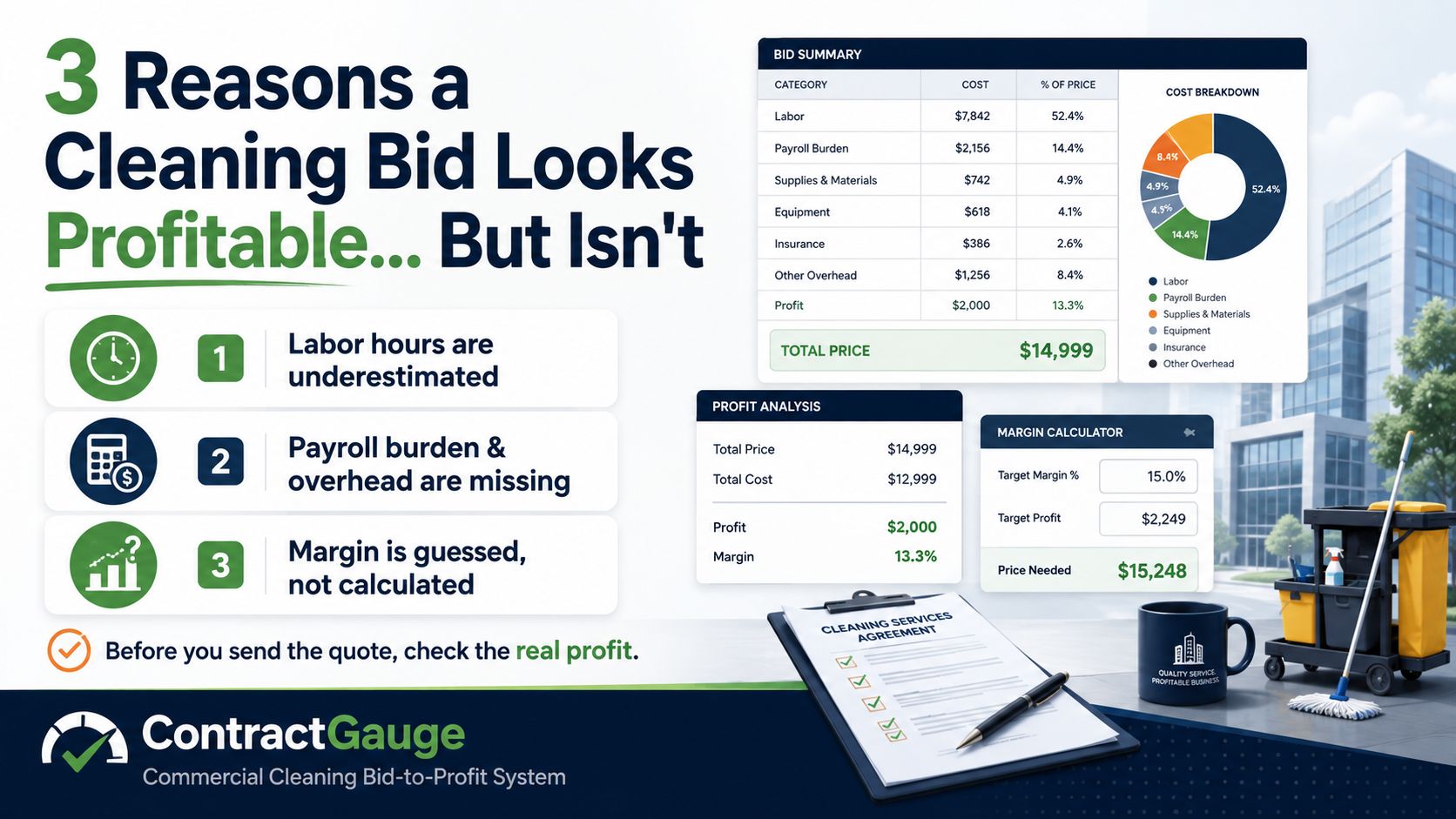
A cleaning bid can look profitable on paper and still lose money in real life.

Here are 3 reasons why:

  1. Labor hours are underestimated
    A small mistake in estimated cleaning time gets multiplied across every visit, every week, and every month.

  2. Payroll burden and overhead are ignored
    Hourly wage is not your true labor cost. Payroll taxes, insurance, admin time, supplies, travel, equipment, and other overhead still have to be paid.

  3. Profit margin is guessed instead of calculated
    Adding “a little extra” on top of your costs isn't the same as knowing your actual margin.

A simple check before submitting a quote:

Revenue − Labor − Payroll Burden − Supplies − Overhead = Real Profit

Then calculate:

Profit Margin = Profit ÷ Revenue × 100

The goal isn't just to win more contracts.

It's to win contracts that are actually worth servicing.

What usually causes the biggest pricing problems in your cleaning business: labor, overhead, or choosing the right margin?
file_LRFttdoLfczs8
Profile picture
ContractGaugeProfile picture@contractgauge·Aug 13

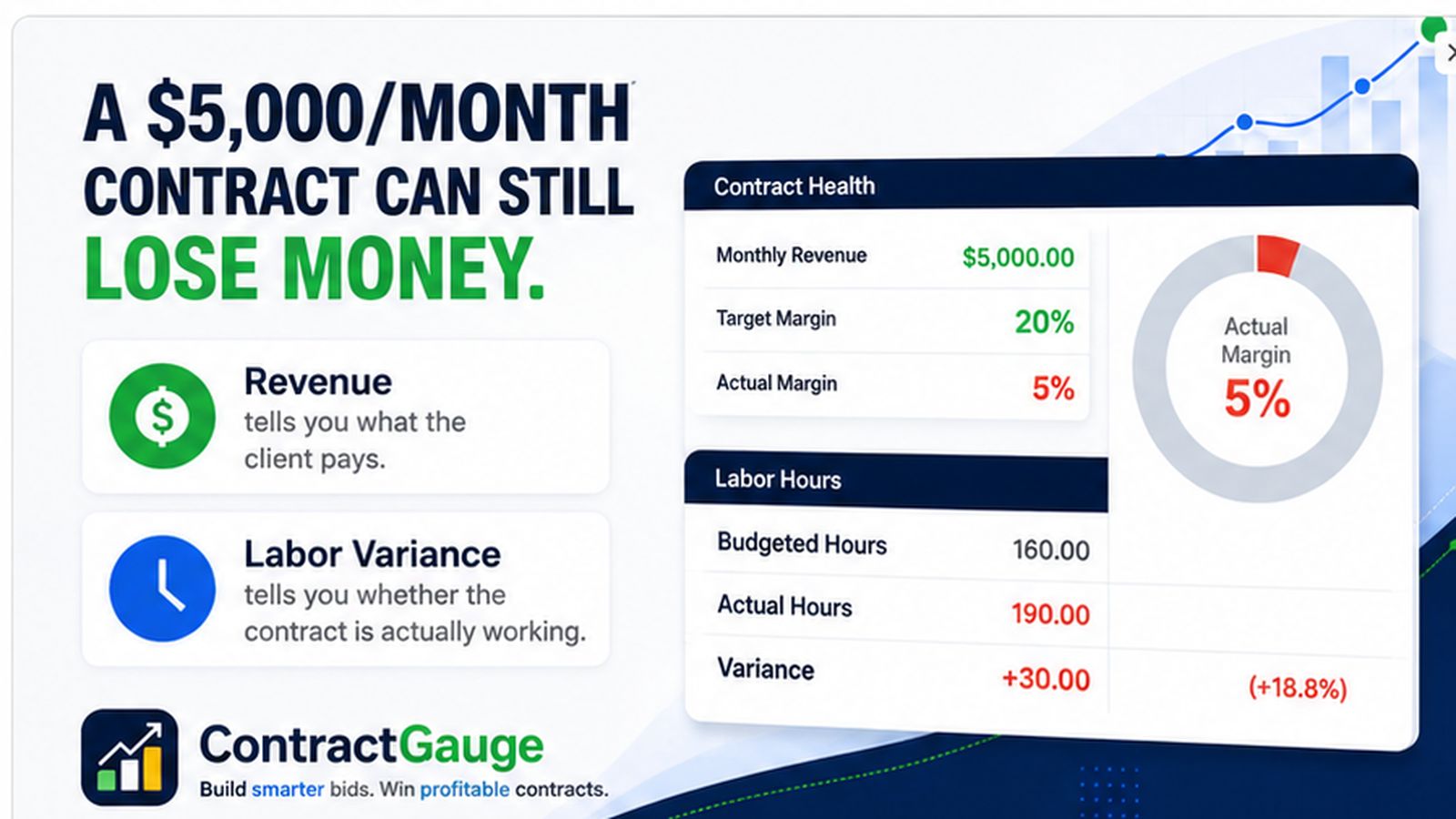
A $5,000/month commercial cleaning contract can still lose money.

Revenue tells you what the client pays.

But if your actual labor hours keep running higher than the hours you priced into the bid, your margin is disappearing every month.

One of the simplest numbers to track after winning a contract is:

Expected labor hours vs. actual labor hours.

That gap can tell you very quickly whether the job was priced realistically.

What do you track after winning a cleaning contract — revenue only, or actual labor hours too?

file_8YZI2jrFxYwLy
Profile picture
ContractGaugeProfile picture@contractgauge·Aug 12

Most commercial cleaning bids don’t fail because the price is “too high.”

They fail because the price was never built from the real workload.

Before you send your next janitorial proposal, calculate these 4 things:

1️⃣ Monthly labor hours
Estimate the actual workload based on your service frequencies and your own production-rate assumptions.

2️⃣ True labor cost
Don’t use hourly wage alone. Include the real cost of delivering those labor hours.

3️⃣ Overhead + operating costs
Insurance, admin, equipment, supplies, transportation and other recurring costs still have to be paid.

4️⃣ Target profit margin
Profit shouldn’t be whatever is left after the job starts. Build it into the bid before you send the proposal.

A $5,000/month contract can look great on paper and still lose money if the labor assumptions are wrong.

The number worth watching after you win the contract:

Expected labor hours vs. actual labor hours.

That gap tells you very quickly whether your pricing assumptions were realistic.

I built ContractGauge around this exact workflow: bid → workload → price → contract → actuals → profitability.

But even if you never use the tool, start tracking these numbers on every commercial cleaning contract you manage.

file_FSZ8sNNysBGDb