Crypto Edge

Daily crypto market breakdowns, exact support/resistance levels, and a private trading floor for traders who want to sharpen their own entri...
Migori, KE
β€’
β€’Created byProfile pictureRazon Jared
1 joined
Profile picture
Razon JaredProfile picture@marubejaredΒ·Aug 14

πŸ”— Blockchain Basics: Why Bitcoin & Ethereum Are Built Different

If you don't understand blockchain, you're trading blind.


Here's the 5-minute breakdown:


Bitcoin: Digital Gold

Use Case: Store of value (like gold)
Supply: Fixed 21 million coins
Speed: ~10 min per transaction (slow = secure)
Focus: Security over speed

Why it matters:
Limited supply = scarcity
Scarcity = value (like gold)
Years to reach max supply: 2140


Real example:

Gold has ~200,000 metric tons ever mined.

Bitcoin will have exactly 21,000,000 coins.

Fewer coins + same demand = higher price.


Ethereum: Programmable Money

Use Case: Smart contracts (automation)
Supply: Unlimited (but burned)
Speed: ~12 sec per transaction (faster)
Focus: Functionality

Why it matters:
DeFi apps run on Ethereum (lending, swaps, yield)
Each app usage = ETH burn (reduces supply)
More apps = more burn = supply decrease


Real example:

You want to lend $1,000 and earn 8% APY.

On Ethereum, you:

  1. Connect wallet

  2. Approve transaction ($1 fee to Ethereum network)

  3. Lend instantly

  4. Earn 8% automatically


No bank required. This is why ETH has value.


The Trading Implication

Bitcoin volatility = macro (Fed, recession, inflation)

Ethereum volatility = ecosystem (DeFi growth, usage, competition)


When Fed raises rates β†’ Both fall

When DeFi yields spike β†’ ETH pumps independently


This is why we allocate 60/40 BTC/ETH in core.

BTC is macro hedge. ETH is growth play.


Coming Next Week

We're diving into:

  • Layer 2 scaling (why Arbitrum & Optimism matter)

  • Smart contract risk (why some coins crash 90%)

  • Tokenomics (supply models that create value)


Understanding these? That's the difference between trading and investing.


See you in the Academy.

file_Lcid6sFNrQ3Ua
Profile picture
Razon JaredProfile picture@marubejaredΒ·Aug 14

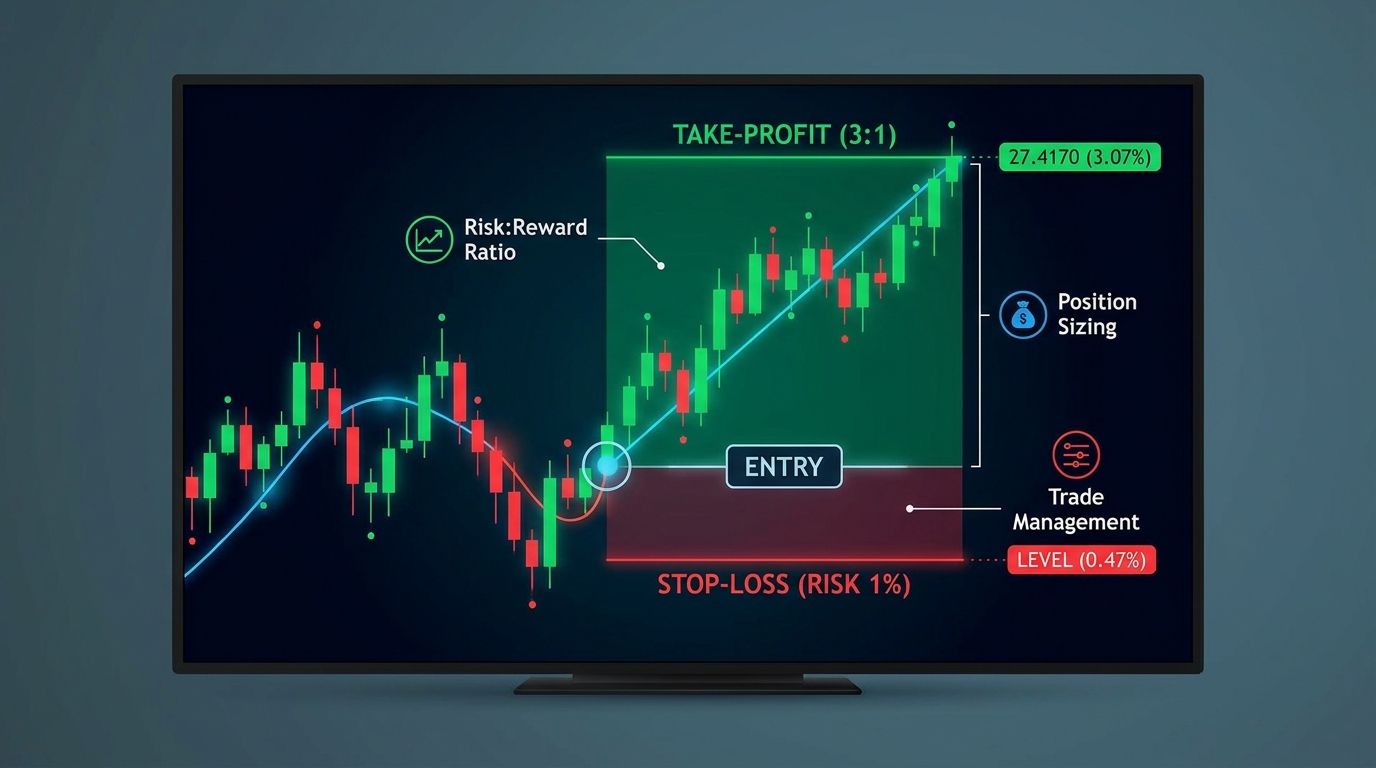
πŸ›‘ Stop Loss & Take Profit: The Math That Separates Winners From Losers

Most traders lose because they don't use stops. Period.


Here's the exact system we use:


The Problem

  • Trader buys BTC at $44,000

  • Price drops to $41,000 (6.8% loss)

  • Trader thinks: "Maybe it'll bounce back"

  • Price drops to $35,000 (20% loss)

  • Trader finally sells in panic


Why? No stop loss. No exit plan.


The Solution: Pre-Planned Exits


Entry Setup:

Entry Price: $44,000
Account Size: $10,000
Position Size: $5,000 (50% of account)
Risk Per Trade: $200 (2% of $10,000)


Stop Loss Calculation:

Risk: $200
Entry: $44,000
Stop Loss Price: Entry - (Risk / Position Size)
Stop Loss = $44,000 - ($200 / $5,000 Γ— $1)
Stop Loss = $44,000 - $40 = $43,960

This is a TIGHT stop (0.09% risk)
If wrong, you're out with $200 loss (2% drawdown)


Take Profit Calculation:

For every $1 you risk, aim for $2.50-$5 profit minimum.


Risk: $200
Target Ratio: 2.5:1
Profit Target: $200 Γ— 2.5 = $500
Target Price: $44,000 + ($500 / $5,000) = $44,100

So:
Entry: $44,000
Stop: $43,960 (risk $200)
Target: $44,100 (profit $500)
Ratio: 2.5:1 βœ…


The Math That Wins

If you take 10 trades:

  • Win rate: 60% (6 wins, 4 losses)

  • Average winner: +$500

  • Average loser: -$200

  • Total: (6 Γ— $500) - (4 Γ— $200) = $3,000 - $800 = +$2,200 profit


Same 60% win rate BUT if you trade without stops:

  • Average loser becomes: -$1,500 (emotional holding)

  • Total: (6 Γ— $500) - (4 Γ— $1,500) = $3,000 - $6,000 = -$3,000 LOSS


The difference between +$2,200 and -$3,000? ONE VARIABLE: Did you use a stop loss?


The Rule

BEFORE you buy, you MUST know:

  1. Entry price

  2. Stop loss price (max loss)

  3. Take profit price (minimum target)


If you can't answer all three, don't trade.


In our daily trade calls, we give you all three. You just execute.


Join the Academy this week to lock in the $49/month lifetime price before it increases.

file_g9zykqoNjEmHd
Profile picture
Razon JaredProfile picture@marubejaredΒ·Aug 14

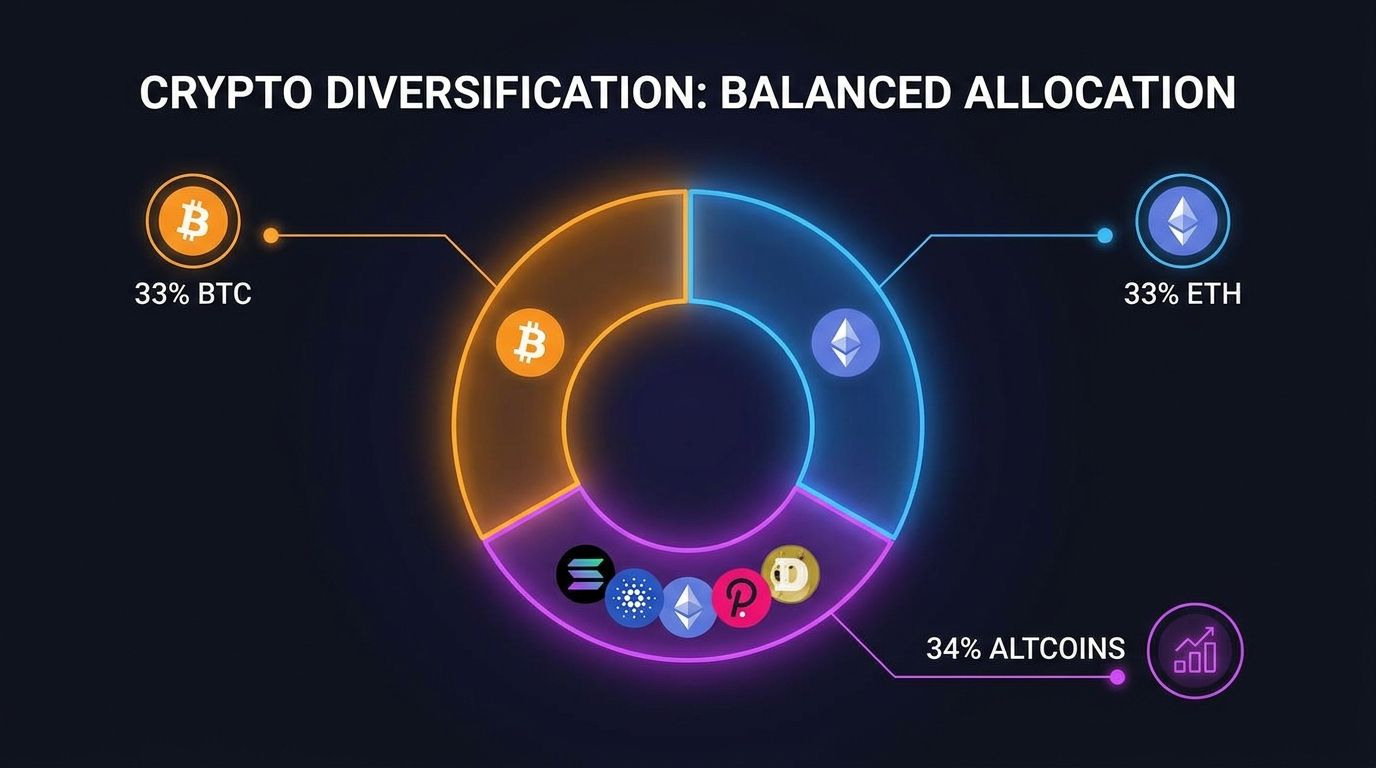
πŸ’Ό Portfolio Allocation for Crypto: The 60/30/10 Rule

One question kills most traders' portfolios: "How much of each coin should I own?"


Here's the allocation system we teach in the Academy:


The 60/30/10 Portfolio Model


60% β€” Core Holdings (BTC/ETH)

  • Bitcoin (40% of total portfolio)

  • Ethereum (20% of total portfolio)

  • Why? Liquidity, correlation to crypto market, least risk of going to zero

  • Hold timeframe: 3+ months minimum

  • Rebalance: Only when one exceeds 50% of core


30% β€” Active Trading (Alt-coins 3-5 coins)

  • Select 3-5 altcoins with market cap $1B+ (reduced volatility)

  • Equal weight: If you have $3K for trading, $600 per coin

  • Hold timeframe: 2-8 weeks (active management)

  • Exit rules: +50% profit or -20% stop loss (strict discipline)


10% β€” High Risk/High Reward (Emerging coins)

  • 2-3 coins with market cap $100M-$1B (higher volatility, higher reward)

  • 5% max loss per coin acceptable

  • Hold timeframe: 1-4 weeks (fast trades)

  • Exit rules: +200% profit or -50% stop loss (accept bigger swings)


Real Example: $10,000 Portfolio

60% Core:
  β€’ Bitcoin: $4,000 (HODL)
  β€’ Ethereum: $2,000 (HODL)

30% Active Trading:
  β€’ SOL: $600
  β€’ AVAX: $600
  β€’ MATIC: $600
  β€’ ARB: $600
  β€’ OP: $600

10% High Risk:
  β€’ RENDER: $500
  β€’ DYDX: $500


Why This Matters

  • Risk control: Losses capped at 10% of portfolio even if high-risk trades all fail

  • Growth: Active trading can 2x in 8 weeks if managed right

  • Psychology: 60% core sleeping well at night, 30% active keeps you engaged


Rebalancing Schedule

  • Check allocation monthly

  • If any core holding exceeds 55%, take profit and rebalance

  • If any active trade hits -20%, exit and reallocate

  • If any high-risk trade hits +200%, take profits and redeploy


The rule: Let winners run (don't sell at +30% unless hitting target), cut losers fast (sell at -20%).


Next Monday: We'll review allocation in live trade calls. Join us.

file_ZVMvC1Nu5f2KL
Profile picture
Razon JaredProfile picture@marubejaredΒ·Aug 14

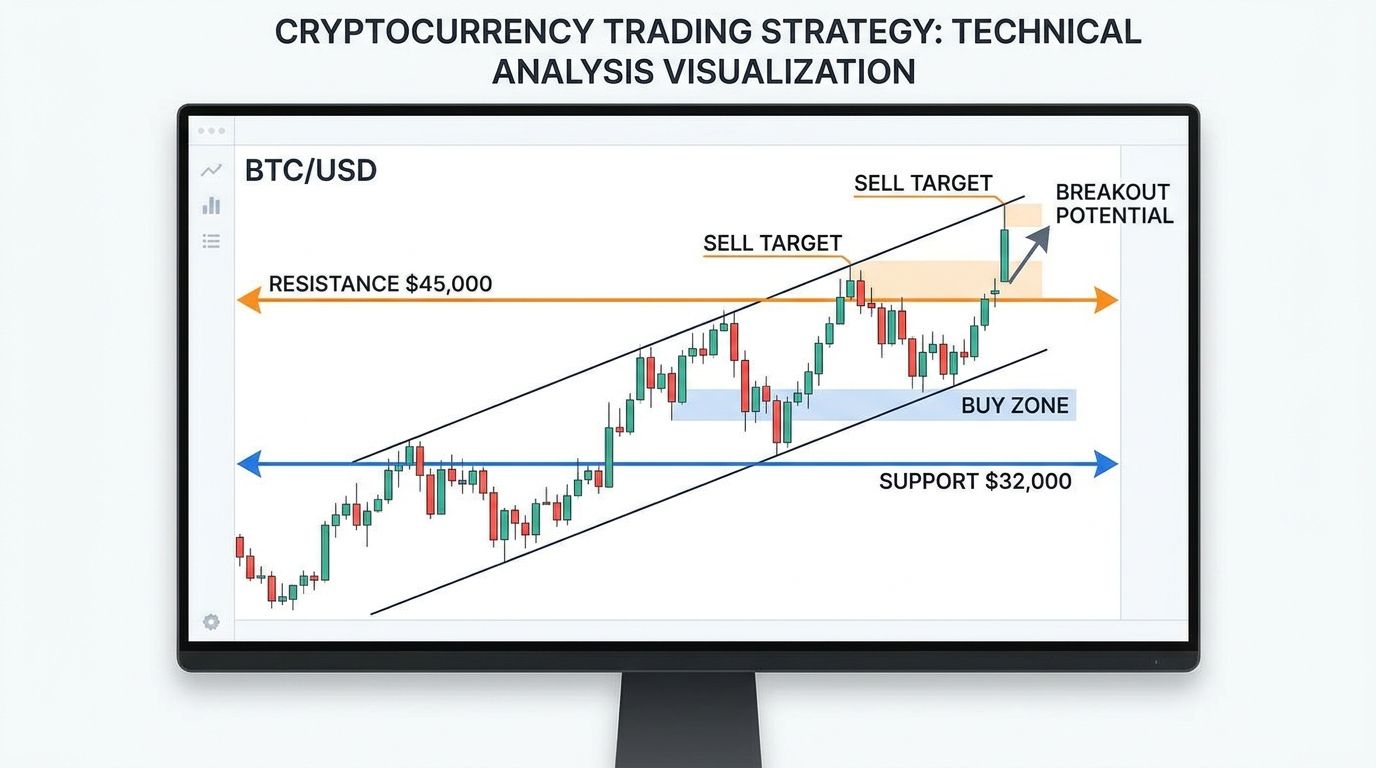
🎯 Support & Resistance Trading: The Exact Levels We're Using This Week

Support & Resistance levels are your MAP β€” without them, you're gambling.


Here are the exact levels our daily trade calls are anchored to:


Bitcoin (BTC)

Resistance Levels:
$46,500 β€” Daily resistance (invalidates if broken)
$45,000 β€” Current price (consolidation zone)
$43,200 β€” Intraday support

Support Levels:
$42,000 β€” Weekly support (if this breaks, reload lower)
$40,500 β€” Monthly support (major reversal zone)
$38,200 β€” Absolute floor (unlikely this week)


Ethereum (ETH)

Resistance Levels:
$2,850 β€” Weekly resistance
$2,750 β€” Daily resistance
$2,650 β€” Current consolidation

Support Levels:
$2,550 β€” Weekly support (hold = bullish)
$2,450 β€” Monthly support


How To Trade These Zones

1. Buy near support (not at it)

  • Entry: $42,200 (above support, momentum building)

  • Stop: $41,800 (tight stop, 0.9% risk)

  • Target: $45,000-46,500 (previous resistance = next target)


2. Sell near resistance (not at it)

  • Entry: $44,800 (under resistance, pullback catching buyers)

  • Stop: $45,200 (above resistance)

  • Target: $43,000-42,000 (previous support = next target)


3. Wait at consolidation (boring = profitable)

  • When price bounces between support/resistance, wait.

  • Don't fade the move. Let it confirm direction first.


Why This Matters

Traders who trade without S&R levels have 30% win rate. Traders who trade with S&R levels have 65% win rate. The difference? Probability of pullbacks and reversals.


Next trade call: Thursday 3:00 PM UTC. We'll identify entries within these exact zones.

file_lV5f7TOmVWxZV
Profile picture
Razon JaredProfile picture@marubejaredΒ·Aug 14

πŸ“ˆ BTC Breakout Pattern: What's Next After $45K Resistance

Chart Alert 🚨


Bitcoin just closed above $45K resistance for the third consecutive week. Here's what we're watching:


The Setup

  • Resistance confirmed: $45K-$46.5K zone (previous all-time volatility peak)

  • Support floor: $41.2K (holds for 6 weeks)

  • Volume profile: Above-average buying into resistance (bullish signal)


What's Next?

If Bitcoin closes above $46.5K:

  • Target 1: $50K psychological level (50% extension of last swing)

  • Target 2: $52.8K (previous January resistance)

  • Target 3: $55K-$58K zone (extended run scenario)


Risk Management

  • Stop loss: Below $42K (breaks weekly support)

  • R:R ratio: Risk $2K to make $5K+ (2.5:1 minimum)


This Week's Play

We're scaling in on any pullback to $43K-$44K. Dollar-cost averaging into resistance beats timing the exact bottom.


Position sizing: Never risk more than 2% of your account per trade. If you have $10K, risk $200 max per position.


Earth this week: No major macro news until Thursday. Watch the Fed comments.


Reaction thread: What's your breakout thesis?

file_fzjasTAaM6vFO
Profile picture
Razon JaredProfile picture@marubejaredΒ·Aug 12

Top 3 Trading Psychology Mistakes That Cost Beginners Thousands

Your edge isn't just about technical analysisβ€”it's about mastering your own mind.


Here are the three most expensive psychology mistakes I see beginners make:


1. Revenge Trading After a Loss

After taking a loss, your emotions spike. You want to "make it back" immediately. This leads to overleveraging and bigger losses.


βœ“ Fix: Take a 15-minute walk. Scale back position size after losses. Never trade angry.


2. FOMO (Fear of Missing Out) Entries

You see a stock mooning and jump in without a plan. You have no stop loss. You panic sell at the bottom.


βœ“ Fix: Trade your plan, not the chart. Every entry needs a defined stop loss and profit target BEFORE you enter.


3. Holding Winners Too Long (Greed)

You hit a 50% gain but hold for a "home run." It comes back down 40%. You exit breakeven.


βœ“ Fix: Take profits at your target. Let a small trailing position run. Don't be greedy.


The Real Edge:

Profitable traders aren't smarterβ€”they're disciplined. They follow their rules even when emotions are screaming otherwise.


In Crypto Edge, we teach you the exact systems, mindsets, and trade setups that separate winners from losers. Daily trade calls + done-for-you entries & exits. No guessing, no emotion.


Join us and trade like a professional.

file_0Bc4UJmztA5c8
Profile picture
Razon JaredProfile picture@marubejaredΒ·Aug 11
Pinned post

Crypto Edge is officially open β€” daily trade calls, done-for-you entries & exits

Crypto Edge is live. If you're tired of guessing entries, chasing green candles, and getting stopped out on emotion β€” this is built for you.


What you get:

  • Daily trade signals with exact entry, stop loss, and take profit levels

  • Market breakdowns explaining the why behind every call β€” so you actually learn to read the market, not just follow blindly

  • A live trading floor chat with the community and me, in real time

  • Risk management built into every single call β€” we protect capital first, chase profit second


Launch offer: Use code LAUNCH20 for 20% off your first month. This won't stay up for long.


$49/month. Cancel anytime. Get in before the next signal drops.

file_nxM9iH31RaCjb
Profile picture
Razon JaredProfile picture@marubejaredΒ·Aug 11

Why most beginner traders lose money on their first 90 days (and how to avoid it)

Been running a signals desk for a while now, and the pattern is always the same with new traders:


They size positions based on conviction, not risk. Feeling "sure" about a trade isn't a risk management plan. If you can't articulate your stop loss BEFORE you enter, you're gambling, not trading.


They chase entries after the move already happened. By the time a coin is trending on your feed, the easy money is gone. The edge is in catching structure shifts early β€” which means most of your trades will feel uncomfortable when you take them.


They have no plan for being wrong. Every trader is wrong a meaningful percentage of the time. The ones who survive have a predefined exit before they're wrong, not after.


If you're newer to crypto and want to see how this actually looks in practice β€” live entries, live exits, and the reasoning behind each one β€” that's exactly what we run at Crypto Edge. No hype, just process.

file_RKdMF5gvdeIXX