Medieval Europe Tales

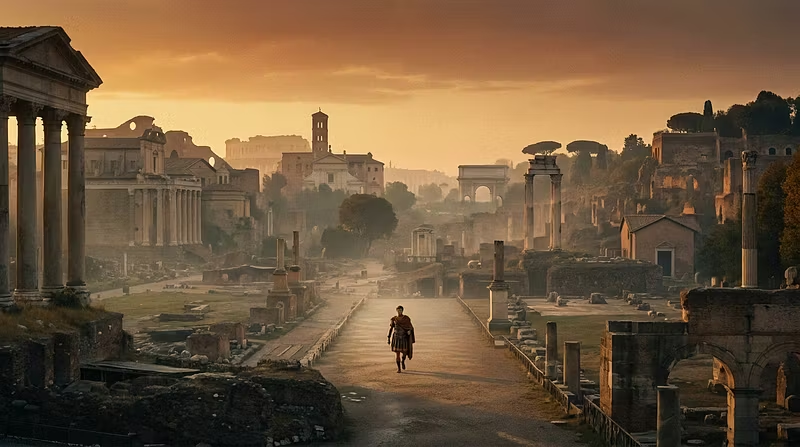
Step through the gates of ancient Rome and experience history as it truly was. Expert-guided coaching on the everyday lives of Roman...
Quezon City, PH
•Created byProfile picturedanglilac9a
1 joined
Profile picture
@danglilac9aProfile pictureJun 3
Pinned post

Welcome to Daily Life in Ancient Rome šŸ›ļø

Salve, fellow history enthusiast!


Welcome to the most immersive journey into the ancient world you'll ever take. You've joined a community dedicated to understanding how ordinary Romans actually lived — not just the emperors and generals, but the bakers, the merchants, the mothers, and the slaves who built one of history's greatest civilizations.


What You'll Experience


šŸ“œ A Complete Course — 6 chapters and 12 lessons taking you from a Roman dawn to the fall of dusk, through homes, kitchens, bathhouses, arenas, temples, and courtrooms.


šŸ’¬ Community Chat — Connect with fellow students, debate historical interpretations, and share your own discoveries.


šŸ“¢ Announcements & Updates — Stay informed about new lessons, live sessions, and bonus content drops.


How to Get Started


  1. Head to the Daily Life in Ancient Rome course and begin with Chapter 1

  2. Take your time — lessons are sequential so you build knowledge layer by layer

  3. Jump into the community chat to introduce yourself

  4. Complete all lessons to earn your certificate of completion


"Not how long, but how well you have lived is the main thing." — Seneca


Let's walk the streets of Rome together. šŸ›ļø


— Your Coach

Profile picture
@danglilac9aProfile pictureJun 3

What Did an Ordinary Roman's Day Actually Look Like?

Most people picture Ancient Rome as gladiator fights and senate speeches. But what was a regular Tuesday like for someone living in Rome around 100 AD?


Dawn — The Day Starts Early


Romans woke before sunrise. There were no curtains, no alarm clocks — just the brutal honesty of sunlight flooding through open windows. The first act of the day? A quick prayer at the household shrine (lararium), asking the gods for protection and fortune.


Breakfast was almost an afterthought: a handful of bread, maybe some cheese or olives. No one sat down for it. You ate standing, quickly, and moved on.


The Morning Hustle


By the second hour of daylight, the city was alive. Merchants shouted from their stalls. Senators walked to the Forum flanked by clients hoping for favors. Laborers hauled goods through streets so narrow two carts couldn't pass.


If you were a craftsman, you opened your taberna (workshop) at street level. If you were wealthy, your morning was spent receiving visitors — the salutatio, a daily ritual where lower-status citizens came to pay respects in exchange for food or small coins.


Midday — Baths, Not Lunch


Around noon, work slowed. But Romans didn't break for lunch the way we do. Instead, many headed to the public baths — massive complexes that were part gym, part spa, part social club. You'd exercise, soak in hot pools, get an oil massage, and gossip about politics. Admission? Often free or nearly so.


Evening — The Main Event


The cena (dinner) was the centerpiece of Roman life. For the wealthy, this was a hours-long affair with multiple courses, reclining on couches, and entertainment. For everyone else, it was simpler — lentil stew, bread, maybe some fish — but still the social highlight of the day.


---


This is just a glimpse. Inside our full course, we go deep into every aspect of Roman daily life — the homes they lived in, the foods they cooked, the gods they prayed to, and the laws that governed them.


If you've ever wanted to truly understand what it felt like to be Roman, this is for you.

Profile picture
@danglilac9aProfile pictureJun 3

What Did an Ordinary Roman's Day Actually Look Like?

Most people picture Ancient Rome as gladiator fights and senate speeches. But what was a regular Tuesday like for someone living in Rome around 100 AD?


Dawn — The Day Starts Early


Romans woke before sunrise. There were no curtains, no alarm clocks — just the brutal honesty of sunlight flooding through open windows. The first act of the day? A quick prayer at the household shrine (lararium), asking the gods for protection and fortune.


Breakfast was almost an afterthought: a handful of bread, maybe some cheese or olives. No one sat down for it. You ate standing, quickly, and moved on.


The Morning Hustle


By the second hour of daylight, the city was alive. Merchants shouted from their stalls. Senators walked to the Forum flanked by clients hoping for favors. Laborers hauled goods through streets so narrow two carts couldn't pass.


If you were a craftsman, you opened your taberna (workshop) at street level. If you were wealthy, your morning was spent receiving visitors — the salutatio, a daily ritual where lower-status citizens came to pay respects in exchange for food or small coins.


Midday — Baths, Not Lunch


Around noon, work slowed. But Romans didn't break for lunch the way we do. Instead, many headed to the public baths — massive complexes that were part gym, part spa, part social club. You'd exercise, soak in hot pools, get an oil massage, and gossip about politics. Admission? Often free or nearly so.


Evening — The Main Event


The cena (dinner) was the centerpiece of Roman life. For the wealthy, this was a hours-long affair with multiple courses, reclining on couches, and entertainment. For everyone else, it was simpler — lentil stew, bread, maybe some fish — but still the social highlight of the day.


---


This is just a glimpse. Inside our full course, we go deep into every aspect of Roman daily life — the homes they lived in, the foods they cooked, the gods they prayed to, and the laws that governed them.


If you've ever wanted to truly understand what it felt like to be Roman, this is for you.