

What is your biggest fibroid symptom?
EndoBloom
3 joined
E
EndobloomE @endobloom1·Jun 22
@endobloom1·Jun 221 vote
E
EndobloomE@endobloom1·Jun 22
@endobloom1·Jun 22Which condition would you like more support resources for?
E
EndobloomE@endobloom1·Jun 22
@endobloom1·Jun 22Which conduction would you like more support resources for?
E
EndobloomE@endobloom1·May 1
@endobloom1·May 1🧘 Gentle Pilates for Core Strength & Pelvic Support
Your core and pelvic floor muscles support your uterus — keeping them strong can help manage fibroid symptoms like pelvic pressure, lower back pain, and discomfort.
Pilates is perfect because it builds strength gently, without the high-impact stress that can worsen symptoms. 💪
---
The 20-Minute Fibroid-Friendly Pilates Routine
No equipment needed — just a mat and a pillow. Perform each exercise slowly and with intention.
1. Pelvic Tilts — 10 reps
Lie on your back, knees bent, feet flat on the floor
Inhale to prepare
Exhale: Gently tilt your pelvis, pressing your lower back into the mat
Inhale: Release back to neutral
Focus on: Engaging your deep core, not your glutes
2. Bridge — 8 reps
Same starting position as pelvic tilts
Exhale: Lift your hips up, creating a straight line from knees to shoulders
Hold for 3 seconds at the top
Inhale: Lower down one vertebra at a time
Benefits: Strengthens glutes and pelvic floor
3. Toe Taps — 10 reps (alternating)
Lie on your back, bring knees to tabletop position (90° angle)
Exhale: Slowly lower one foot to tap the floor
Inhale: Return to tabletop
Alternate legs
Key: Keep your lower back pressed to the mat throughout
4. Side-Lying Leg Lifts — 10 each side
Lie on your side, bottom arm supporting your head
Keep your body in a straight line
Exhale: Lift your top leg to hip height
Inhale: Lower with control
Benefits: Strengthens hip stabilizers that support the pelvis
5. Bird Dog — 8 reps (alternating)
Start on all fours
Exhale: Extend your right arm forward and left leg back simultaneously
Hold for 3 seconds
Inhale: Return to start
Alternate sides
Focus on: Keeping your hips level — no rocking
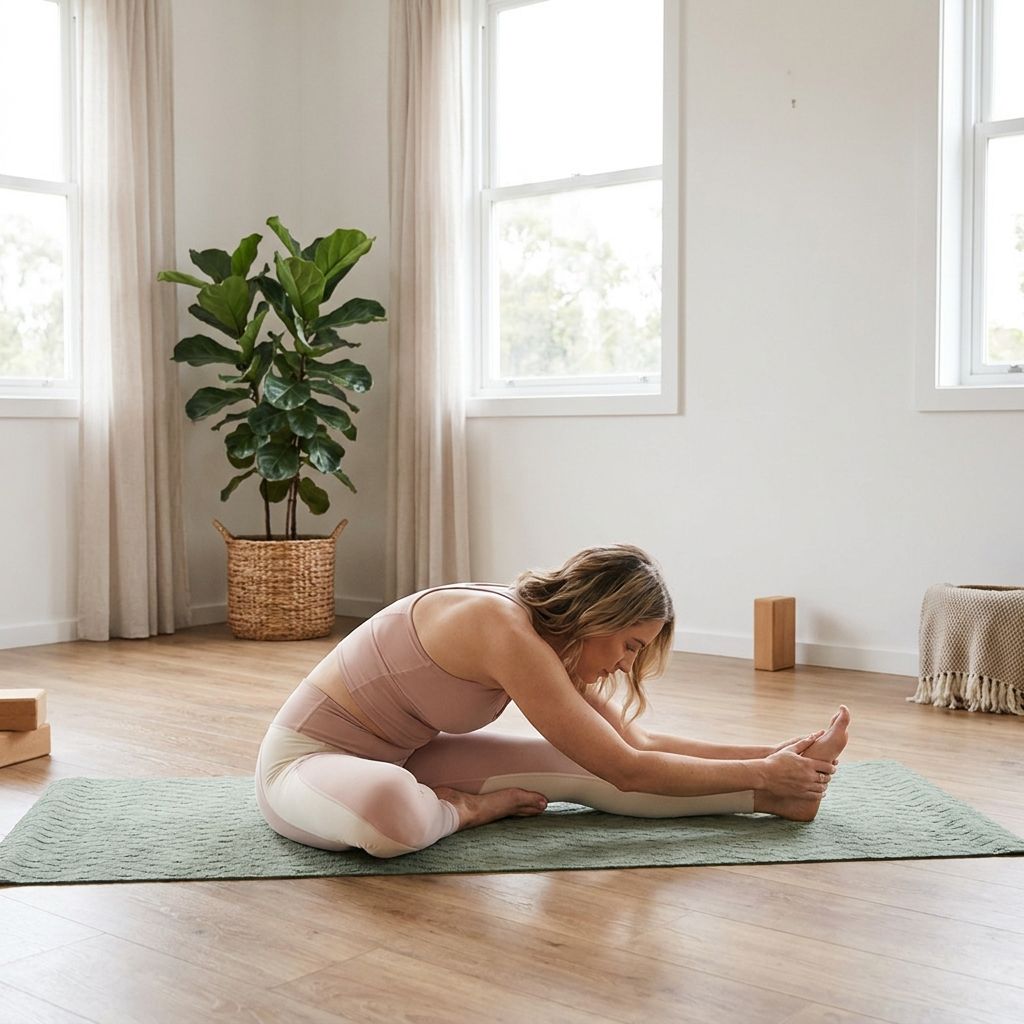
6. Seated Forward Fold — Hold 1 minute
Sit with legs extended in front of you
Inhale: Reach arms overhead, lengthening your spine
Exhale: Fold forward from the hips, reaching for your shins or feet
Relax your head and neck
Benefits: Stretches the lower back and hamstrings
7. Deep Breathing Cool-Down — 2 minutes
Lie on your back, place one hand on your chest, one on your belly
Breathe into your belly (the lower hand should rise more than the upper)
Inhale for 4 counts, exhale for 6 counts
Let your whole body release into the mat
---
📅 Recommended Schedule
Day | Session | Duration |
|---|---|---|
Monday | Full routine | 20 min |
Wednesday | Full routine | 20 min |
Friday | Full routine | 20 min |
Other days | Just pelvic tilts + deep breathing | 5 min |
---
⚠️ Important Modifications
Skip any exercise that causes sharp pain — Mild discomfort is okay; pain is not
Avoid heavy core work (crunches, planks, V-ups) if you have large fibroids
Use a pillow under your hips during bridges for extra support
During heavy bleeding days — Stick to just the breathing and gentle stretching
Post-surgery — Get clearance from your doctor before resuming any exercise
---
Consistency > Intensity. Three gentle sessions per week will transform how your body feels over time. Trust the process. 🌿
💬 Have you tried Pilates for symptom relief? Share your experience!
---
⚠️ Consult your healthcare provider before starting any new exercise program, especially if you have large or symptomatic fibroids.
E
EndobloomE@endobloom1·May 1
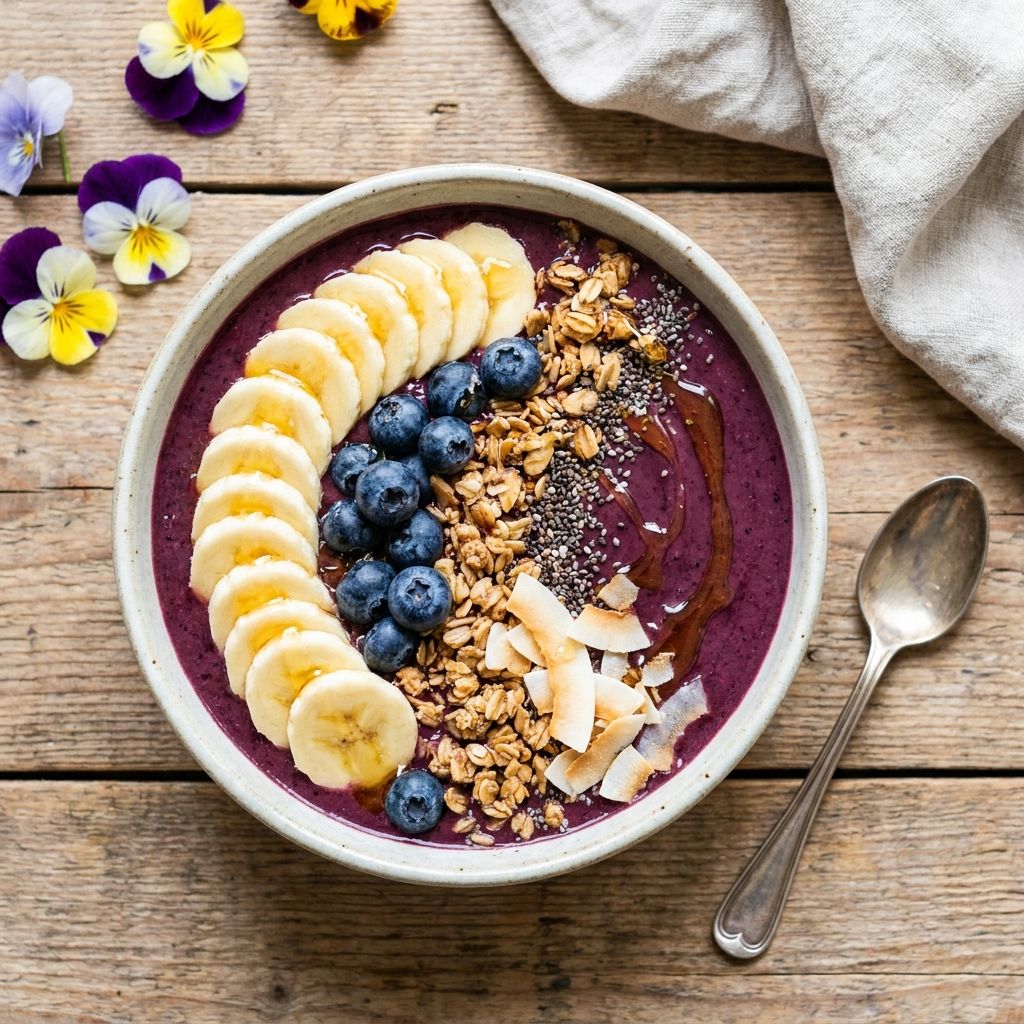
@endobloom1·May 1🫐 Smoothie Bowl Recipe: The Ultimate Fibroid-Fighting Breakfast
Start your morning with a bowl of pure healing. 🌸
This smoothie bowl is packed with anti-inflammatory ingredients, fiber, and antioxidants — everything your body needs to fight fibroid growth from the inside out.
---
🥣 The EndoBloom Power Bowl
Base Ingredients:
1 cup frozen mixed berries (blueberries, raspberries, strawberries)
1/2 frozen banana
1 tablespoon ground flaxseed
1 tablespoon chia seeds
1/2 cup unsweetened almond milk
1/2 teaspoon turmeric powder
Small piece of fresh ginger (optional)
Toppings:
Sliced banana
Fresh blueberries
Granola (low-sugar, whole grain)
Coconut flakes
Extra chia seeds
Drizzle of raw honey
Handful of walnuts
Instructions:
Blend the base ingredients until thick and creamy (it should be thicker than a regular smoothie)
Pour into a bowl
Arrange toppings artistically
Enjoy immediately
---
🔬 Why Every Ingredient Matters
Ingredient | Fibroid-Fighting Benefit |
|---|---|
Berries | Loaded with antioxidants that combat oxidative stress linked to fibroid growth |
Ground flaxseed | Contains lignans that help your body metabolize excess estrogen |
Chia seeds | High in omega-3s and fiber — anti-inflammatory powerhouse |
Turmeric | Curcumin is one of nature's strongest anti-inflammatories |
Ginger | Reduces inflammation and may help with nausea from pain |
Walnuts | Rich in omega-3s and vitamin E for hormonal balance |
Banana | Natural energy + potassium to reduce bloating |
---
🔄 Variations to Try
Green Power Bowl:
Swap berries for spinach + mango + pineapple + flaxseed. Rich in iron and vitamin C.
Chocolate Recovery Bowl:
Blend cacao powder + banana + almond butter + almond milk + chia seeds. Cacao is rich in magnesium (muscle relaxant).
Tropical Healing Bowl:
Blend papaya + pineapple + coconut milk + turmeric + ginger. Papaya contains papain, an enzyme that supports digestion.
---
💡 Prep Hack
Make smoothie packs on Sunday:
Portion frozen fruits + flaxseed + chia seeds into individual ziplock bags
Store in the freezer
Each morning, dump a bag into the blender + add liquid
Blend, top, enjoy in under 5 minutes
5 bags = 5 mornings of zero-effort healing breakfasts. 🙌
💬 What's your favorite smoothie combo? Drop your recipe below!
---
⚠️ This is general wellness content. Consult your healthcare provider or registered dietitian for personalized nutrition advice.
E
EndobloomE@endobloom1·May 1
@endobloom1·May 1🚶♀️ Morning Walks: The Simplest Exercise That Changes Everything
You don't need a gym membership or fancy equipment. A daily morning walk might be the most powerful exercise for fibroid and endo management. 🌅
---
Why Walking Works for Fibroids
Research shows that women who exercise around 7 hours per week have the lowest fibroid risk — and walking is the easiest way to hit that target.
Here's what a daily walk does for your body:
1. Lowers Estrogen
Walking helps reduce body fat, which decreases estrogen production through aromatization. Less excess estrogen = a less favorable environment for fibroid growth.
2. Reduces Inflammation
Moderate exercise triggers anti-inflammatory compounds from your muscles. A 30-minute walk can lower inflammation markers for up to 24 hours.
3. Relieves Pain
Walking stimulates endorphin release — your body's natural painkillers. Many women report reduced pelvic pain and cramping with consistent walking.
4. Lowers Cortisol
Walking in nature is especially powerful. Studies show 20 minutes outdoors significantly drops cortisol (the stress hormone that worsens hormonal imbalance).
5. Improves Mood
Exercise boosts serotonin and dopamine. When you're dealing with chronic pain, protecting your mental health is just as important as managing physical symptoms.
---
🗓️ Your 4-Week Walking Plan
Week 1: Build the Habit
Walk 15-20 minutes daily
Keep it easy — focus on consistency, not speed
Morning is ideal (boosts energy + sets your circadian rhythm)
Week 2: Extend
Walk 25-30 minutes daily
Add gentle arm swings to increase circulation
Try a new route to keep it interesting
Week 3: Strengthen
Walk 30-40 minutes daily
Include some gentle hills or inclines
Practice deep breathing while you walk
Week 4: Sustain
Walk 40-45 minutes daily
This gets you close to 5+ hours per week
Add a podcast, audiobook, or music you love
---
💡 Tips for Walking With Fibroids
Go at YOUR pace — This isn't a race. Gentle and consistent wins
Wear supportive shoes — Proper footwear prevents back and hip pain
Stay hydrated — Carry a water bottle, especially in warm weather
Walk after meals — A 10-minute post-meal walk aids digestion and blood sugar regulation
Skip heavy bleeding days if needed — Listen to your body. A gentle stretch at home is perfectly fine
Buddy up — Walking with a friend or in a group boosts accountability and mood
---
🌿 The Nature Bonus
If you can walk in a park, garden, or natural setting, you get extra benefits:
Lower cortisol than indoor or urban walking
Reduced blood pressure and heart rate
Improved mood and mental clarity
Vitamin D from safe sun exposure (15-20 min)
Nature + movement = double healing. 🌸
💬 Are you a morning walker? Tell us your favorite route or playlist in the comments!
---
⚠️ Consult your healthcare provider before starting a new exercise routine, especially if you have severe symptoms.

E
EndobloomE@endobloom1·May 1
@endobloom1·May 1📋 Weekly Meal Prep Guide: 5 Days of Fibroid-Friendly Meals
Stop stressing about what to eat every day. Prep once, eat well all week. 🙌
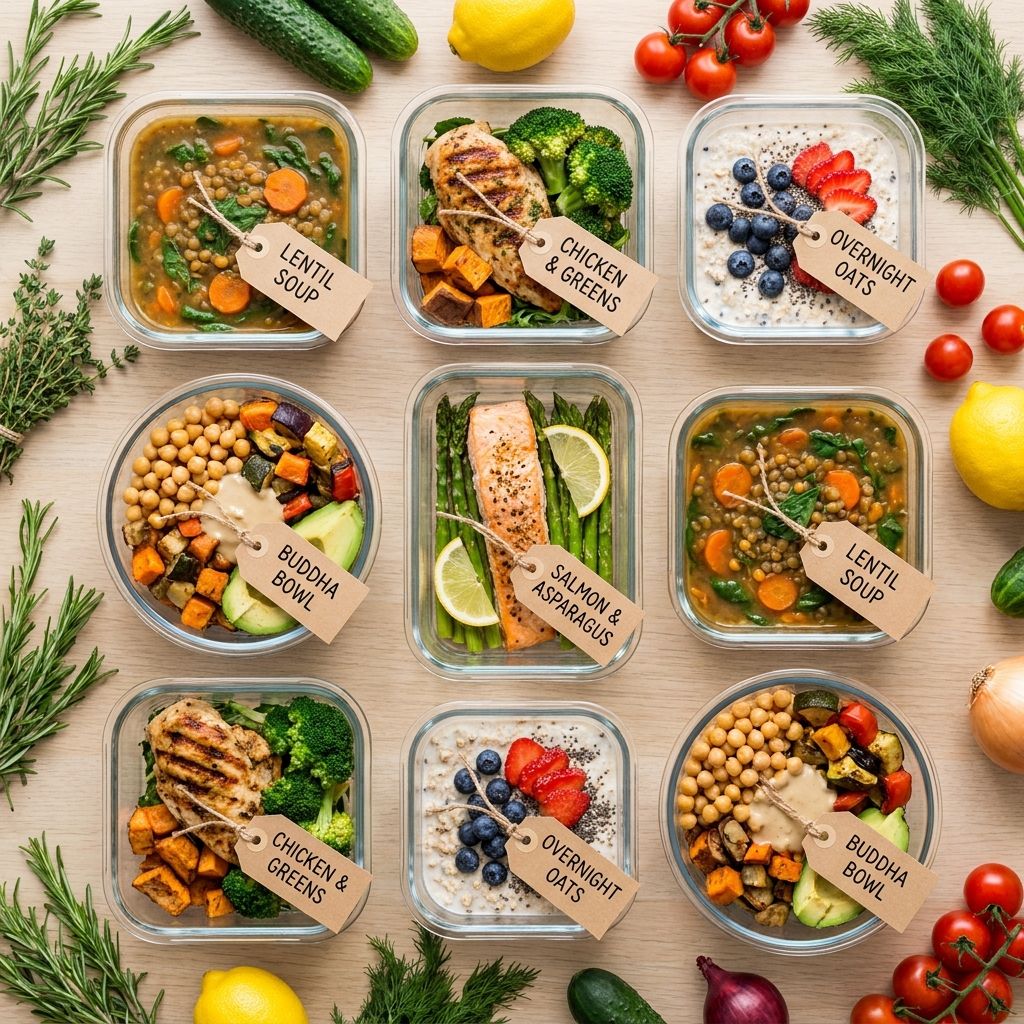
Here's a complete 5-day meal prep plan designed to reduce inflammation, balance hormones, and support fibroid management — all in one Sunday session.
---
🗓️ The 5-Day Plan
Monday: Lentil & Vegetable Soup
Red lentils, carrots, celery, turmeric, cumin, garlic
Rich in fiber + plant protein to regulate estrogen
Make a big batch — freezes beautifully
Tuesday: Buddha Bowl
Chickpeas, roasted sweet potato, quinoa, kale, tahini dressing
Packed with antioxidants and fiber
The tahini adds healthy fats for hormone support
Wednesday: Baked Salmon & Greens
Wild-caught salmon, steamed asparagus, brown rice
Omega-3s from salmon are one of the best anti-inflammatories
Squeeze fresh lemon for vitamin C + iron absorption
Thursday: Overnight Oats
Oats, ground flaxseed, chia seeds, almond milk, berries, walnuts
Flaxseed contains lignans that help balance estrogen
Prep 3-4 jars at once for grab-and-go breakfasts
Friday: Chicken & Veggie Stir-Fry
Organic chicken breast, broccoli, bell peppers, snap peas, ginger, garlic
Cook with coconut aminos instead of soy sauce
Ginger is a natural anti-inflammatory
---
🛒 Your Shopping List
Proteins: Salmon fillets, organic chicken, red lentils, chickpeas
Grains: Quinoa, brown rice, rolled oats
Vegetables: Broccoli, kale, sweet potatoes, carrots, celery, asparagus, bell peppers, snap peas
Fruits: Berries (frozen work great), lemons
Pantry: Olive oil, coconut aminos, tahini, turmeric, cumin, garlic, ginger, ground flaxseed, chia seeds, walnuts, almond milk
---
⏰ Prep Timeline (About 2 Hours)
Time | Task |
|---|---|
0:00 | Start lentil soup on stove; preheat oven |
0:10 | Season & roast sweet potatoes + broccoli |
0:15 | Season salmon; prep overnight oats jars |
0:25 | Put salmon in oven |
0:35 | Cook quinoa + brown rice |
0:45 | Prep stir-fry vegetables (chop & store) |
1:00 | Cook chicken for stir-fry |
1:15 | Assemble containers |
1:30 | Clean up + label everything |
---
💡 Storage Tips
Use glass containers (avoid plastic for hormone health)
Label each container with the day
Most meals last 4-5 days refrigerated
Soups freeze well for up to 3 months
Add fresh toppings (avocado, lemon, herbs) right before eating
Eating well is an act of self-care, not a chore. Start small — even prepping 2-3 meals makes a difference. 🌿
💬 What's the easiest meal prep recipe you've found? Drop it in the comments!
---
⚠️ This is general wellness content. Consult your healthcare provider or a registered dietitian for personalized nutrition advice.
E
EndobloomE@endobloom1·May 1
@endobloom1·May 1🧘♀️ Your Gentle Yoga Flow for Pelvic Pain Relief
When fibroid pain hits, your yoga mat can be your best friend. 🧘♀️
These gentle poses are specifically chosen to relieve pelvic tension, ease cramping, and calm your nervous system — without putting stress on your body.
---
The 15-Minute Pelvic Relief Flow
Hold each pose for 5-8 slow breaths. Focus on releasing tension with every exhale.
1. Child's Pose (Balasana) — 1 min
Kneel on your mat, big toes touching, knees wide
Fold forward, arms extended or resting by your sides
Let your forehead rest on the mat
Why it helps: Gently compresses the abdomen, calms the nervous system
2. Cat-Cow (Marjaryasana-Bitilakasana) — 1 min
On all fours, wrists under shoulders, knees under hips
Inhale: Drop belly, lift chest and tailbone (Cow)
Exhale: Round spine, tuck chin and pelvis (Cat)
Why it helps: Massages abdominal organs, relieves lower back tension
3. Reclined Butterfly (Supta Baddha Konasana) — 3 min
Lie on your back, soles of feet together, knees falling open
Place pillows under each knee for support
Arms relaxed at your sides, palms up
Why it helps: Opens the hips, releases pelvic floor tension
4. Legs Up The Wall (Viparita Karani) — 3 min
Sit sideways next to a wall, then swing your legs up
Scoot your hips close to the wall
Rest your arms by your sides
Why it helps: Reduces pelvic congestion, improves circulation, deeply relaxing
5. Supine Twist — 2 min each side
Lie on your back, hug knees to chest
Drop both knees to the right, arms in a T
Turn your head to the left
Hold, then switch sides
Why it helps: Releases lower back and hip tension, aids digestion
6. Savasana (Final Rest) — 3 min
Lie flat on your back, legs relaxed, arms at your sides
Close your eyes and breathe naturally
Place a heating pad on your lower abdomen if it feels good
Why it helps: Activates your body's rest-and-repair mode
---
💡 Tips for Yoga With Fibroids
Use props generously — Bolsters, blankets, and blocks are your friends
Skip inversions during heavy bleeding days
Never push through pain — Modify or skip any pose that causes discomfort
Practice consistently — Even 10 minutes daily beats one long session per week
Pair with breathwork — Deep belly breathing amplifies the benefits
💬 Do you practice yoga for symptom relief? What poses help you the most?
---
⚠️ Consult your healthcare provider before starting a new exercise practice, especially if you have large fibroids.

E
EndobloomE@endobloom1·May 1
@endobloom1·May 1🥗 Meal Prep Sunday: Anti-Inflammatory Meal Prep for Fibroid & Endo Warriors
Your weekly meal prep just got a glow-up. 🌿
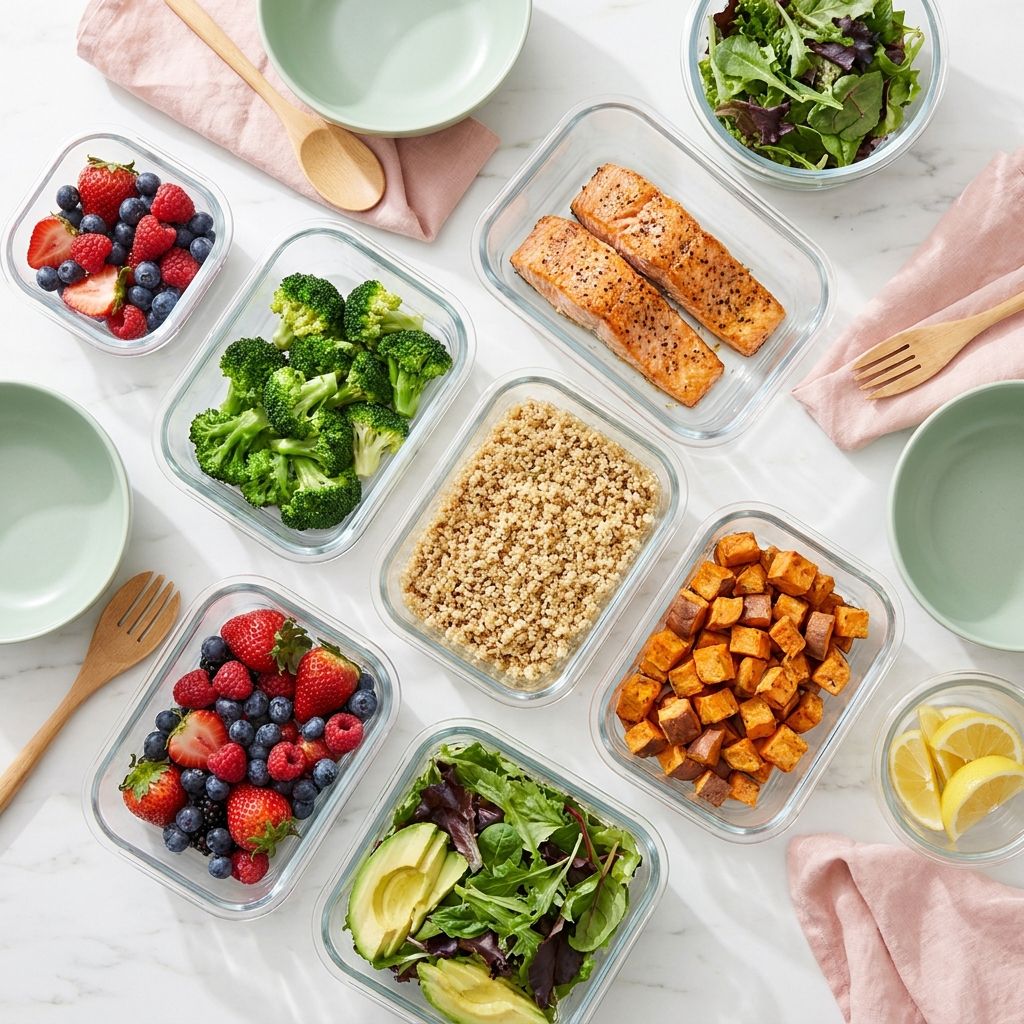
This is what a fibroid-fighting, anti-inflammatory meal prep looks like — colorful, nourishing, and designed to support your hormonal balance.
What's in the containers:
🐟 Roasted salmon (rich in omega-3s to fight inflammation)
🥦 Steamed broccoli (cruciferous veggies support estrogen metabolism)
🍠 Roasted sweet potatoes (packed with fiber and vitamin A)
🥑 Sliced avocado (healthy fats for hormone production)
🫘 Quinoa (high-fiber, complete protein grain)
🫐 Fresh berries (antioxidant powerhouses)
---
How to Make This in Under 2 Hours
Step 1: Prep your proteins (30 min)
Season 4 salmon fillets with lemon, garlic, and olive oil. Bake at 400°F (200°C) for 15-18 minutes.
Step 2: Roast your veggies (35 min)
Toss broccoli and cubed sweet potatoes with olive oil and sea salt. Roast at 400°F for 25-30 minutes.
Step 3: Cook your grain (20 min)
Rinse and cook 2 cups of quinoa in a pot or rice cooker.
Step 4: Assemble (15 min)
Divide everything into glass containers. Add sliced avocado and berries fresh each morning to keep them from browning.
Step 5: Store
Keeps in the fridge for 4-5 days. Reheat salmon, sweet potato, and broccoli — keep avocado and berries cold.
---
💡 Pro Tips
Swap the salmon for baked chicken, lentils, or tempeh if you prefer
Add leafy greens — a handful of spinach or kale boosts iron and fiber
Drizzle with lemon-tahini dressing for extra flavor and healthy fats
Prep on Sundays so you're set for the whole week ahead
Eating well shouldn't feel overwhelming. One prep session = 5 days of nourishment. 💪
💬 What's your go-to meal prep combo? Share your favorites below!
---
⚠️ Always consult your healthcare provider about dietary changes that are right for your specific health needs.
E
EndobloomE@endobloom1·May 1
@endobloom1·May 1🩺 When to Seek Medical Help for Fibroids: Know Your Options (Part 6 of 6)
Holistic management is powerful — but there are times when medical intervention is necessary for your safety and quality of life. Knowing when to seek help and understanding your options empowers you to make the best decisions for your body.
This final post in our series covers the red flags to watch for, medical treatment options, and how to be your own best advocate.
---
🚨 When to See Your Doctor
Seek medical evaluation if you experience any of the following:
Emergency/Urgent Signs:
Soaking through a pad or tampon every hour for 2+ consecutive hours
Passing blood clots larger than a golf ball
Severe, sudden pelvic pain that doesn't respond to OTC medication
Dizziness, fainting, or extreme fatigue (signs of severe anemia)
Shortness of breath or rapid heartbeat at rest
Fever with pelvic pain (could indicate fibroid degeneration)
Non-Urgent but Important Signs:
Heavy periods lasting more than 7 days
Periods that are gradually getting heavier over time
Pelvic pressure that interferes with daily activities
Frequent urination or difficulty emptying your bladder
Constipation caused by fibroid pressure
Pain during intercourse that is new or worsening
Visibly distended abdomen
Difficulty conceiving
---
💊 Medical Treatment Options
Medications
Hormonal treatments:
GnRH agonists (e.g., Lupron) — Temporarily shrink fibroids by lowering estrogen. Usually used short-term before surgery
GnRH antagonists (e.g., Oriahnn/elagolix) — Newer option that manages bleeding and pain with fewer side effects
Hormonal IUD (e.g., Mirena) — Can reduce heavy bleeding, though it doesn't shrink fibroids themselves
Birth control pills — May help regulate bleeding patterns
Non-hormonal:
Tranexamic acid — Reduces heavy menstrual bleeding without hormones
NSAIDs — For pain management during flares
Iron supplements — To treat anemia from heavy bleeding
Minimally Invasive Procedures
Uterine Artery Embolization (UAE):
Tiny particles are injected to block blood flow to fibroids
Fibroids shrink by approximately 40-75% within months
90%+ of women report significant symptom improvement
Preserves the uterus
Recovery: 1-2 weeks
Not always recommended if future pregnancy is desired
MRI-Guided Focused Ultrasound (MRgFUS):
Uses focused sound waves to heat and destroy fibroid tissue
Completely non-invasive (no incision)
Outpatient procedure
Recovery: 1-2 days
Not suitable for all fibroid types or locations
Endometrial Ablation:
Destroys the uterine lining to reduce heavy bleeding
Quick outpatient procedure
Not suitable if you want to become pregnant
Treats the symptom (bleeding) but not the fibroids themselves
Surgical Options
Myomectomy (fibroid removal, uterus preserved):
Hysteroscopic — For fibroids inside the uterine cavity. Done through the vagina, no abdominal incision
Laparoscopic — Small incisions, camera-guided. Best for fewer, smaller fibroids
Abdominal (open) — Larger incision. Used for many or very large fibroids
Preserves fertility — The go-to option for women who want children
Recovery: 2-6 weeks depending on approach
Fibroids can recur (up to 30% within 5 years)
Hysterectomy (uterus removal):
The only permanent cure for fibroids — they cannot recur
Can be performed vaginally, laparoscopically, or abdominally
Consider only when other options have failed or aren't suitable
Ends fertility permanently
Recovery: 4-8 weeks
---
🗣️ How to Advocate for Yourself
Navigating the medical system with fibroids can be frustrating. Here's how to be your own best advocate:
Before Your Appointment:
Track your symptoms for at least 2-3 months (use a journal or app)
Record your menstrual cycle — flow intensity, duration, pain levels
Write down your questions so you don't forget them
Bring a support person if you'd like backup
During Your Appointment:
Be specific about your symptoms and how they affect your daily life
Ask about ALL options — don't accept "just wait and see" if your quality of life is suffering
Ask these questions:
"What are my treatment options beyond hysterectomy?"
"Am I a candidate for minimally invasive procedures?"
"Can you explain the risks and benefits of each option?"
"Will this treatment affect my fertility?"
"Can I get a second opinion?"
If you feel dismissed, you have every right to seek another provider
After Your Appointment:
Research what was discussed — knowledge is power
Get a second (or third) opinion for any major procedure
Connect with support communities — hearing other women's experiences is invaluable
Take your time with decisions (unless it's an emergency)
---
🌸 Integrating Holistic & Medical Approaches
The most effective fibroid management often combines both:
Holistic Approach | Complements Medical Treatment By... |
|---|---|
Anti-inflammatory diet | Reducing inflammation that drives growth |
Exercise | Supporting recovery and hormonal balance |
Stress management | Improving treatment outcomes and coping |
Vitamin D optimization | Potentially slowing fibroid regrowth |
Pain management techniques | Reducing medication dependence |
Community support | Improving mental health and resilience |
Think of holistic strategies as the foundation and medical treatment as the intervention when needed. They're not opposing forces — they work together.
---
💛 The EndoBloom Promise
You deserve to be heard. You deserve options. You deserve support.
Whether you're managing fibroids naturally, exploring medical options, or somewhere in between — EndoBloom is here for you every step of the way.
This 6-part series is just the beginning. Save these posts, share them with someone who needs them, and remember: you are not alone in this journey. 🌸
---
📚 Full Series Recap:
🍎 The Fibroid-Fighting Diet
🧘♀️ Movement as Medicine
🧠 Stress, Hormones & Fibroids
🌡️ Natural Pain Relief
☀️ Vitamin D & The Overlooked Connection
🩺 When to Seek Medical Help (this post)
---
⚠️ Disclaimer: This content is for informational and educational purposes only and is not a substitute for professional medical advice, diagnosis, or treatment. Always consult a qualified healthcare provider for any medical decisions. In case of a medical emergency, call your local emergency services immediately.