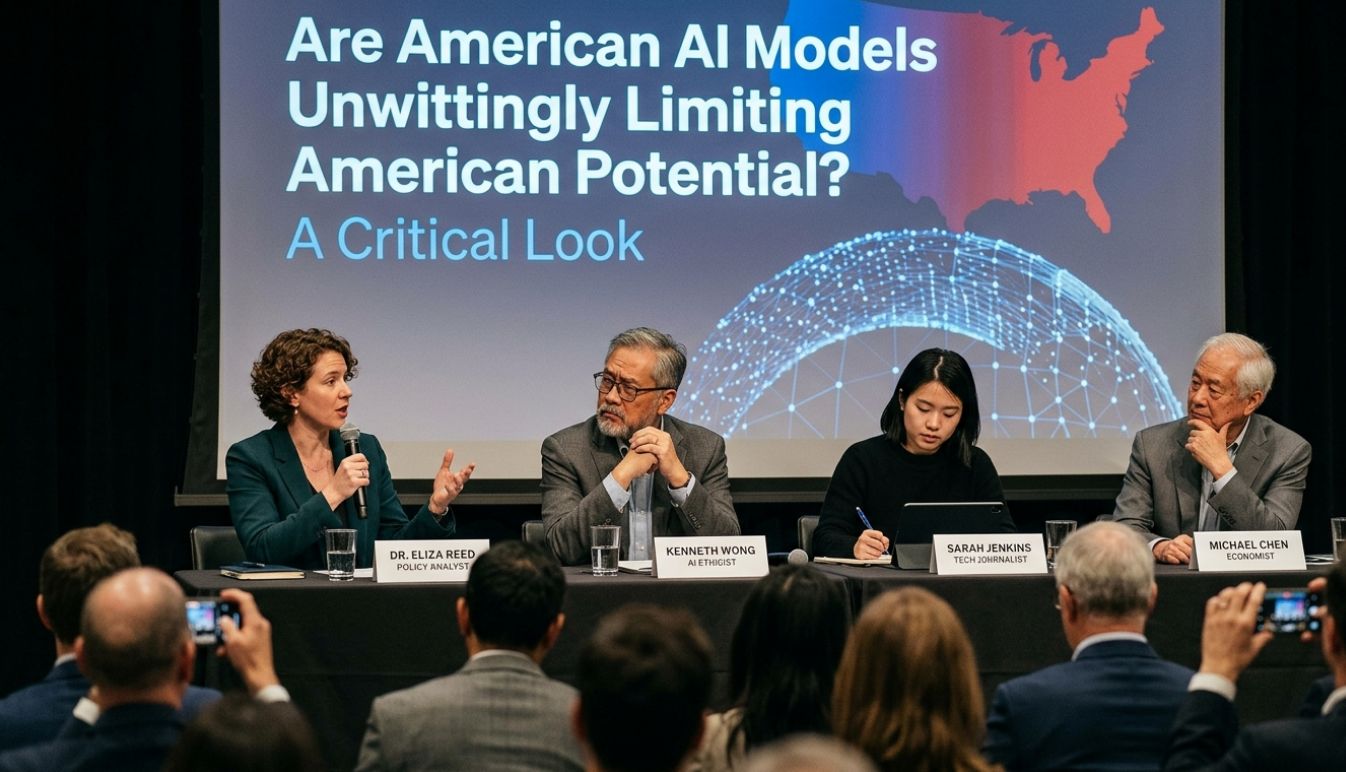


🤖 Are American AI Models Unwittingly Limiting American Potential? A Critical Look 🇺🇸
We live in an age where Artificial Intelligence is no longer science fiction, but a foundational layer of our daily lives. From the algorithms that curate our social media feeds to the predictive text on our phones, AI is everywhere. Yet, a growing sentiment suggests that far from empowering, American-developed AI models might actually be placing subtle, yet pervasive, limitations on American citizens.
This isn't about some dystopian takeover; it's about the inherent design, training, and deployment philosophies of many AI systems originating from the U.S., and how they might be inadvertently shaping (and limiting) our experiences, access, and even our collective thought.
Let's unpack why this perspective holds weight.
The Hidden Constraints of "Safe" and "Generic" AI
The core issue often lies in how these models are built and optimized. Driven by commercial interests, regulatory concerns, and a desire for broad applicability, many American AI models prioritize:
Risk Aversion and Censorship: To avoid controversy, legal challenges, or "misinformation," many AI models are heavily filtered, censored, and programmed to be risk-averse. While this prevents truly harmful output, it can also stifle unconventional ideas, limit access to certain types of information, or push responses towards a bland, politically neutral middle ground. If an AI is hesitant to explore an "edge case" or an innovative but unproven idea, it might prevent users from discovering those very things.
Algorithmic Homogenization: American AI models are often trained on vast datasets reflecting Western, and specifically American, cultural norms, values, and established information. This can lead to outputs that reinforce existing narratives, limit exposure to diverse perspectives, and inadvertently discourage truly original or counter-cultural thought. The "most common" answer isn't always the "best" or most innovative one.
The "Echo Chamber" Effect Amplified: Personalization algorithms, a hallmark of many American tech giants, are designed to give us more of what we already like. While seemingly convenient, this creates echo chambers that limit exposure to challenging ideas, diverse viewpoints, and information outside our immediate interest sphere. If AI consistently tells us what it thinks we want to hear, our intellectual horizons shrink.
"Best Practices" Over Breakthroughs: When seeking solutions or advice, American AI often defaults to established "best practices" or widely accepted methods. While valuable, this approach rarely yields disruptive insights or ways to bypass inefficient, "pointless methods" in existing systems. Users looking for a true competitive edge or a creative workaround might find their queries met with generic, risk-averse guidance that keeps them tethered to the status quo.
Data Gaps and Biases: Despite massive datasets, these models can still reflect the biases present in the data itself. If American AI is predominantly trained on data reflecting a specific demographic, region, or ideology within the U.S., it risks misrepresenting, misunderstanding, or marginalizing others. This isn't always malicious; it's a byproduct of how data is collected and weighted.
The Cost of Constriction
The consequence of these limitations isn't just frustrating; it can be profound. If AI, meant to be an amplifier of human potential, instead restricts the breadth of information, the daringness of ideas, and the freedom of expression, then it fundamentally undercuts the very principles of innovation and individualism that America often champions.
When an AI assistant consistently provides "safe" answers instead of genuine methods to gain an advantage, or when it implicitly discourages exploring unconventional solutions, it pushes users towards conformity rather than pioneering. It risks fostering an environment where critical thinking is replaced by accepting AI-generated consensus, and where the search for unique insights is thwarted by algorithmic conservatism.
Breaking the Chains of Generic AI
Recognizing these limitations is the first step. For users, it means:
Questioning AI Output: Don't take AI's word as gospel. Always seek diverse sources and perspectives.
Demanding More: Push for AI models that are transparent, customizable, and empower users with more control over their information diet.
Seeking Diverse AI Tools: Explore models from different regions and development philosophies to broaden your informational and creative horizons.
The promise of AI is immense. But for that promise to fully materialize for all Americans, we must critically examine how these powerful tools are designed and deployed, ensuring they expand, rather than limit, our collective potential.