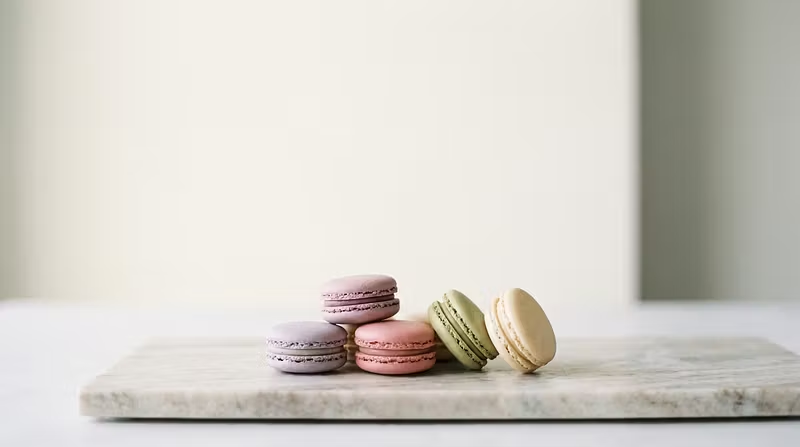
Macaron Mastery

Master the art of flawless French macarons. Led by an Executive Chef, this intensive program breaks down every variable — from meringue...
1 joined
Profile picture
@degenerbyasProfile pictureMay 31

The 3 Variables That Ruin 90% of Macaron Batches

Most macaron recipes give you ingredients and steps. What they won't tell you is why the same recipe works on Tuesday and fails on Saturday.


It's not your technique. It's your environment.


After thousands of batches in professional kitchens, here are the three variables responsible for the vast majority of macaron failures:


---


1. Humidity


Macarons form a "skin" during resting — a dry crust that becomes the smooth shell top. Humidity above 60% prevents this skin from forming properly, causing cracked tops, wrinkled surfaces, and uneven feet.


What to do: Check kitchen humidity before you start. Below 55% is ideal. Above 65%? Run a dehumidifier or AC for 30 minutes before baking. Above 75%? Reschedule — even professional kitchens avoid these conditions.


2. Oven Temperature Accuracy


Your oven lies to you. Most home ovens are off by 10-15°C from the dial setting. When your recipe says 150°C and your oven is actually at 165°C, you get browned shells, premature crusting, and hollow interiors.


What to do: Buy a $10 oven thermometer. Set your oven to 150°C, wait 20 minutes, and read the actual temperature. That gap is your permanent offset. Every serious baker knows their oven's offset by heart.


3. Egg White Age


Fresh egg whites contain more water and less stable proteins than aged ones. This is why the same meringue recipe can produce stiff, glossy peaks one day and a weepy, loose foam the next.


What to do: Separate your eggs 24-48 hours before baking. Store whites in the fridge, uncovered, in a clean container. Excess moisture evaporates and proteins relax, giving you a more stable meringue every time.


---


The Real Secret


Consistent macarons aren't about the "perfect recipe." They're about understanding what's happening at every stage and adjusting when conditions change.


That's exactly what I teach inside Macaron Mastery — 8 chapters, 22 lessons covering ingredient science, meringue mastery, macaronage, baking protocols, fillings, troubleshooting, and advanced flavor development.


If you're tired of inconsistent batches, this is the course that fixes it for good.

Profile picture
@degenerbyasProfile pictureMay 31
Pinned post

Welcome to Macaron Mastery — Start Here

Welcome, and congratulations on investing in your macaron consistency.


The single biggest difference between a chef who produces flawless macarons and one who doesn't is understanding over memorization. This course was built on that principle.


How to Get the Most Out of This Course


  1. Go in order. Lessons build on each other — later chapters assume foundational knowledge from earlier ones.

  2. Start your Batch Consistency Log immediately. Chapter 7 covers this in detail, but start logging from your very first bake.

  3. Don't chase perfection on batch one. Your first 5 batches are data collection. Failures are information.

  4. Use the Kitchen Community chat. Post your results. I review posts regularly and give direct feedback.

  5. Revisit the Troubleshooting chapter often. It's a reference, not a one-time read.


What You'll Achieve


  • Consistent, professional-quality macarons in any kitchen

  • Diagnose and fix any common failure in one batch

  • Custom flavors, textures, and seasonal collections

  • Pricing confidence for selling at professional margins


Let's get to work.


— Chef

Profile picture
@degenerbyasProfile pictureMay 31

The 3 Variables That Ruin 90% of Macaron Batches (And How to Control Them)

Most macaron recipes online will give you ingredients and steps. What they won't tell you is why the same recipe works on Tuesday and fails on Saturday.


It's not your technique. It's your environment.


After thousands of batches in professional kitchens, I can tell you the three variables responsible for the vast majority of macaron failures:


---


1. Humidity


Macarons form a "skin" during resting — a dry crust that becomes the smooth top of the shell. Humidity above 60% prevents this skin from forming properly, leading to cracked tops, wrinkled surfaces, and uneven feet.


What to do: Check your kitchen humidity before you start. Below 55% is ideal. Above 65%? Run a dehumidifier or AC for 30 minutes before baking. Above 75%? Reschedule — even professional kitchens with climate control avoid these conditions.


2. Oven Temperature Accuracy


Your oven lies to you. Most home ovens are off by 10-15°C from the dial setting. When your recipe says 150°C and your oven is actually running at 165°C, you get browned shells, premature crust formation, and hollow interiors.


What to do: Buy a $10 oven thermometer. Set your oven to 150°C, wait 20 minutes, and read the actual temperature. The gap between dial and reality is your permanent offset. Every serious baker knows their oven's offset by heart.


3. Egg White Age


Fresh egg whites contain more water and less stable proteins than aged ones. This is why the same meringue recipe can produce stiff, glossy peaks one day and a weepy, loose foam the next.


What to do: Separate your eggs 24-48 hours before baking. Store the whites in the fridge, uncovered, in a clean container. This allows excess moisture to evaporate and proteins to relax, giving you a more stable meringue every time.


---


The Real Secret


Consistent macarons aren't about finding the "perfect recipe." They're about understanding what's happening at every stage and knowing how to adjust when conditions change.


That's exactly what I teach inside Macaron Mastery — an 8-chapter, 22-lesson course covering ingredient science, meringue techniques, macaronage, baking protocols, fillings, troubleshooting, and advanced flavor development.


If you're tired of inconsistent batches and want chef-level precision, this is the course that gets you there.