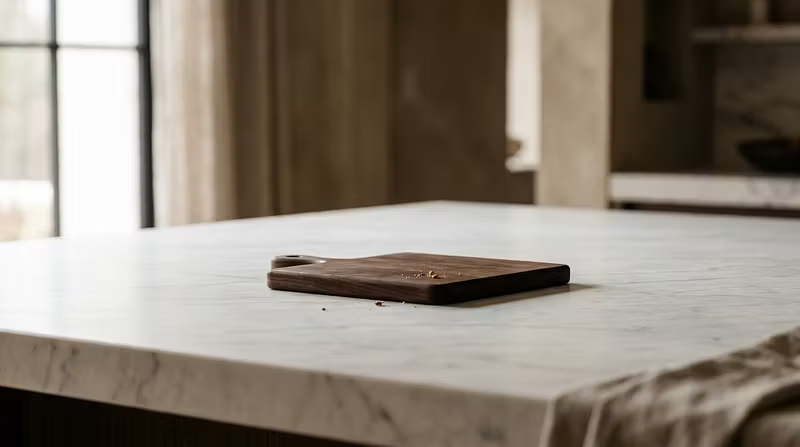


Why your cutting board is ruining your knives
Most people spend hundreds on a good chef's knife, then use it on a glass cutting board. Or bamboo. Or some mystery composite from Amazon.
Here's the thing nobody tells you: the board matters as much as the blade.
Glass and ceramic boards are the worst offenders. They're basically sharpening stones in reverse — every chop rolls and chips your edge.
Plastic boards are fine at first, but they develop grooves that harbor bacteria and dull blades unevenly.
Bamboo looks nice but it's actually harder than most hardwoods. It's tough on edges and the glue joints can split over time.
End-grain hardwood is the gold standard. The wood fibers absorb the blade instead of resisting it, which means your knife stays sharper longer and the board self-heals from cut marks.
We use black walnut specifically because it sits in the sweet spot — hard enough to last decades, soft enough to be gentle on steel, and naturally antimicrobial.
If you care about your tools, start with the surface they work on.