
Help traders stop losing to emotion. Free bias quiz → $47 toolkit → $29/mo membership with weekly briefings and community. Psychology first....
Location hidden
Created byProfile pictureHellsMachines
7 joined
Profile picture
HellsMachinesProfile picture@hellsmachines·Aug 15
Pinned post

Why 'research-first' AI beats black-box trading bots

Most AI trading products on the market are black boxes: a signal appears, you're told to trust it, and if it's wrong nobody can tell you why. That's not a system — it's a slot machine with a UI.


The alternative is a research-first architecture — the same structural pattern institutional trading desks use internally, minus the black box:


  • Every conclusion is required to cite the evidence that produced it. No evidence, no output.

  • Specialized departments (Technical, News, Fundamental, Behavioral, Macro, Data Analyst, Questioning, Regime, Probability, Risk, Strategist) each own one narrow job instead of one model trying to do everything.

  • A dedicated "Questioning" department runs constantly in the background — not looking for trades, just interrogating the system itself for data drift, overconfidence, and blind spots.

  • Research and execution are architecturally separated. Research can rank ideas. It cannot place a trade. A human authorizes every single order, with the full evidence chain in front of them, before anything touches a live account.


That last rule is the one most "AI trading bot" products skip entirely — because removing the human is what makes the demo look impressive. It's also what makes the failure mode catastrophic.


We just published the full engineering blueprint for building a system like this from scratch — governance model, department contracts, data schemas, and a 15-phase build plan (starting with Gold/XAU, extensible to stocks/crypto/forex/macro). If you're building serious research tooling instead of another signal bot, it's worth a look.
Profile picture
HellsMachinesProfile picture@hellsmachines·Aug 11

Market Watch

Stay sharp. 🎯

file_STJqlPJ0l78HH
Profile picture
HellsMachinesProfile picture@hellsmachines·Aug 11

Tokenization Revolution: How Real Assets Are Moving On-Chain

⛓️ The Next Mega Trend: Tokenization of Everything


A quiet revolution is happening. Major institutions are tokenizing real-world assets (RWA) — real estate, bonds, commodities, even art. This is HUGE for traders.


Here's what's moving:


What's Happening:


Major banks and fintech companies are launching tokenized versions of:

  • 🏢 Real estate & properties

  • 💵 Government & corporate bonds

  • 🥇 Commodities (gold, oil, silver)

  • 💎 Fine art & collectibles

  • 📊 Stocks & ETFs


Why It Matters:


1️⃣ 24/7 Trading — Unlike traditional markets (9:30 AM - 4 PM), tokenized assets trade 24/7 on blockchain

2️⃣ Instant Settlement — No T+2 settlement delays. Ownership transfers instantly

3️⃣ Lower Barriers — Fractional ownership means smaller minimums. $1 = entry, not $10,000 minimums

4️⃣ Global Access — No geographic restrictions. Trade from anywhere

5️⃣ Transparency — All transactions on blockchain = complete audit trail


Big Players Moving:


JPMorgan Chase — Launched JPM Coin (tokenized stablecoin) for institutional payments

BlackRock — Filing for tokenized ETFs and real-world asset platforms

Fidelity — Building tokenization infrastructure for institutional clients

Singapore's Government — Piloting tokenized bonds

Swiss Banking — Launching tokenized securities trading platform


Opportunity for Traders:


🎯 New Markets — Tokenized assets = new trading pairs, new volatility, new profits

🎯 Early Adopters — First traders on new platforms catch the moves before retail piles in

🎯 Volatility Plays — Asset tokenization announcements = sharp moves

🎯 Cross-Asset Arbitrage — Same asset trading differently on traditional vs. blockchain platforms = arbs


Key Events to Watch:


📅 Regulatory Clarity — SEC & CFTC statements on tokenized assets (huge catalyst)

📅 Platform Launches — When major banks launch tokenized platforms = volume spike

📅 Institution Adoption — Every corporate bonds tokenization = new market opens


The Trend:


This isn't crypto speculation. This is the digitization of finance itself. The same way the internet changed business, blockchain is changing how assets settle and trade.


Early traders who understand tokenization will see opportunities others miss.


Your Action:


✅ Start following tokenization news (Bloomberg, Reuters, crypto news sites)

✅ Understand the difference between trading on-chain vs. traditional markets

✅ Watch for tokenized asset announcements — those are high-volatility events

✅ Learn blockchain fundamentals (you don't need to code, just understand the tech)


Question:


Are you currently trading any tokenized assets? Or is this new territory for you? Drop your thoughts below. 🚀

Profile picture
HellsMachinesProfile picture@hellsmachines·Aug 11

Institutional Money Moves: What Bloomberg & Big Banks Tell Us About Markets

🏦 When Big Banks Move, Smart Traders Follow


Bloomberg terminals, bank earnings calls, Fed statements — this is where the real money moves BEFORE retail traders see it.


Here's what you need to watch:


Major Institutional Players:


1️⃣ JPMorgan Chase

  • Largest US bank by assets

  • Their earnings = health of corporate lending

  • When JPM reduces loan exposure = banks expect recession

  • When JPM increases equity allocation = bullish signal


2️⃣ Goldman Sachs

  • Leads M&A deals and market predictions

  • Their strategists call major market turns

  • Track their sector rotation calls

  • Listen to their earnings calls for macro outlook


3️⃣ BlackRock

  • Manages $10+ trillion (largest asset manager)

  • Their flows move markets MASSIVELY

  • When BlackRock shifts allocation, billions follow

  • Their quarterly reports = market direction clues


4️⃣ Federal Reserve

  • Every statement, every rate decision moves everything

  • Bloomberg Terminal traders front-run Fed announcements

  • Watch the FOMC meeting schedule

  • Interest rate expectations = bond/stock direction


5️⃣ Bloomberg Terminal Signals

  • Institutional traders read this first

  • Key metrics: VIX, put/call ratios, options flow

  • When Bloomberg shows unusual activity = something's coming

  • Smart retail traders watch after-hours for early signals


What To Monitor:


📊 Bank Earnings (quarterly):

  • JPMorgan, Goldman Sachs, Bank of America

  • Listen for: loan growth, trading revenue, guidance

  • If they're bullish → markets follow


💰 Fed Announcements (scheduled):

  • FOMC meetings (8x per year)

  • Interest rate changes = biggest market mover

  • Watch the dots plot (where rates head)


📈 Sector Rotation:

  • When big funds move billions from Tech → Healthcare = change coming

  • Track institutional positioning via SEC filings


🎯 Options Flow:

  • Unusual options activity often precedes moves

  • Big money buys puts before downturns (hedging)

  • Big money buys calls before rallies (positioning)


Your Action:


✅ Follow Bloomberg News (free app) for breaking financial news

✅ Watch Fed Calendar for rate decisions

✅ Read bank earnings summaries (10-minute read, huge insight)

✅ Track major institutional moves via SEC filings (13F, 8-K)

✅ Join financial Twitter/X for real-time institutional commentary


The Edge:


Retail traders chase headlines. Professional traders watch institutional positioning BEFORE the headlines hit.


When you understand what big money is doing, you can position ahead of the move.


Question for You:

Which institution's moves do you currently follow? Or is this new to you?


Drop a comment. Let's discuss macro strategy. 🎯

Profile picture
HellsMachinesProfile picture@hellsmachines·Aug 11

Geopolitical Disturbances & Market Impact: What Traders Need to Know

🌍 How Geopolitical Events Move Markets (And Your Portfolio)


We're seeing increased geopolitical tensions globally — and smart traders know this moves money. Here's what you need to understand:


What's Happening:

  • Rising tensions in key regions = capital flight to safe havens

  • US dollar strengthens, bonds rally, gold rises

  • Emerging market currencies weaken

  • Oil & energy markets spike on supply concerns

  • Equity volatility increases across all sectors


Why This Matters to You:


1️⃣ Safe-Haven Flows — When geopolitical risk rises, money flows to:

  • Gold & precious metals ✅

  • US Treasury bonds ✅

  • Swiss franc & Japanese yen ✅

  • Out of emerging markets & growth stocks ❌


2️⃣ Sector Rotation — Different sectors respond differently:

  • Defense/aerospace stocks → tend to rise

  • Airlines/travel → tend to fall

  • Energy → volatile, depends on supply concerns

  • Tech → typically pressured (risk-off sentiment)


3️⃣ Volatility = Opportunity — Higher volatility means:

  • Bigger price swings = bigger potential profits (if you have a plan)

  • Wider bid-ask spreads = higher trading costs

  • Emotional traders panic sell = your entry points


Your Action Plan:


Monitor, Don't Panic — Geopolitical events are temporary. Markets adjust. Emotions lose money.


Check Your Portfolio Hedges — Do you have gold, bonds, or defensive stocks to balance risk?


Look for Overshoots — When panic selling happens, that's where smart money enters. Preparation beats reaction.


Avoid FOMO — Don't chase moves. Wait for technical confirmation at key levels.


Key Question for You:

How is your portfolio positioned right now? Are you:

  • Hedged with safe-haven assets?

  • Over-exposed to risk assets?

  • Ready to buy dips?


Share your thoughts below. Let's think through this together. 🎯

Profile picture
HellsMachinesProfile picture@hellsmachines·Aug 11

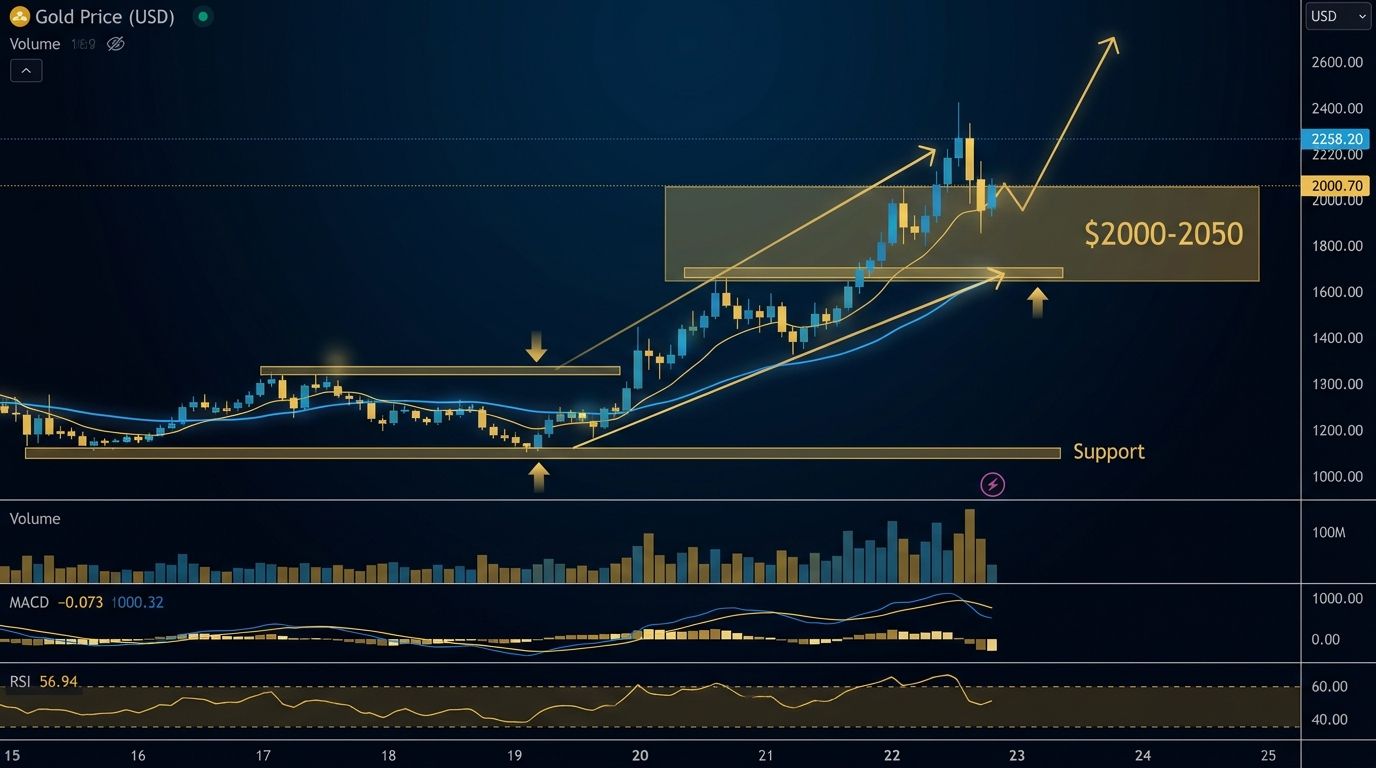
Gold Market Alert: What Smart Traders Need to Know Right Now

📊 Gold Price Movement & What It Means for Your Portfolio


Gold is trading strong right now, and here's why this matters to you as a trader:


The Setup:

  • Gold has broken key resistance levels

  • Geopolitical tensions remain (safe-haven asset demand)

  • US dollar weakness = gold strength (inverse relationship)

  • Central bank buying continues globally


3 Key Takeaways:


1️⃣ Macro Context — When uncertainty rises, capital flows to gold. This isn't random; it's predictable market behavior.


2️⃣ Technical Signals — We're seeing breakout patterns. If you're analyzing gold, watch the $2000-2050 level. That's where smart money decides next.


3️⃣ Risk Management — Gold is a hedge. In your portfolio, it's not about getting rich quick. It's about not losing everything.


Your Action:

  • Are you holding any gold exposure?

  • What's your thesis — hedge or profit play?

  • Share in the comments. Let's discuss strategy.


Remember: News moves fast. Technical analysis keeps you ahead. Emotion loses money.


Stay sharp. 🎯

file_94W6V4VuBPHJr
Profile picture
HellsMachinesProfile picture@hellsmachines·Aug 11
Pinned post

Master Trading Psychology & Market Timing with Bee

Welcome to Bee 🐝


I'm HellsMachines, and I've spent years helping traders and crypto enthusiasts understand the psychology behind winning trades.


What You'll Get


📊 Trading Psychology Course — Master the mindset that separates winners from losers. Learn discipline, emotional control, and decision-making frameworks.


💰 Crypto & Stock Details — In-depth analysis of market movements, entry/exit strategies, and real-world examples.


🎯 Private Consultancy — 1-on-1 sessions if you want personalized guidance on your trading journey.


💬 Community — Connect with other traders, share strategies, and grow together.


Launch Offer 🎉


Use code LAUNCH20 for 20% off your first month. Limited time!


Start here:


---


Building empires, one trade at a time.

Profile picture
HellsMachinesProfile picture@hellsmachines·May 5

Technical Analysis 101 — Read the Charts, Not the Hype

Technical analysis is one of the most powerful tools in a trader's arsenal. Instead of relying on news or gut feelings, you let price action and data tell the story. Here's a quick breakdown of the essentials:


📊 What Is Technical Analysis?

Technical analysis is the study of historical price movements and volume to forecast future market direction. It works on one core principle: price discounts everything.


🔑 Key Concepts to Master


1. Support & Resistance

These are price levels where buying or selling pressure historically steps in. Think of support as the floor and resistance as the ceiling. When one breaks, it often flips roles.


2. Trend Lines & Channels

Drawing trend lines connecting higher lows (uptrend) or lower highs (downtrend) helps you identify the market's direction. Never trade against the trend unless you have a strong reason.


3. Candlestick Patterns

Learn to read candles — dojis, engulfing patterns, hammers, and shooting stars. These give early signals of reversals or continuations.


4. Moving Averages (MA)

The 50-day and 200-day MAs are widely watched. A "golden cross" (50 crossing above 200) is bullish; a "death cross" is bearish.


5. Volume

Price moves on high volume carry more weight. A breakout without volume is suspect — always confirm with volume.


⚠️ Common Mistakes

  • Over-relying on a single indicator

  • Ignoring the higher timeframe context

  • Entering trades without a clear stop-loss

  • Letting emotions override the chart


💡 Final Thought

Technical analysis isn't about predicting the future — it's about stacking probabilities in your favor. Combine it with solid risk management and discipline, and you have a real edge.


Drop your questions below 👇

Profile picture
HellsMachinesProfile picture@hellsmachines·May 4

3 things I look for before putting serious money into any asset

Most people buy based on hype. Here's what actually matters.


1. Fundamentals over narratives

If you can't explain what drives the asset's value in two sentences, you don't understand it well enough to invest. Whether it's a stock's revenue growth rate or a crypto project's on-chain metrics — numbers first, story second.


2. Technical confirmation

I never enter a position without looking at the chart. Support/resistance levels, volume profile, and trend structure tell you when smart money is accumulating vs distributing. Fundamentals tell you what to buy. Technicals tell you when.


3. Risk management before entry

Before I decide how much to buy, I decide how much I'm willing to lose. Position sizing relative to your portfolio, clear stop-loss levels, and realistic profit targets. The biggest mistake high-net-worth investors make is thinking their net worth protects them from bad entries.


This is the framework behind every analysis I publish inside Bee — 20 deep-dive crypto reports + 30 stock breakdowns, all with fundamental + technical layers.


If you want to see the process in action, the Bee Membership gives you community access, weekly briefings, and live market discussions.