




The Night Shift Sleep System
The Night Shift Sleep System
You get home at 7:40 am, pull the blinds, and lie there until ten. Four hours later you are up again. On days off you stay awake 24 hours to flip back. The next block feels like your first night ever.
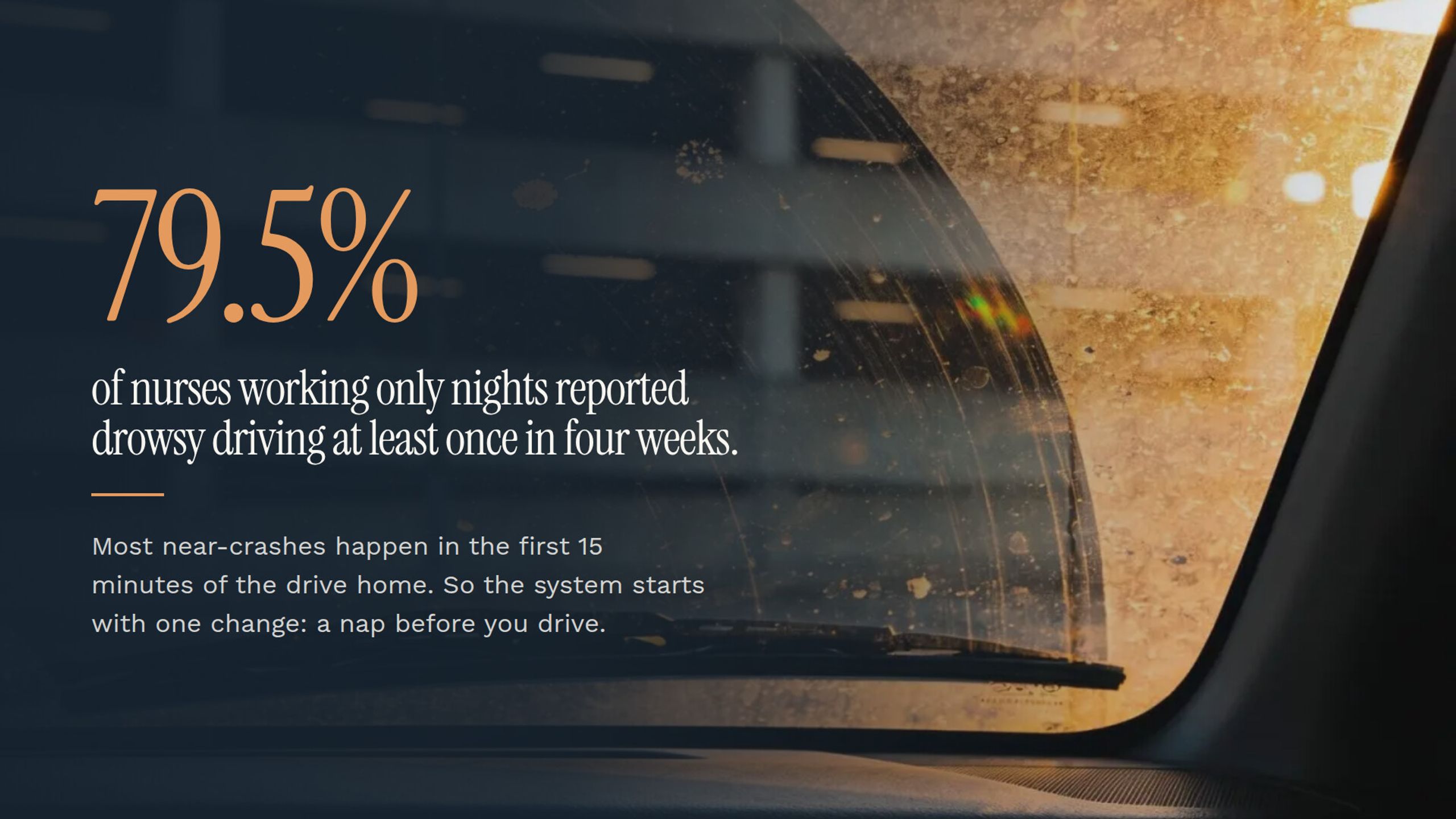
One thing from this page, free: the riskiest part of your day is the drive home, in the first 15 minutes. On a closed track, 37.5 percent of night shift workers had a near-crash after a shift. After normal sleep, the same drivers had none. A 20-minute nap before you leave the lot is the countermeasure with evidence behind it. Do that tonight, whether you buy or not.
Your clock shifts about one hour across three or four nights. In one study of ICU staff, nobody reached partial adaptation. Going fully nocturnal is no fix: it parks your sleepiest hour at 2 pm and ruins every day off.
This four-week plan uses a third option, tested by Rush University researchers: park your sleepiest hour at 10 am. It falls early in your day sleep and late in your sleep on days off. In their study, people slept nearly all their scheduled sleep, and by night six their 3 am reaction times were near daytime baseline.
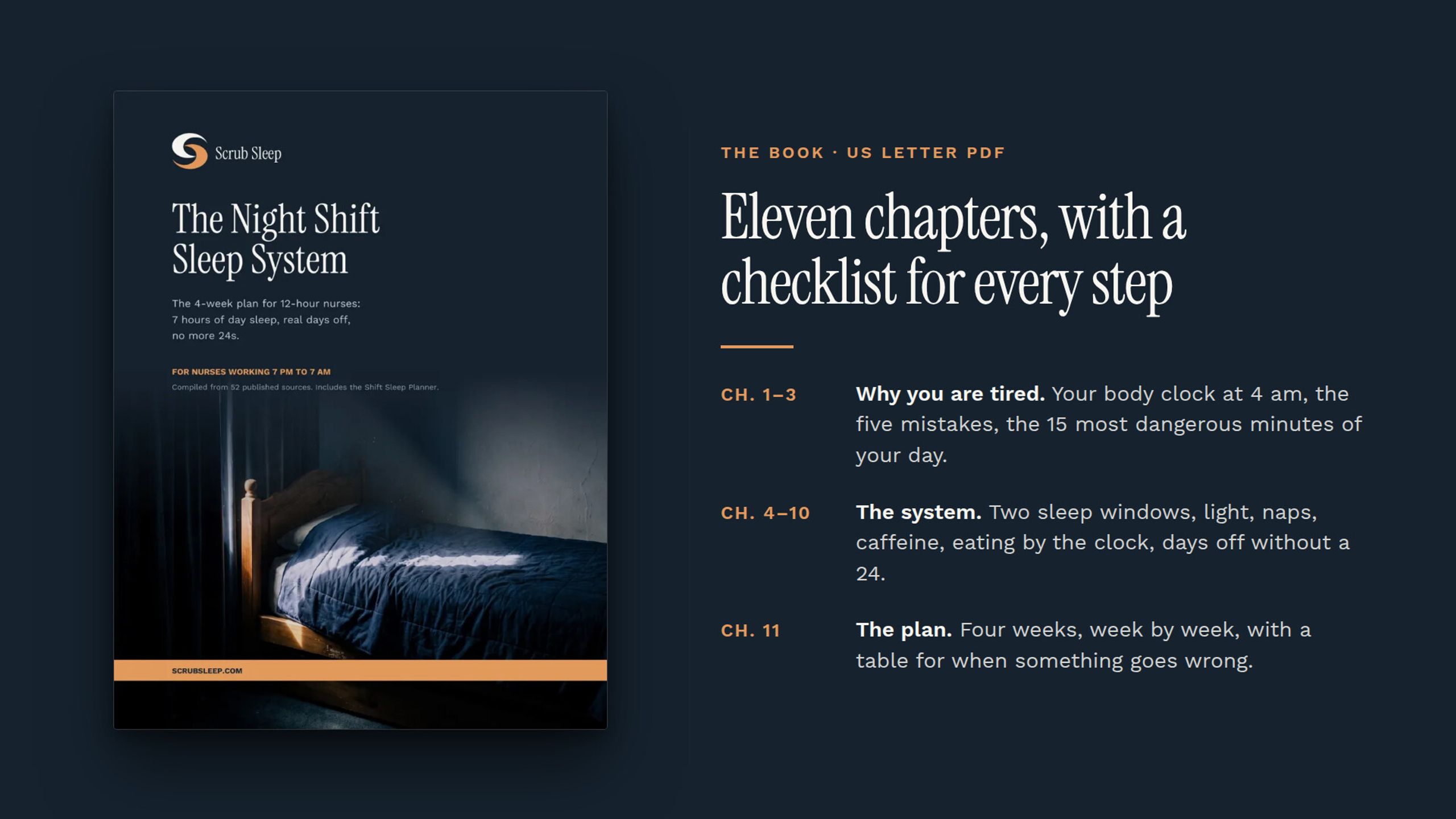
Inside: two sleep windows, five timed light pulses, the sunglasses rule, two naps with exact times, a caffeine cutoff you will not like, a days-off protocol that replaces the 24-hour flip, five printable logs, every claim numbered to 52 sources. Plus the Shift Sleep Planner: enter your rotation, get 28 days on your dates.
Not for rotating rosters. A system, not medical advice.