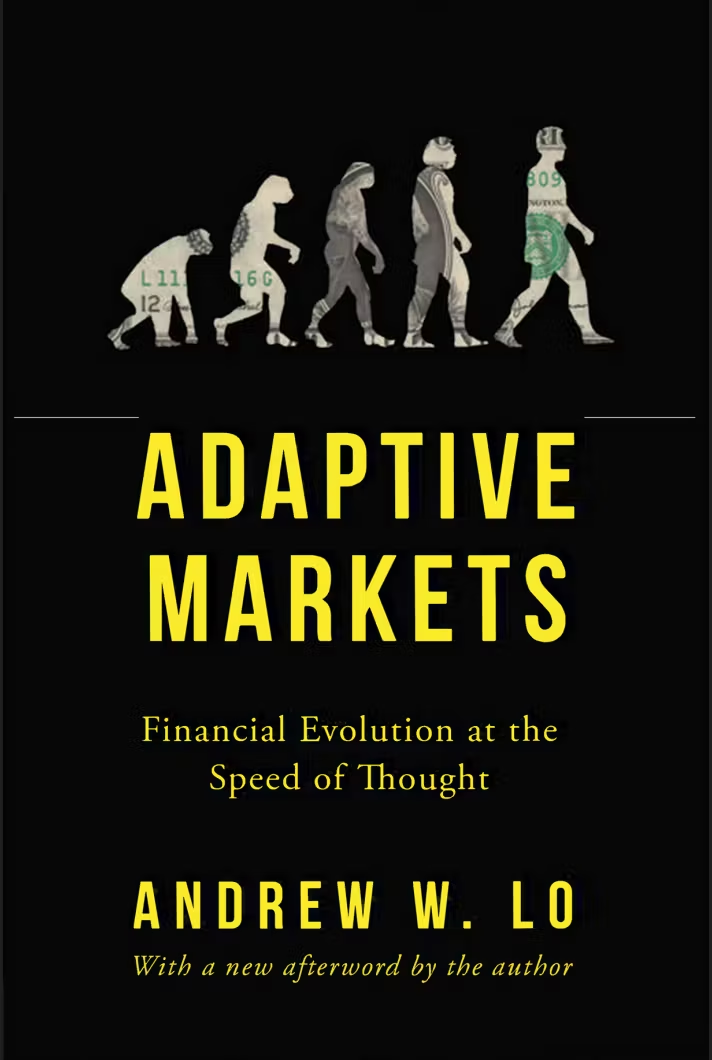
Adaptive Markets
Financial Evolution at the Speed of Thought Andrew W. Lo
The Adaptive Markets Hypothesis (AMH) is a financial theory that combines traditional finance with behavioral economics. Proposed by Andrew Lo, it suggests that financial markets are not always perfectly efficient. Instead, markets evolve over time as investors adapt their behavior to changing economic conditions, competition, and new information.
According to the Adaptive Markets Hypothesis:
Investors learn from experience and adjust their strategies over time.
Market efficiency changes depending on the environment and investor behavior.
Emotions, psychology, and competition influence investment decisions.
Profitable opportunities may exist temporarily but disappear as more investors discover and exploit them.
Financial markets behave similarly to biological ecosystems, where participants continuously adapt to survive.
The Adaptive Markets Hypothesis explains that financial markets are constantly evolving because investors continuously learn and adapt. It bridges the gap between the traditional Efficient Market Hypothesis and behavioral finance, providing a more realistic explanation of how markets function in the real world.