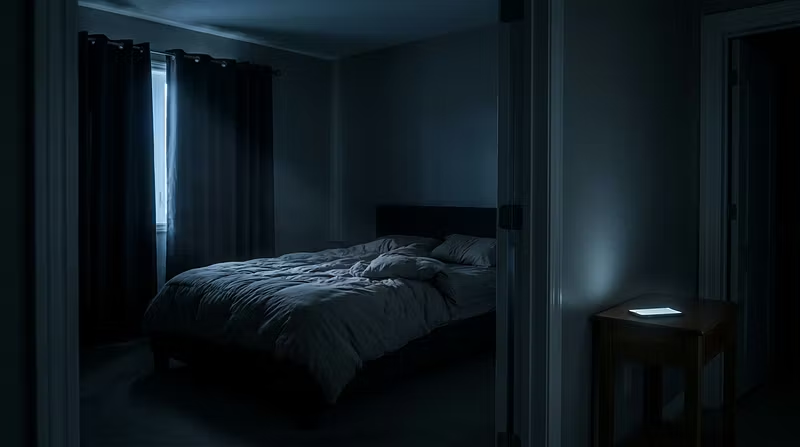


Why Checking the Clock at 2am Is Sabotaging Your Sleep (And What To Do Instead)
If you wake up around 2am and instantly reach for your phone to check the time, you've probably noticed something: knowing it's 2:14am never helps you fall back asleep. It just starts a countdown of dread ("only 4 hours left...") that makes your brain more alert, not less.
Here's the actual mechanism working against you:
1. Clock-checking triggers a stress response.
The moment you see the time, your brain does math about how much sleep you'll "lose." That math triggers cortisol. Cortisol is an alertness hormone. You've just chemically woken yourself up further.
2. Your phone screen makes it worse.
It's not just the blue light — it's the behavior. Checking notifications, scrolling "for just a minute," or even opening a sleep app trains your brain that waking up at 2am is a doorway to stimulation. Do this enough nights in a row and your brain starts anticipating it.
3. Trying hard to fall back asleep backfires.
This is called "performance pressure." The more you will yourself to sleep, the more alert you become, because sleep is not something you can force — it's something that happens when you stop trying.
A simple fix you can use tonight:
Don't check the clock. If you wake up, don't look. You don't need the exact time to go back to sleep — you need to not know it.
Give yourself a 5-minute rule. If you're still awake after roughly 5 minutes (estimate it, don't time it), get up briefly rather than lying there fighting it. Lying in bed awake trains your brain to associate the bed with wakefulness — the opposite of what you want.
Leave the phone in another room. Not on silent on the nightstand — physically out of reach. The temptation to check "just the time" is the #1 thing that turns a 5-minute wake-up into a 45-minute scroll session.
Have a boring, quiet default activity ready if you do get up (not your phone) — something low-stimulation so you're not accidentally training your brain to enjoy being awake at 2am.
None of this requires melatonin, a new mattress, or giving up caffeine. It's about removing the two things that turn a normal, biologically normal middle-of-the-night wake-up into a 45-minute ordeal: the clock and the phone.
If you want the full system — including the exact stimulus control method, the "traffic light" decision rule for what to do in the first 5 minutes awake, and the wind-down sequence that makes falling back asleep automatic — I put it all together in Light Sleepers: Falling Back Asleep Without Doom Scrolling. It's a quick read, one-time purchase, instant access. But even if you never read it, ditch the phone from the nightstand tonight. That one change alone fixes most of this.