
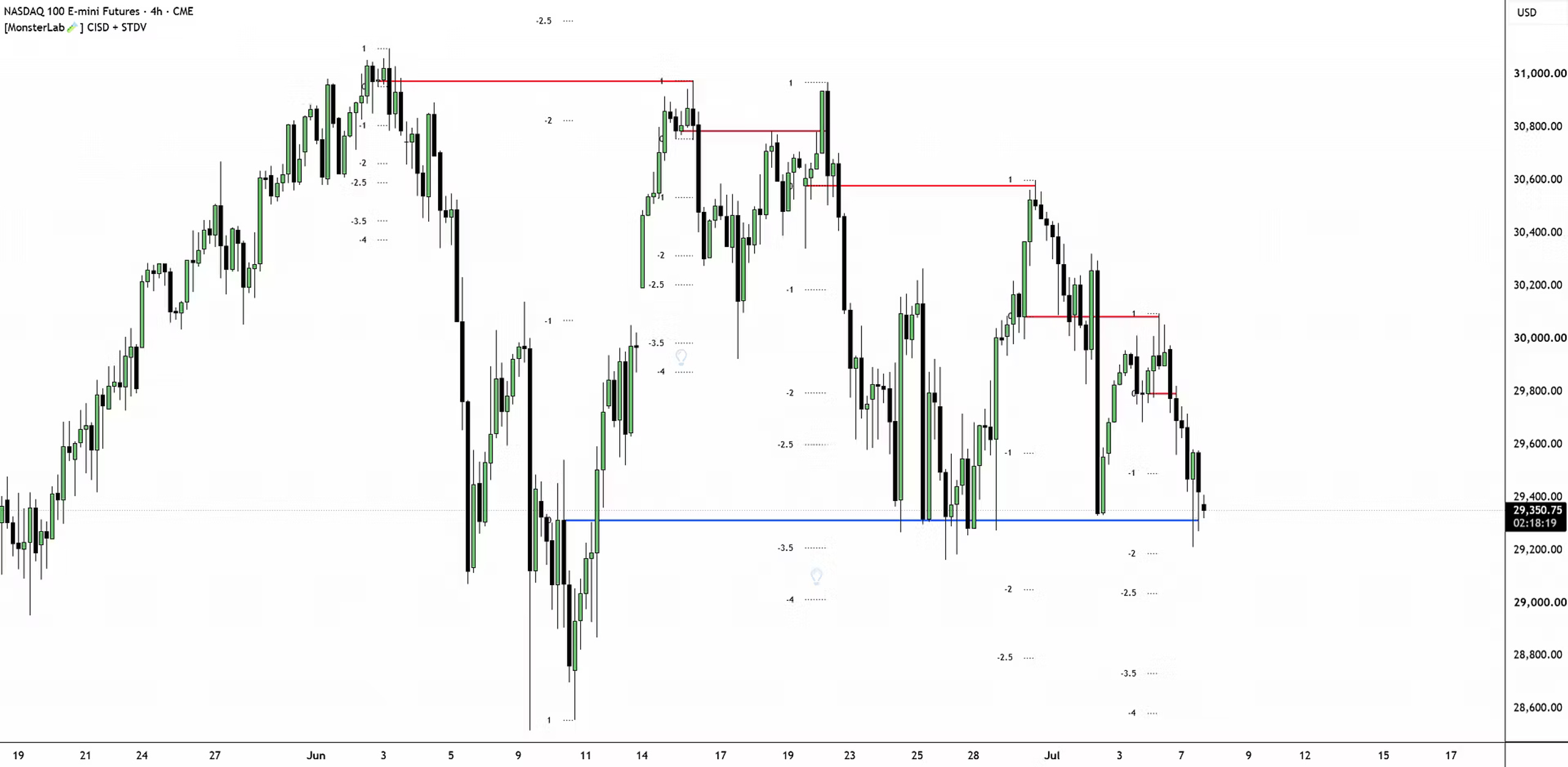
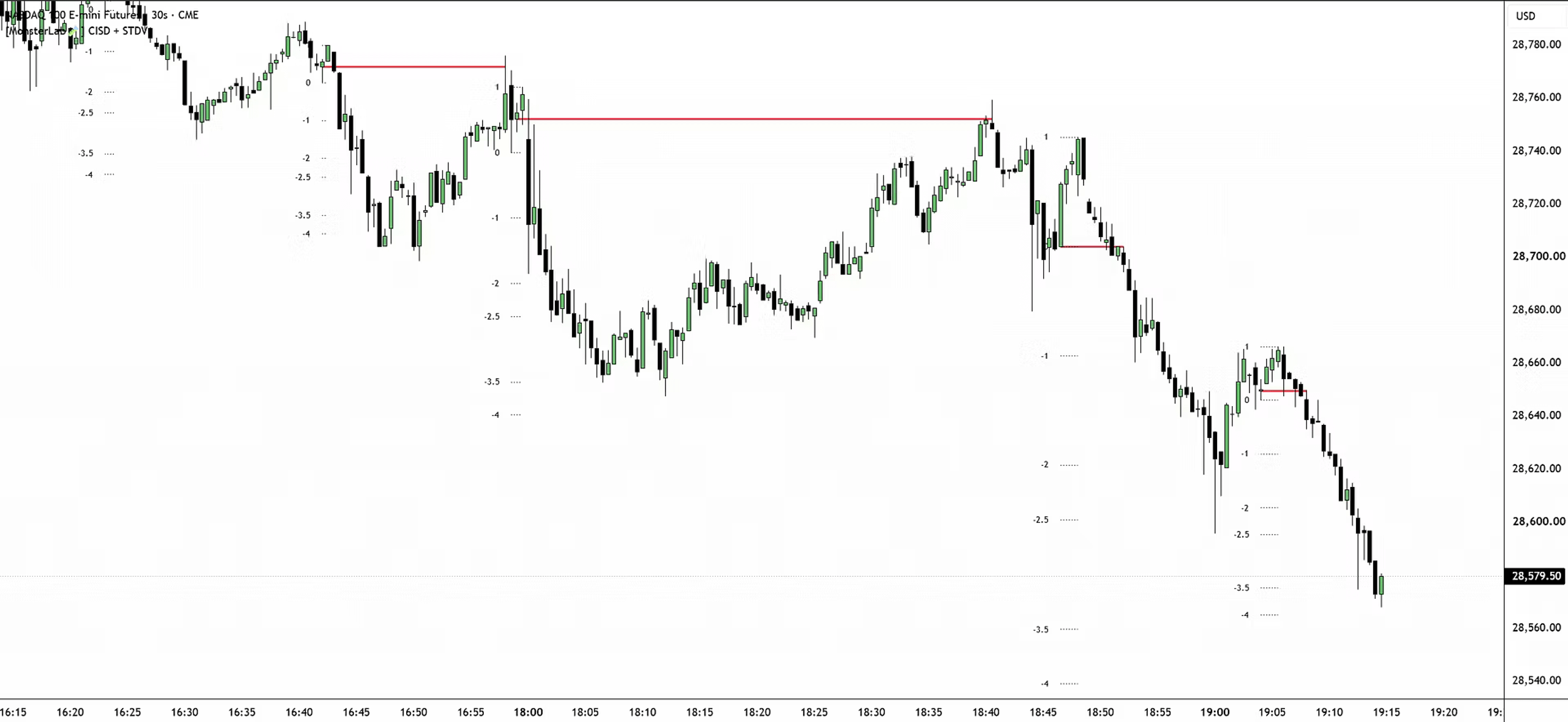
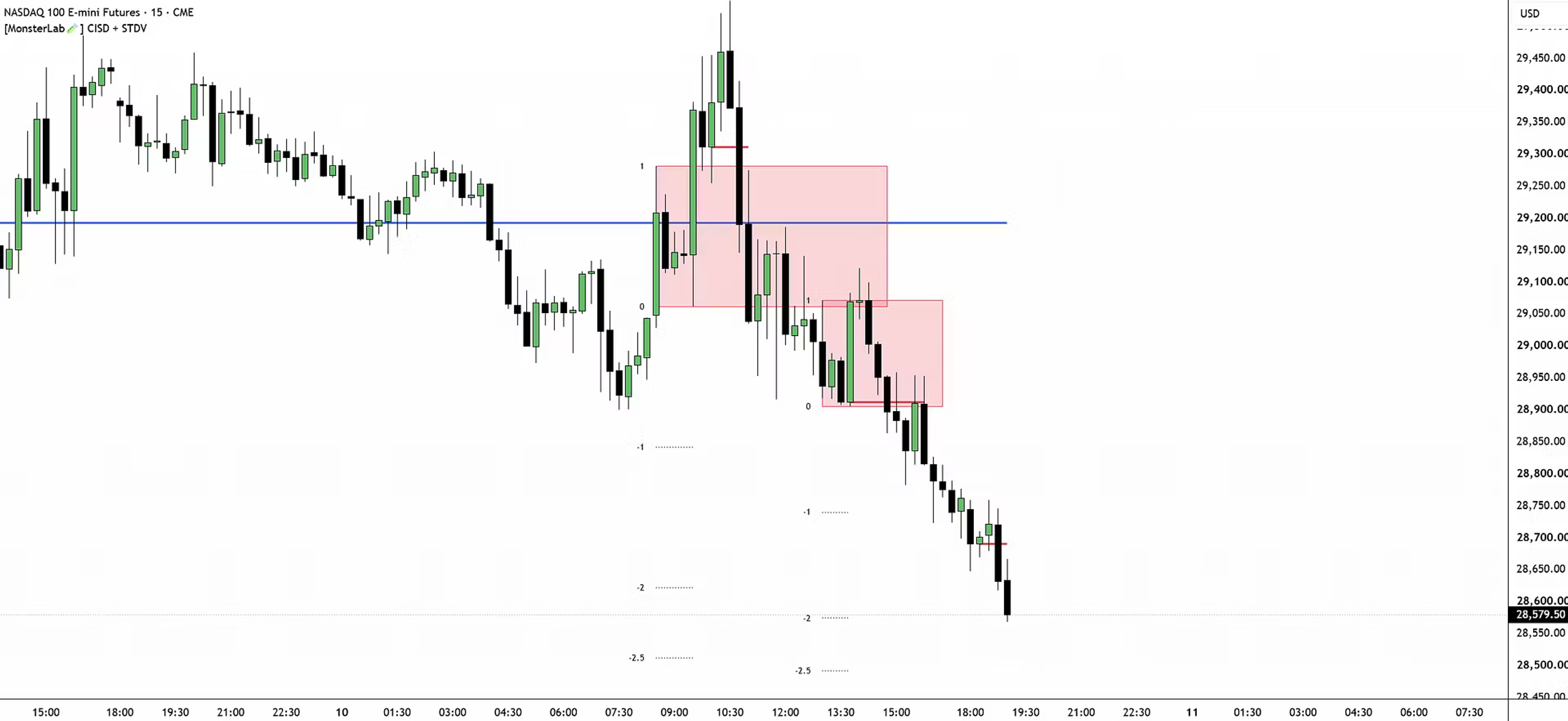
[MonsterLab] CISD + Standard Deviations
Delivery changed hands. Now measure how far it runs.
Every reversal leaves the same footprint.
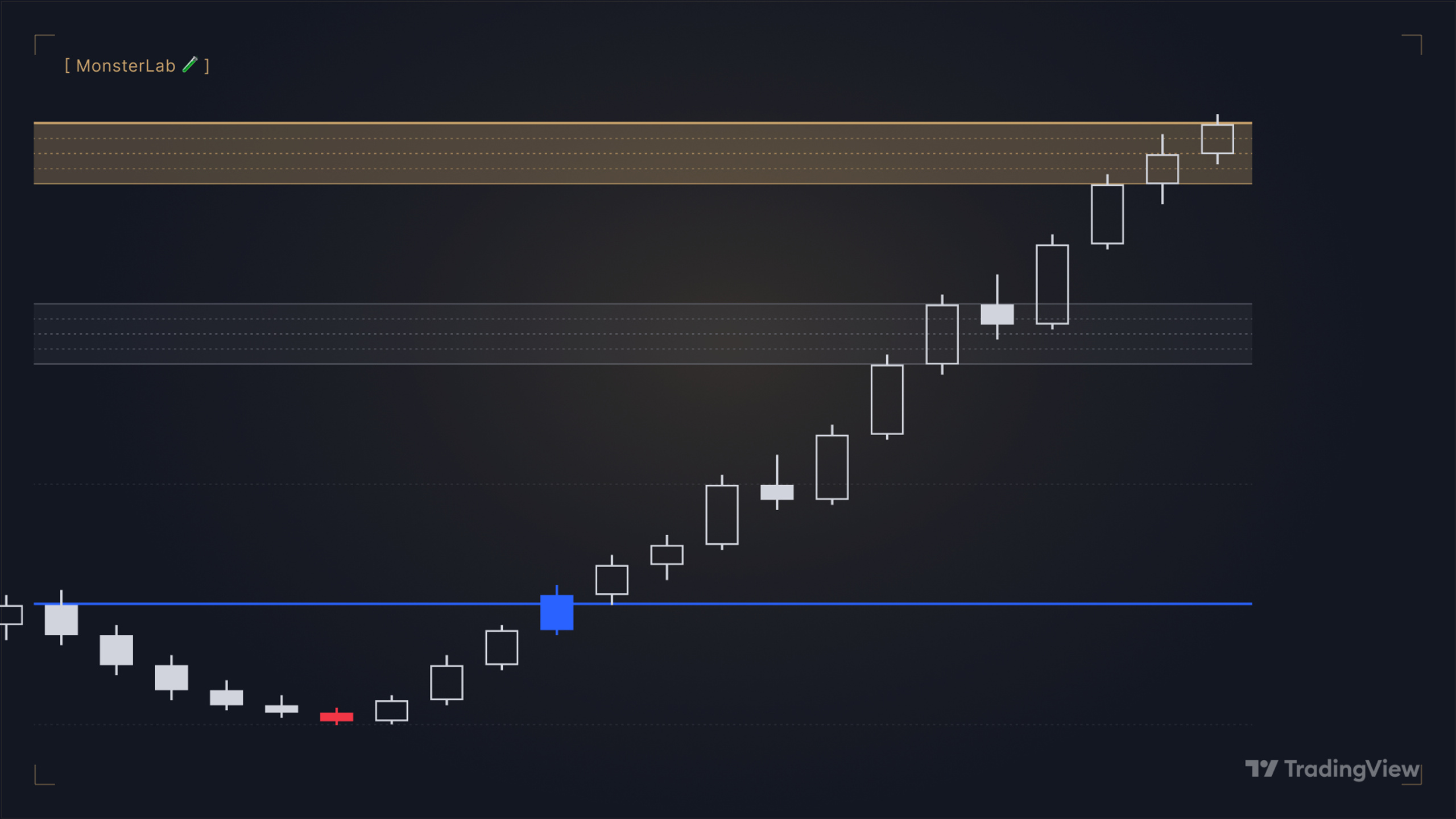
Price closes back through the candles that were delivering, and delivery changes hands.
That is the CISD. Everybody can draw it.
The second half is where the work is.
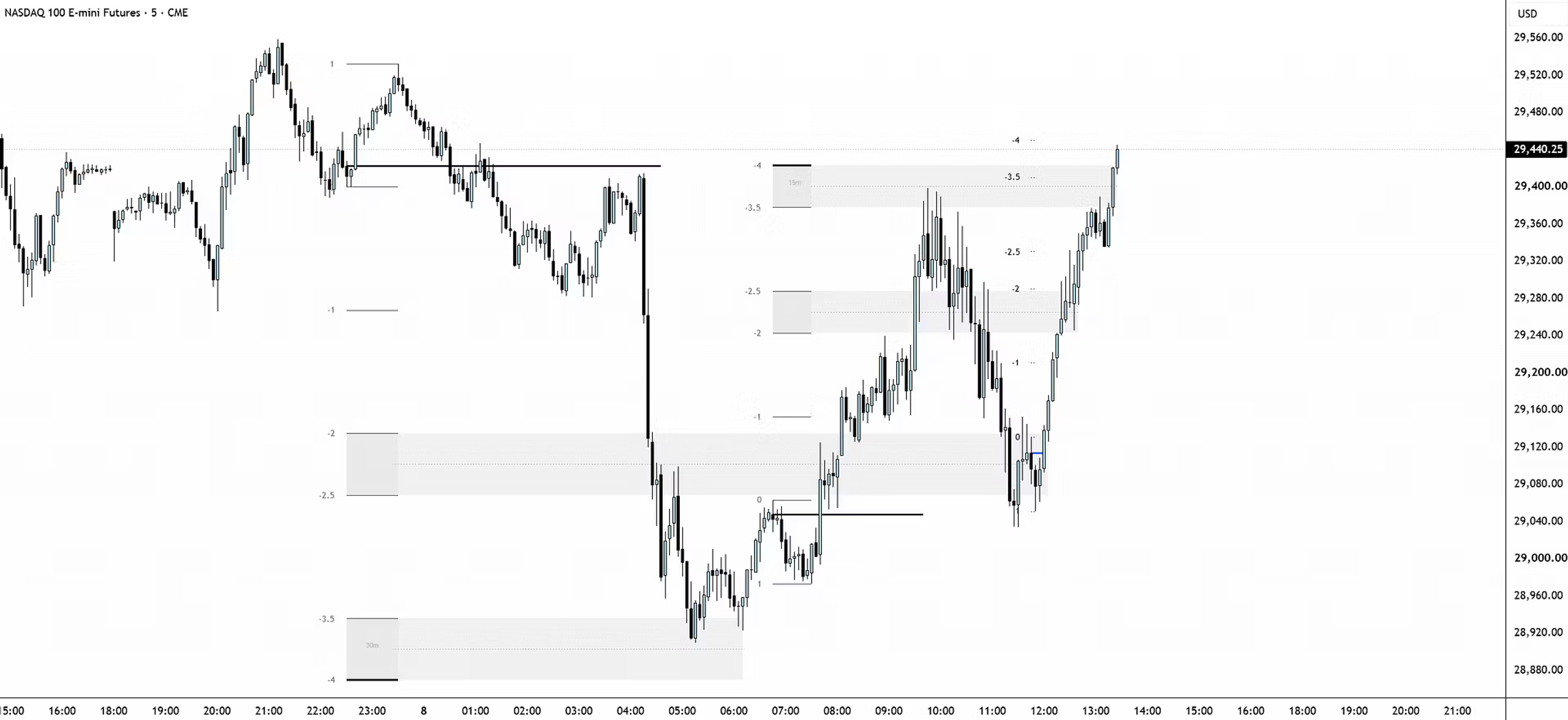
Once delivery flips, how far does it run before it runs out of road.
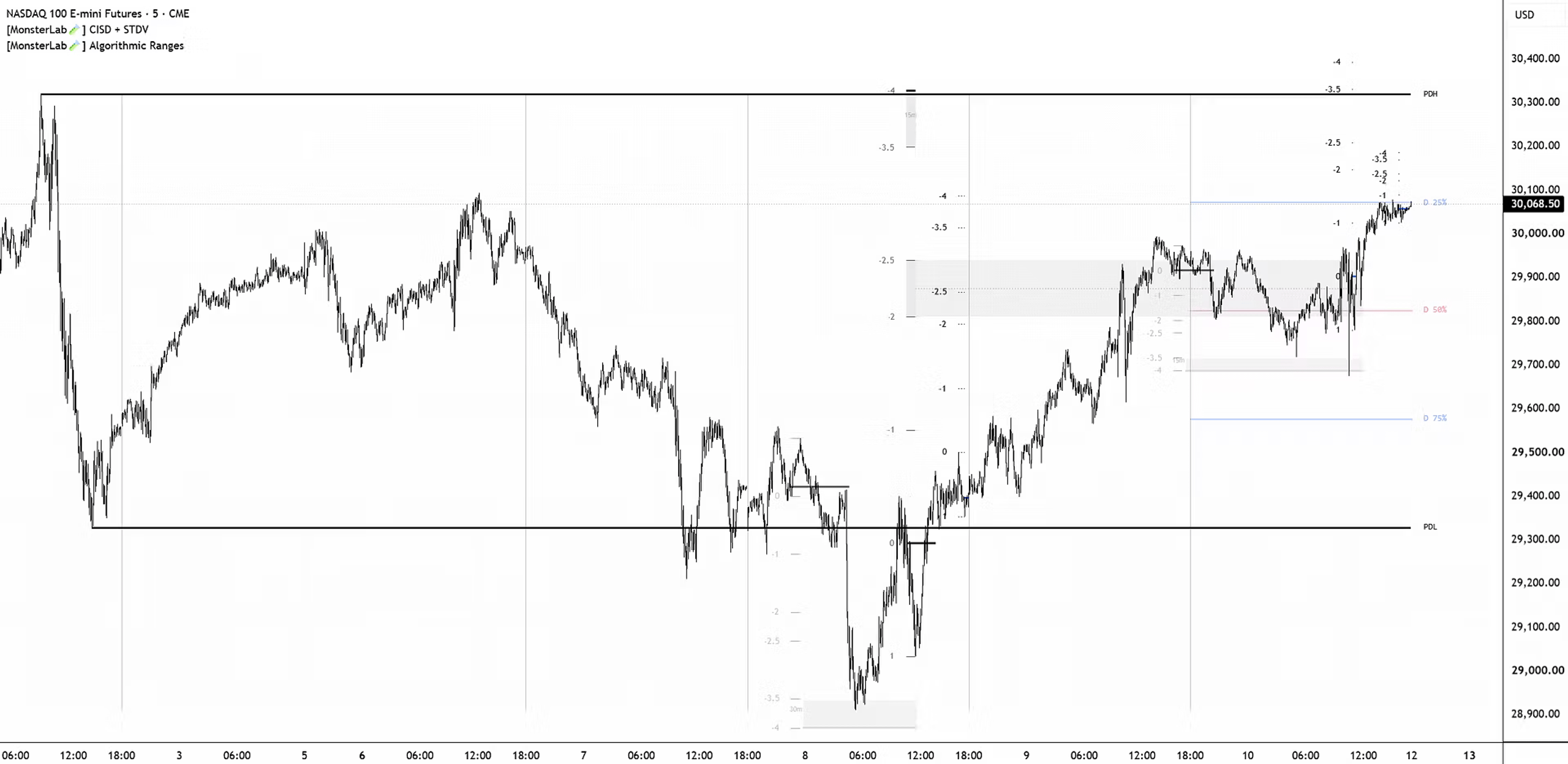
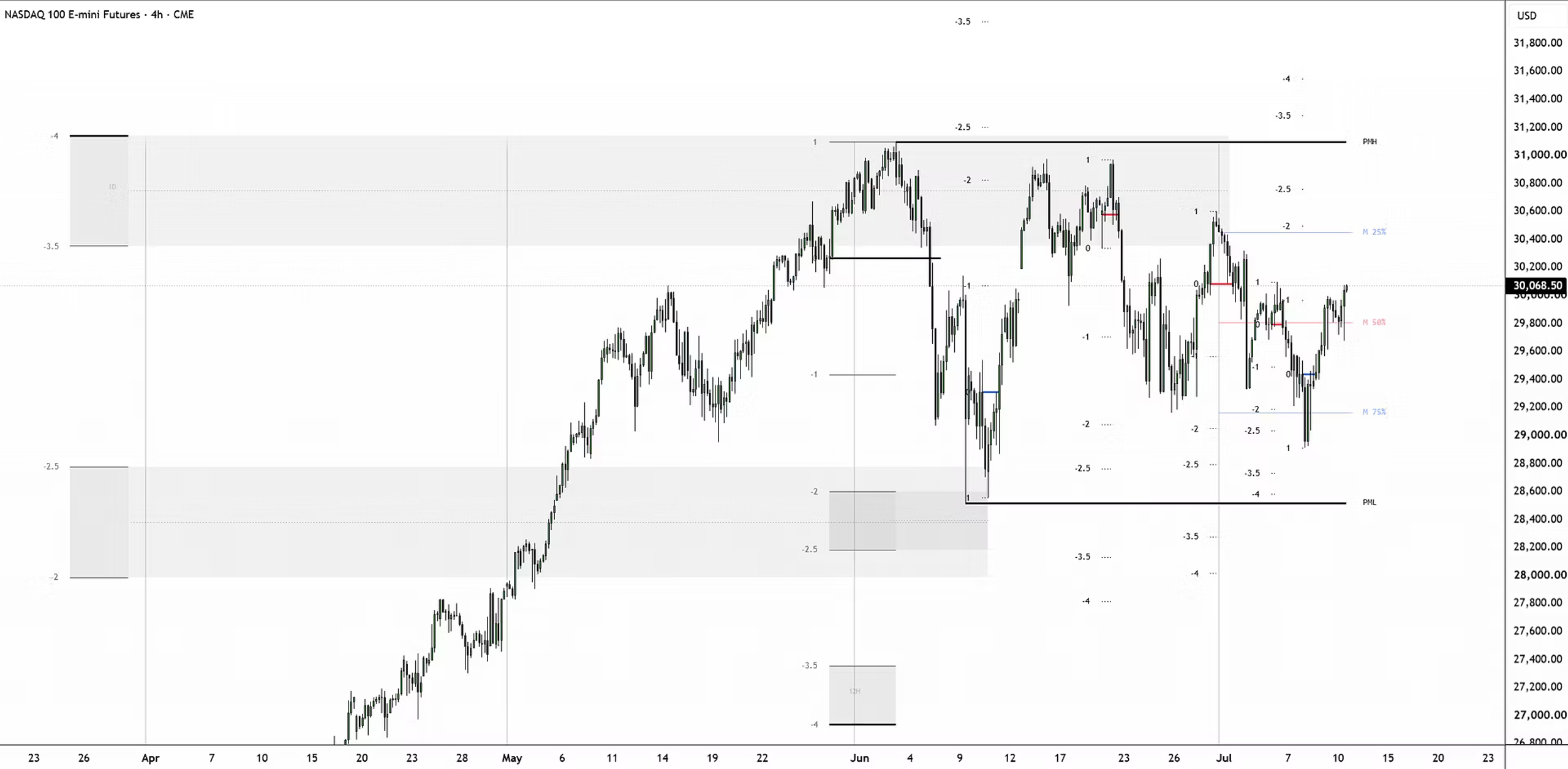
Standard deviations answer that, but only if you measure from the right place.
The same move measured from the open, from the swing pair, or from the breaker gives you three different maps.
So the anchor is the whole job. This picks it, keeps it current, and re measures the projection while the move is still alive.
And it separates two things most tools confuse: a structure that was wrong, and a structure that finished.
The CISD tells you direction changed. The projection tells you when to stop expecting more.
- 2 months agoHighest respect for the Monster Lab. The information library of information on whop and recorded sessions is Gold. Definitely the best indicators for algorithmic trading theory / Frameworks and great communityWritten 1 month after purchase
- 4 months agoMonster Lab helped me so much with my trading as an ICT trader if you trade ICT and need help with Po3 or Standard Deviation Dexter is the guy to go to worth the money and I learned so much and improved my trading a lot with the info in the whop.Written 23 days after purchase
- 4 months agoJust the only team needed to be successful in trading. put in the work and success will follow. complete framework for po3 and std dev.Written 9 months after purchase
- 4 months agoBest complete place to learn and get tools.Written 2 years after purchase