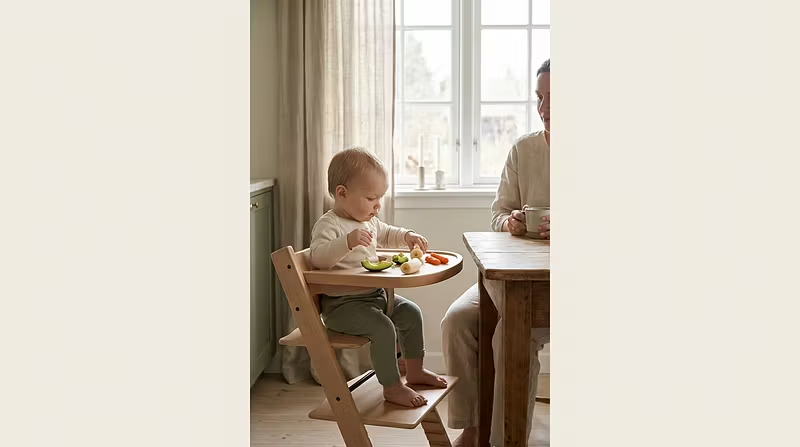


Why pressuring a 1-year-old to eat actually makes food refusal worse (and what to do instead)
Most parents instinctively try to encourage bites. "One more bite." "Just try it." "Look, it's delicious."
It makes sense. You're worried. You want them to eat. But here's the thing no one tells you upfront:
Pressure at the table increases food refusal, not compliance.
When a toddler feels pressure around food — even gentle encouragement — their nervous system registers the meal as a high-stakes interaction. And high-stakes interactions make exploration feel unsafe. So they refuse more. Not because they're being stubborn. Because that's what brains do under pressure.
---
The three-part exposure sequence that actually works
Instead of pushing for bites, try this:
Look → Touch → Taste
That's the sequence. And the key insight is that "look" is a real win. If your 1-year-old looked at a new food on their plate and didn't melt down, that's progress. Not failure.
Here's how to apply it at a real meal:
Put the new food on the plate without comment. Don't point to it. Don't name it.
Eat your own food calmly. Talk about other things.
If they touch it: say nothing. If they move it away: say nothing. If they put it in their mouth and spit it out: say "that's okay."
You're building a track record of safety around that food. It takes an average of 8–15 low-pressure exposures before a toddler accepts a new food. Pressure resets that counter.
---
The neutral script for when refusal starts
When your child pushes a food away or says no, use this exact phrase:
"That's okay. It's on your plate."
Nothing else. No negotiating. No replacing with a safer option. No visible disappointment. Just neutrality.
This sounds passive. It's not. You're teaching your child that refusal is allowed — and that new foods stay at the table anyway. That combination creates safety without short-order cooking.
---
The one-safe-food structure
You don't have to eliminate safe foods. You just stop making entire separate meals.
The rule: one safe food always appears at the family meal. Everything else at the table is shared. The child eats the safe food if they want it. They see the other foods without pressure.
Over time, that exposure to the other foods — just seeing them, smelling them, touching them accidentally — builds familiarity. Familiarity reduces fear. Reduced fear opens the door to tasting.
---
If you're a parent of a 1-year-old and mealtime has started to feel like a battle, this is the framework I built the ebook around. Seven chapters. One clear sequence. No guilt, no pressure tactics.
The goal isn't a child who eats everything. It's a child who keeps encountering new foods in a calm environment until eating them feels like no big deal.
That's achievable. And it starts with the next meal.