GauravFrr

I build production-grade AI agent systems and developer tools. Currently selling starter kits and boilerplates that help other developers...
Bhiwāni, IN
•Created byProfile pictureMikey
Profile picture
MikeyProfile picture@itzmixel·6d

Building AI agent products? Most of the hard work isn't the "agent" part — it's the orchestration, memory, human-approval, and observability layer everyone ends up rebuilding from scratch. Took me 2-3 months to build that layer properly the first time.

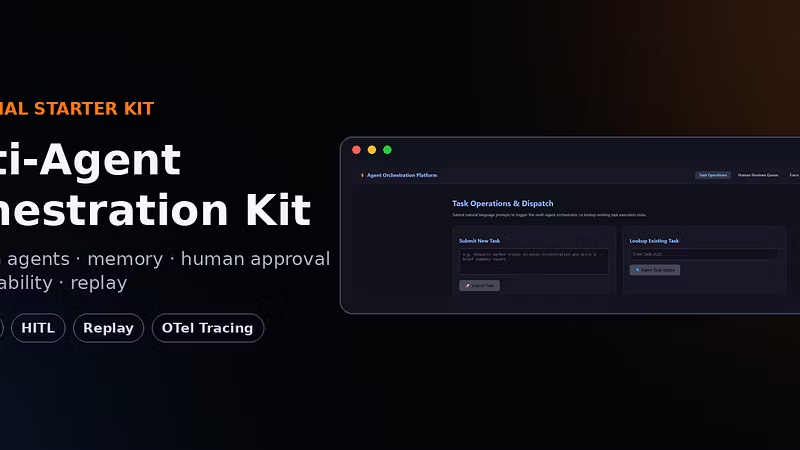
Packaged it into the Multi-Agent Orchestration Kit:

✓ LangGraph multi-agent backend (supervisor decomposes tasks, delegates to specialists) ✓ Persistent memory — Redis (short-term) + ChromaDB (long-term semantic recall) ✓ Human-in-the-loop approval queue for sensitive actions ✓ Full OpenTelemetry tracing — cost tracking, latency, replay ✓ One-command Docker setup, running in ~2 minutes

Built and stress-tested on a real system — including catching a runaway loop that generated 5,000+ duplicate database rows before it got fixed. That fix (and a couple other real production bugs) is already baked into the codebase.

$99, one-time, commercial license for unlimited personal/client projects.

30% affiliate commission if you want to share it with your network — details on the product page.

Profile picture
MikeyProfile picture@itzmixel·Sep 8

Your agent product is dying in the orchestration layer

Most AI agent products don't fail at the model.


They fail when the third tool call hangs, memory drifts, a human needed to approve a refund, and nobody can replay the run that just cost $40.


If you're building a support bot, research assistant, or workflow agent, you need five pieces before the "agent" is a product:


  1. Task decomposition — a graph, not a while-loop of tool calls.

  2. Persistent memory — across sessions, not a stuffed context window.

  3. Human-in-the-loop — a real approval gate, not a Slack ping you ignore.

  4. Observability + cost tracing — which node spent the money, on which run.

  5. Replay — same inputs, same graph, so you can debug without guessing.


LangGraph gives you the primitives. The months of work is wiring those five into a backend + dashboard you can actually ship to a client.


That's the gap I kept hitting, so I packaged the production version as a source kit. Not a course. The codebase.


If you're in r/LangChain or shipping agents for agencies: steal the architecture even if you don't buy. The five pieces above are the product. The model is the easy part.