

Why young workers overdraft even when they know the balance is low
Here's something most budgeting advice gets wrong: overdrafts don't happen because people don't know how to save.
They happen because of timing.
You know the balance. You check it constantly. But you still overdraft — because a bill hits two days before payday, or you swiped on Monday not realizing rent auto-pulls Thursday, or you spent normally the first week and ran dry the second.
That's not a discipline problem. That's a system problem.
The way most checking accounts work, every dollar sits in one pile, and every expense fights over the same pile. There's no separation. No protection. No signal before you overspend — just the overdraft fee afterward.
The fix isn't checking your balance more often.
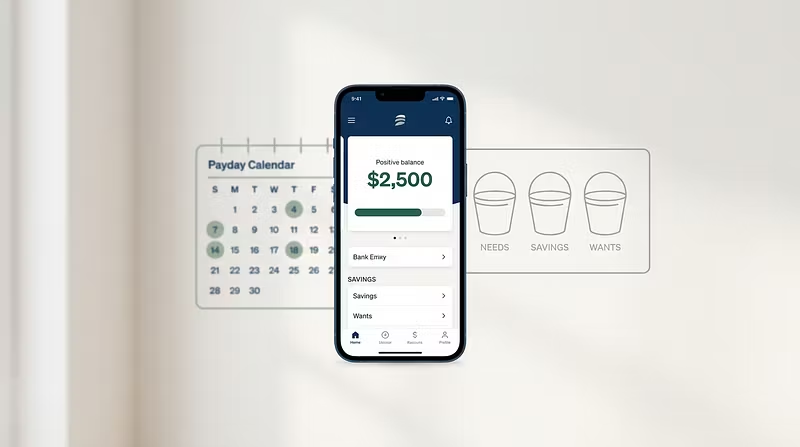
It's setting up three buckets before payday:
🧾 Bills bucket — every fixed expense, already assigned
💳 Spending bucket — what you actually have to spend freely
🛡️ Buffer bucket — the small cushion that keeps the account calm
You assign every dollar a job before payday. Bills go to their bucket automatically. Spending money goes to its bucket. The buffer stays untouched unless the account hits a certain threshold.
Once that system is running, you stop guessing. You stop checking every hour. You already know — because you already assigned it.
That's the core idea behind the Never Overdraft Again system. Seven chapters. One simple framework. Built for workers paid once or twice a month who are tired of paying $35 for a $4 mistake.
If this sounds like what you've been missing, the full eBook is at whop.com/never-overdraft-again.