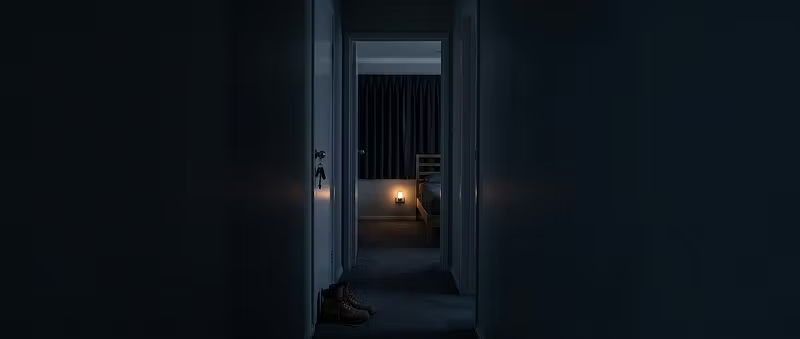


Why Night Shift Workers Lose Sleep Before The Bedroom Even Matters
Most night shift sleep advice starts in the wrong room.
"Get blackout curtains." "Try melatonin." "Keep the bedroom cool."
That's all bedroom advice. And by the time you get to the bedroom, the damage is already done.
Here's what actually destroys daytime sleep for nurses, security guards, plant operators, and drivers working nights:
The first two hours after shift end.
That window — from the moment you walk out of the building to the moment you close your eyes — is where sleep gets sabotaged. Not in the bedroom. Before it.
Bright light on the drive home resets your circadian clock right when you need it winding down. Your brain interprets morning sunlight as "time to wake up" even though you just worked 12 hours.
Eating a full meal at 7am triggers digestion, raises your core temperature, and keeps your gut active for hours. Your body can't sleep and digest at the same time.
The conversation at the front door — "Hey, before you go to bed, can we talk about..." — spikes cortisol and pulls you out of the downshift you need.
Scrolling your phone in bed feels harmless but adds 20-40 minutes of blue light exposure when your melatonin is trying to do its job.
By the time you pull the blackout curtains shut, you've already lost. You lie there for 45 minutes, maybe an hour, wondering why the $200 mattress topper isn't working.
The fix isn't the bedroom. The fix is everything that happens before the bedroom.
Block the light. Downshift the body. Lock in the routine.
That's the framework. Three phases. Seven chapters. One week to see measurable change.
If you work nights and you're tired of being tired, this is the system that protects the window everyone else ignores.