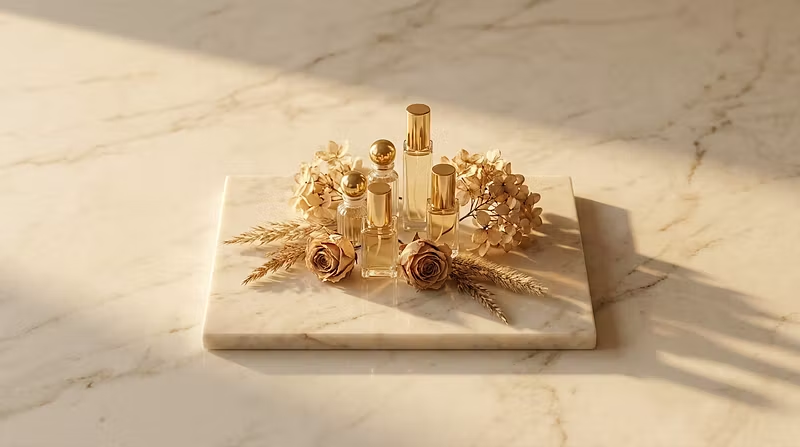


The #1 myth about perfume quality (and the 30-minute test that debunks it)
Most people think "good perfume" = "expensive perfume." That's the single biggest myth in fragrance, and it's costing you money and making you smell worse.
Here's the actual hierarchy that matters, in order:
Skin chemistry fit — a $30 fragrance that reacts well with your skin's pH and oils will smell better on you than a $300 one that clashes. This is non-negotiable and no amount of money fixes it.
Concentration level — EDT (Eau de Toilette) vs EDP (Eau de Parfum) vs Parfum isn't about quality, it's about oil concentration and longevity. A $40 EDT reformulated well will often outlast a poorly-diluted "luxury" EDP.
Note balance — cheap perfumes usually smell bad because of a lazy top note (the first 15 minutes) with nothing underneath. Once that blows off, a well-composed budget scent with a decent base (musk, amber, woods) will hold up just fine on skin.
Actual raw materials — this is where price can matter, but it's the last factor, not the first. Niche houses using rare naturals cost more because the ingredients cost more — but that premium is invisible to 90% of noses in a room.
The test: Next time you're tempted to buy based on price or brand name alone, do this instead — spray it on skin (never just the tester strip), wait 30 minutes, then smell your wrist without expectation. Does it still feel like "you"? That's the only signal that matters.
If you're starting from zero and want a structured way to actually train your nose instead of guessing — that's exactly what we built Noseworthy for. Full beginner course, no fluff. Happy to answer any fragrance questions in the comments.