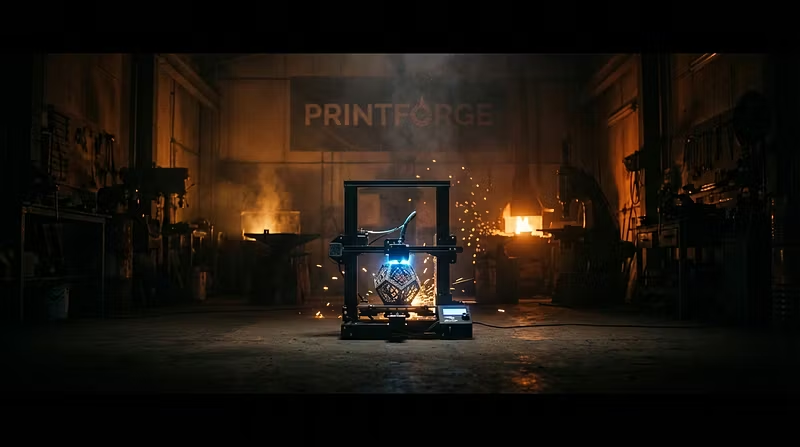


5 things I wish I knew before I started 3D printing for other people
I've been running a 3D print-on-demand service for a while now. Here's what I've learned the hard way so you don't have to:
1. Material matters more than resolution. Everyone obsesses over layer height, but choosing the right filament (PLA vs PETG vs ASB vs TPU) makes 10x more difference in the final product. A 0.2mm print in the right material beats a 0.08mm print in the wrong one every time.
2. Orientation is everything. The way you orient a part on the build plate determines strength, surface finish, and support waste. I've seen the same part go from fragile to indestructible just by rotating it 45 degrees.
3. Post-processing is where the magic happens. Sanding, priming, and painting can turn a $2 FDM print into something that looks injection-molded. Most people skip this step and wonder why their prints look "homemade."
4. Not every design is printable. Thin walls, impossible overhangs, non-manifold geometry — I've seen it all. If you're designing for 3D printing, learn the constraints of the process first. It'll save you time and money.
5. Speed vs quality is a real tradeoff. Fast prints = visible layer lines and potential defects. If it's a prototype, crank the speed. If it's a final product, slow down and dial in your settings.
If you've got a project in mind but don't own a printer (or don't want to deal with the headaches), that's literally what PrintForge is for. I handle the printing, you get the part.