

When a new request arrives, which task should move?
For freelancers and solo professionals using Todoist, start by separating the work date from the real hard cutoff. Two tasks dated “today” do not automatically carry the same consequence if they slip.
An illustrative decision:
• 90 minutes of usable focus time remain.
• The client proposal needs 45 minutes and must be sent by 4 pm.
• The portfolio update needs 45 minutes but has no external deadline.
• A new client revision needs 45 minutes and is also required by 4 pm.
All three would need 135 minutes. In this example, keep the proposal and revision today. Move the portfolio update to Friday at 10 am only after checking that the 45 minutes fit there. Confirm any changes that affect someone else.
If neither existing task can move, discuss the new request’s scope or timing before committing. A worksheet makes the conflict visible; resolving it still requires a decision.
Where the kit helps
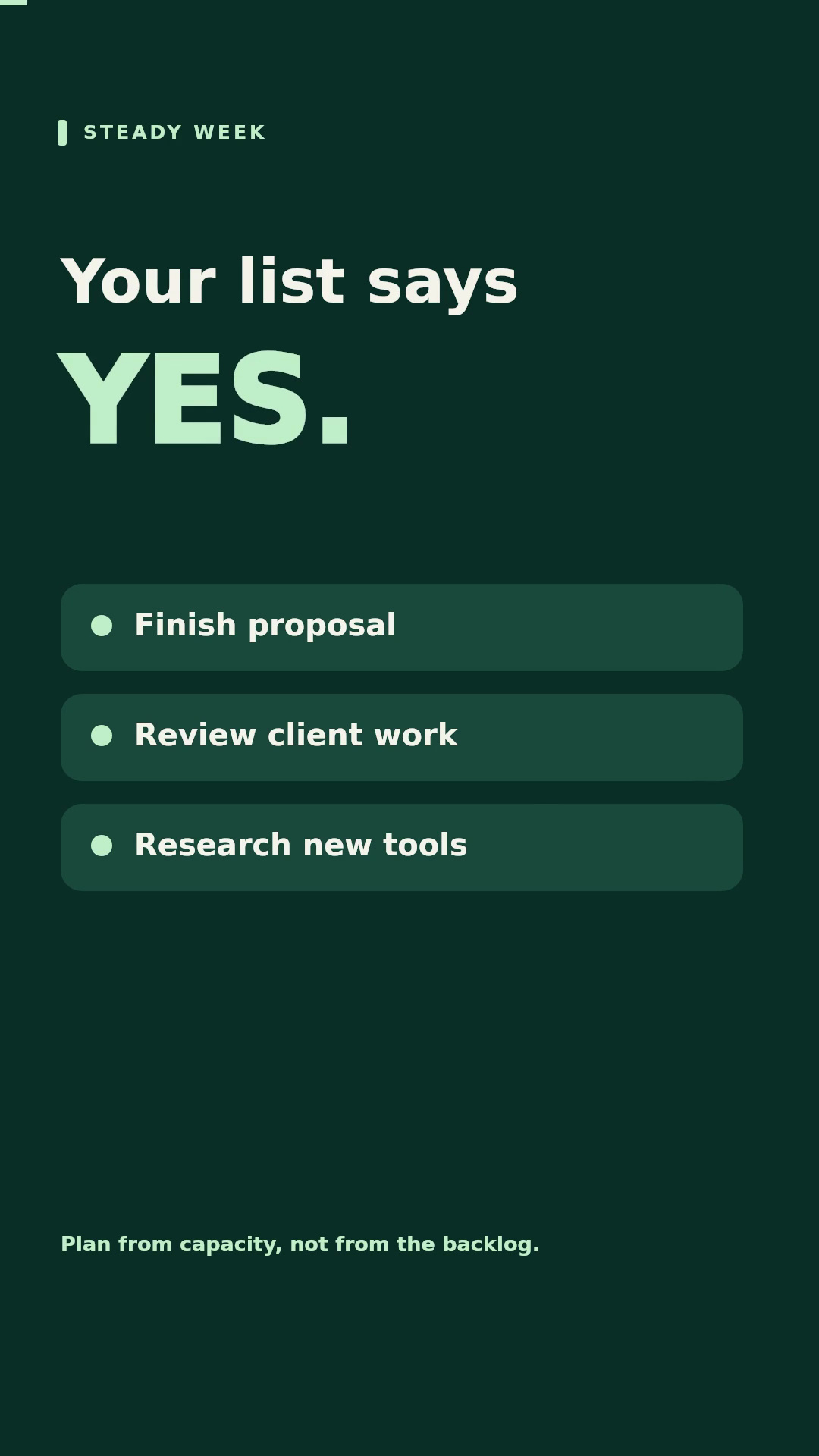
The Week Planner includes a “New request tradeoff” page for recording the request, its true cutoff, estimated effort, what changes and who needs to know. The attached graphic summarises the illustrative decision.
What do you receive?
The Realistic Todoist Planning Kit contains 5 PDF resources: Quick Setup Guide, Backlog Reality Check, Capacity Planner, Week Planner and Week Reset Guide, plus 1 importable Todoist CSV template. The tradeoff worksheet is part of the Week Planner. The kit is $29.99 as a one-time purchase.
Does it make these changes automatically?
You enter the estimates, choose what fits and update your tasks. Use Todoist’s Date for the planned work. Native Deadline requires Pro/Business; without it, keep the hard cutoff in the description or planner. Record exact cutoff times where needed. A Todoist subscription is separate.
See the actual materials and what is included: