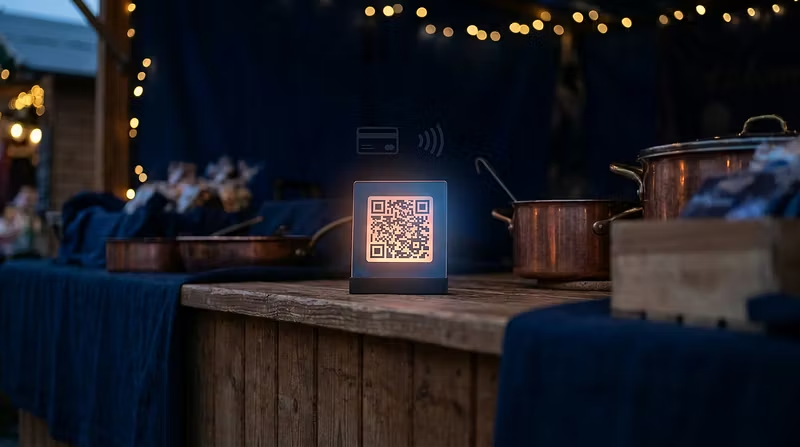


The QR code isn't the product. The route is.
Most vendors think a QR code is just a link to a payment page. It isn't — it's the start of a route, and every route has seven jobs it has to do before a scan turns into a reconciled sale: get noticed, get scanned, load fast, build trust in under 3 seconds, present the right offer, complete the payment, and confirm it back to both sides.
Miss any one of those jobs and you get the thing every market vendor has seen: a code taped to a table that nobody scans, or worse, one that scans into a broken or unbranded checkout page that kills trust instantly.
Two things that move the needle most, from testing this across food stalls, taxis and event tables:
Static vs. dynamic isn't a technical choice, it's an operations choice. A static code baked into a price sign is permanent — if your price or link ever changes, you're reprinting. A dynamic code (one that redirects) lets you swap the destination without touching the printed material. If you sell anything with prices that move (produce, event tickets, daily specials) you want dynamic from day one.
The 3-second trust test. Whatever loads after the scan has about 3 seconds to look legitimate before the customer bails. That means a fast-loading page, a real business name, and a clear price — not a bare payment link. This is a checkout design problem, not a QR problem.
I wrote the full breakdown — the seven jobs, code placement psychology, fraud/"quishing" prevention, and a 7-day sprint to get a working scan-to-sale system live — into a full guide. Details are in this community if you want to build this properly instead of guessing.