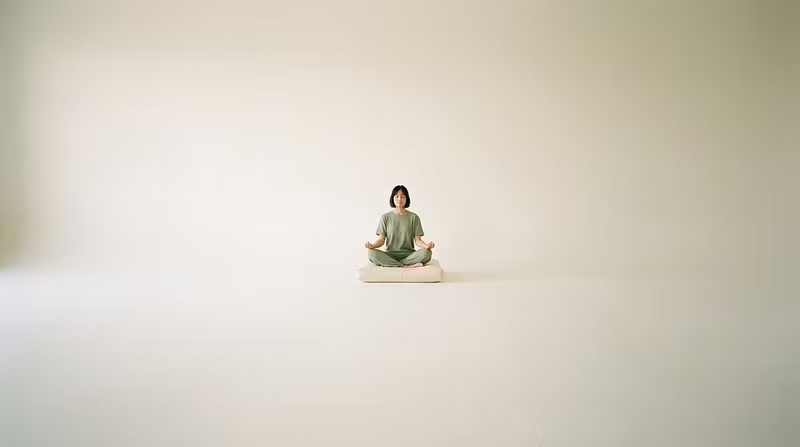


Why most self-care advice fails (and what actually works)
Most self-care content tells you to "meditate more" or "practice gratitude" without ever addressing why people bounce off these habits in the first place.
Here's the real problem: self-care routines fail because they're designed for someone who already has energy and motivation to spare. If you're exhausted, stressed, or just starting out, a 45-minute morning routine with 6 steps isn't going to survive contact with a Monday.
What actually works:
1. Start with one 10-minute anchor habit, not a whole routine. Pick the single thing that gives you the most relief (for most people it's sleep, movement, or 5 minutes of quiet) and protect that one thing for 2 weeks before adding anything else.
2. Build a "minimum viable" version of every habit. Your real morning routine isn't the 45-minute version you do on your best day — it's the 3-minute version you can still do on your worst day. Design for your worst day, not your best one.
3. Attach new habits to things you already do. Self-care sticks when it's stacked onto an existing routine (right after you brush your teeth, right when you sit down at your desk) instead of floating as a separate task you have to remember.
4. Track consistency, not intensity. Doing a tiny version of a habit for 30 days straight rewires behavior more than doing an intense version for 3 days and quitting.
We built Calm Start Academy around exactly this philosophy — small, sequential steps instead of overwhelming routines. If you've tried self-care before and it didn't stick, it probably wasn't a discipline problem. It was a design problem.