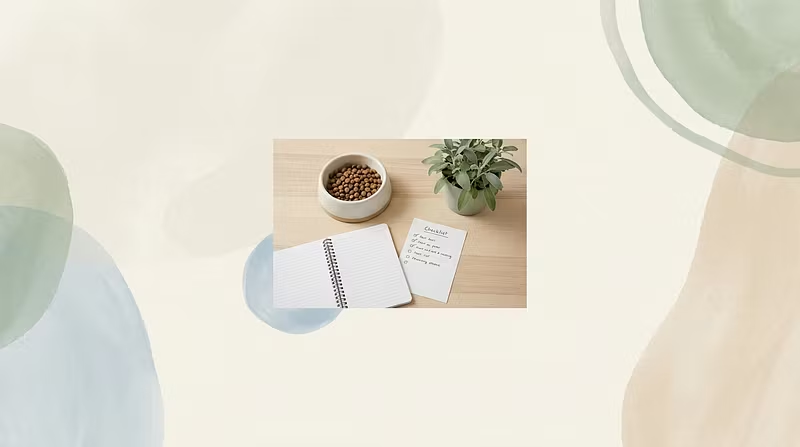
Sensitive Stomach Feeding Kit

Keep your dog's meals consistent and easier to tolerate. A complete digital workbook kit that helps you track ingredient changes, log post-m...
2 joined
Profile picture
Kamilla DonatoProfile picture@kamilladt·May 2

Your dog's stomach doesn't need a new food. It needs you to stop switching.

Every dog owner with a sensitive-stomach pup has been through the same loop:


  1. Dog has a bad reaction → you Google "best food for sensitive stomachs"

  2. You switch to the new food → dog seems okay for 3 days

  3. Day 5, the symptoms come back → you assume this food doesn't work either

  4. Back to Google → new food → repeat


The problem isn't the food. It's the switching.


Every time you change your dog's diet, you're resetting their gut. The digestive system needs consistency to adapt, not variety. Most dogs with sensitive stomachs would do fine on a simple, boring bowl — if you gave them 2-3 weeks on it without changing anything.


Here's what actually works:


  • One protein. One carb. One fat. That's the bowl. Nothing else for 7 days minimum.

  • Same time, same portion, same place. Routine is as important as the recipe.

  • Track before you tweak. Note stool quality, energy, and appetite daily. You'll see real patterns emerge by day 5 — not the noise from constant switching.


The dogs who improve fastest aren't on the fanciest food. They're on the most consistent food.


I put everything I know about this into a free ebook called "The Steady Bowl Method." It walks you through choosing one baseline recipe, sticking with it, and reading the signals your dog is actually giving you.


No fluff. No affiliate links to premium kibble. Just the system that works.


→ Grab it free here and start tonight.

Profile picture
Kamilla DonatoProfile picture@kamilladt·May 2

The #1 mistake dog owners make with sensitive stomachs (and how to fix it)

Most dog owners with a sensitive-stomach pup do the same thing when flare-ups happen: they switch the food.


New protein. New brand. New formula. Sometimes all three at once.


And it makes things worse almost every time.


Here's why: sensitive stomachs don't just react to "bad" food — they react to change itself. Every time you swap an ingredient, you're resetting your dog's gut and asking it to adjust to something unfamiliar. Even if the new food is technically "better," the transition creates exactly the kind of digestive stress you were trying to avoid.


What actually works is the opposite approach:


  1. Track what's already going in. Most owners can't name every ingredient their dog ate this week. Treats, toppers, dental chews — it all counts. If you don't know what changed, you can't know what caused the problem.


  1. Log post-meal reactions consistently. Not just the bad days. The good days matter too, because they show you what a stable routine looks like for your dog specifically.


  1. Define boundaries before problems start. Know which foods stay, which go, and what your backup plan is if your regular brand goes out of stock. Most setbacks happen because owners make reactive decisions under pressure.


The pattern I see over and over: an owner finds something that works, gets confident, introduces one small change ("just a new treat"), and then spends weeks trying to get back to stable.


Consistency isn't boring — it's the entire strategy.


I built the Sensitive Stomach Feeding Kit around this exact framework. Six workbooks that help you track ingredients, log reactions, define safe boundaries, plan for supply gaps, and keep daily meals repeatable.


If your dog's stomach has been up and down and you're tired of guessing, this is the system that replaces guesswork with clarity.