

The real reason shift workers can't sleep during the day (it's not what you think)
Most people assume shift workers can't sleep because their body clock is off. Circadian rhythm plays a role, sure. But after talking to hundreds of nurses, warehouse workers, paramedics, and factory operators — the number one sleep killer isn't biological.
It's the house.
Your partner runs the hoover at 11am. The postman rings the doorbell. The kids get home from school and the front door slams. The neighbour starts mowing. Sunlight pours through curtains that were never designed to block daytime light.
You're lying there genuinely shattered — and your home is working against you.
Here's what nobody talks about: you can't fix your sleep without fixing your environment first. No supplement, app, or meditation will help if your bedroom is bright and loud.
What actually works:
🔇 Audit your noise sources. Walk through your home before your next sleep window and write down every sound. Fridge hum, boiler clicks, traffic, voices. Fix them one by one — earplugs, white noise machine, draught excluder under the door, "do not disturb" sign on the front.
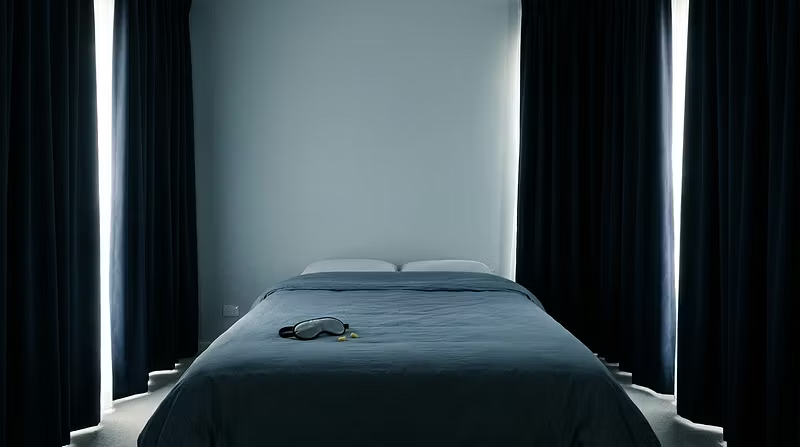
🌑 Black out your room properly. Blackout curtains alone aren't enough — light leaks around the edges, over the top, and under the door. Use blackout tape, a rolled towel, and cover standby lights on electronics.
🗣️ Have the conversation. Tell your partner, kids, flatmates: "Between these hours, I need the house quiet. Here's specifically what that means." Don't be vague. Be exact.
The shift workers who sleep well aren't lucky. They've built a system. It starts with the environment, not the body.
If this sounds like your life, I built a workbook that walks you through the whole process — planning your sleep windows, fixing noise and light, and having the boundary conversations that actually stick.