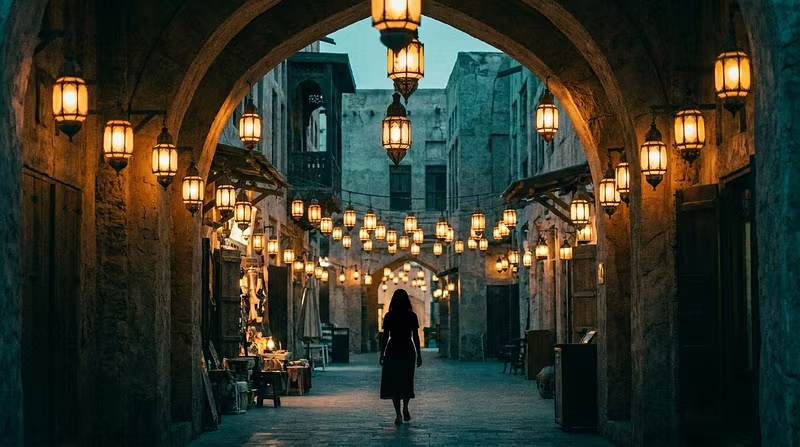


5 Cultural Mistakes That Put Solo Female Travelers at Risk
Most travel safety advice is generic: "don't walk alone at night," "watch your drink." That advice is baseline. It doesn't prepare you for the cultural landmines that actually create dangerous situations for women traveling alone.
Here are 5 mistakes I see constantly — and how to avoid them:
1. Wearing "Modest" Clothing That's Still Wrong
Covering your shoulders isn't enough. In many Middle Eastern and South Asian countries, the fabric weight, color, and fit matter as much as coverage. A loose white cotton shirt can be effectively transparent in sunlight. Dark, heavyweight fabrics with layers are the standard — and locals notice when you get it wrong.
2. Making Eye Contact to Be "Friendly"
In Western culture, eye contact signals confidence and openness. In parts of North Africa and the Middle East, sustained eye contact from a woman to a man is read as romantic interest or an invitation. Learn the local gaze rules — in many cultures, looking slightly downward or to the side is the respectful norm.
3. Eating With Your Left Hand
Across much of the Middle East, South Asia, and parts of Africa, the left hand is considered unclean. Eating, handing money, or gesturing with your left hand can cause genuine offense — and mark you as someone who doesn't understand the culture (making you a softer target).
4. Refusing Food or Tea From a Host
In many cultures, refusing offered food or drink is deeply insulting. But accepting everything can put you in vulnerable situations. The protocol: always accept the first offering graciously. You can politely decline seconds. This shows respect without overcommitting.
5. Assuming "Tourist Areas" Are Culturally Relaxed
Tourist zones often have stricter cultural enforcement because locals are tired of disrespectful visitors. The most dangerous assumption is that being in a popular area means local norms don't apply.
---
These aren't things you learn from a travel blog. They come from studying cultural protocols at a granular level — the kind that keeps you respected, safe, and welcomed.
I built a full course covering cultural etiquette, safety protocols, and emergency response for solo female travelers across the Middle East, South/Southeast Asia, North Africa, and Latin America.
If you're planning a solo trip to any of these regions, this is the preparation you need.