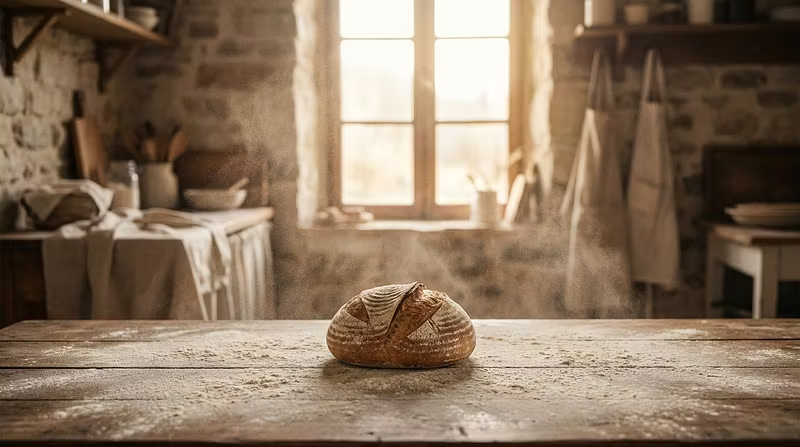


Why Sourdough? The Case for Wild Yeast Fermentation
Every loaf of commercial bread you buy uses the same laboratory-bred yeast strain — Saccharomyces cerevisiae. It's fast. It's predictable. And it produces bread with the nutritional depth of cardboard.
Wild yeast fermentation is different.
When you build a sourdough starter, you're cultivating a living ecosystem of wild yeast and lactic acid bacteria unique to your environment. These organisms:
Pre-digest gluten proteins, making sourdough easier on sensitive stomachs
Break down phytic acid, unlocking minerals (iron, zinc, magnesium) that whole grains otherwise lock away
Produce organic acids that lower glycemic index and extend shelf life naturally — no preservatives needed
Create flavor compounds that commercial yeast simply cannot replicate
The result? Bread with a complex, tangy depth. A crust that shatters and sings. A crumb that's custardy and alive.
I built The Sourdough Lab to teach this craft from the ground up — no prior experience needed. The course covers everything from creating your first starter to advanced shaping, scoring, and baking techniques.
If you've been thinking about learning sourdough, this is your sign.
→ Start with a 1-day free trial and see what wild yeast can do.