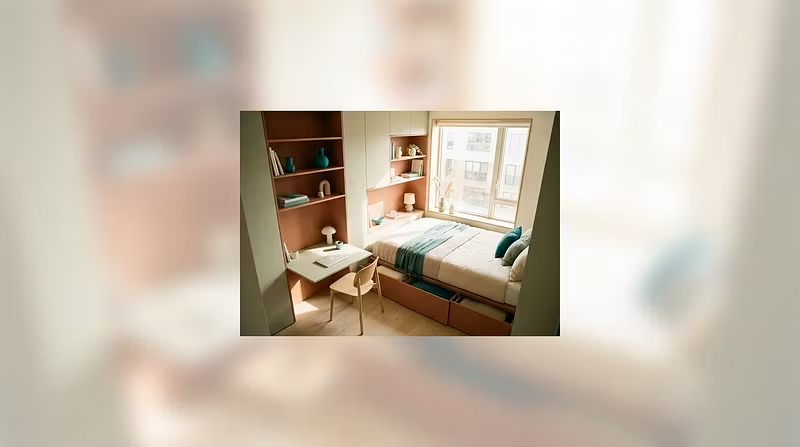


The 3-Wall Rule: How to Double Your Storage Without Buying Anything
Most people in small spaces make the same mistake: they store horizontally.
Every surface becomes a landing pad — counters, tables, the top of the dresser, the floor next to the door. Then they buy organizers to manage the chaos on those surfaces. It doesn't work. You're just organizing clutter.
Here's a framework I teach called the 3-Wall Rule that you can implement today in about 30 minutes.
The Concept
In any room under 400 square feet, you have roughly 4 walls. Most people only use 1 of them for storage (usually the one with the closet). The 3-Wall Rule says: every room should use at least 3 of its 4 walls for vertical storage between 5 and 7 feet high.
That's the zone above your eyeline but below where you need a step stool. It's dead space in almost every small apartment.
How to Apply It Right Now
Step 1: Stand in your most cluttered room. Face each wall. Count how many have something mounted, hung, or shelved between the 5ft and 7ft marks. Most people: zero or one.
Step 2: Identify your top 10 daily-use items that are currently sitting on a flat surface. Not decorations — functional items. Cooking tools, keys, bags, chargers, notebooks, whatever you reach for every day.
Step 3: Relocate 7 of those 10 items to that 5-7ft wall zone using hooks, a single floating shelf, a magnetic strip, or a hanging organizer you already own. The other 3 can stay on surfaces — those are your true "active items."
Why This Works
It's not about minimalism or throwing things away. It's about moving your storage axis from horizontal to vertical. You're reclaiming counter and floor space — which is what actually makes a small room feel bigger — without getting rid of a single thing.
The 5-7ft zone works because it's accessible without tools but high enough to be out of your workflow. Items stored there don't create visual clutter at eye level.
The Result
People who apply just this one rule typically clear 30-40% of their flat surface area in under an hour. That's not an exaggeration — it's geometry. You're activating wall space that was doing nothing.
Try it with one room this weekend and see what happens.