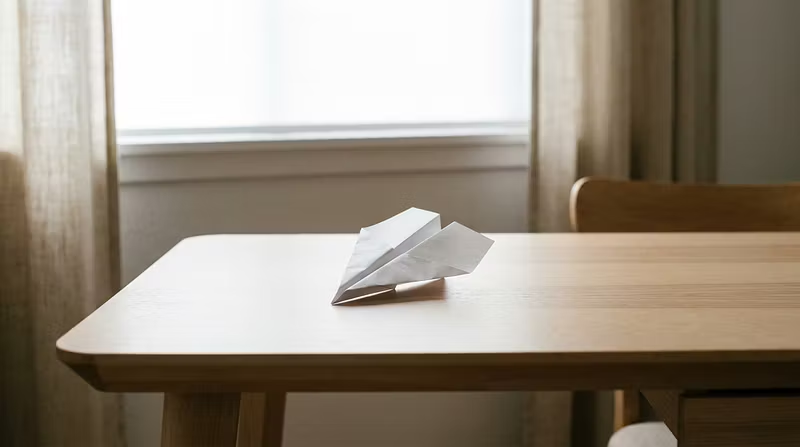


The #1 Reason Your Paper Airplane Nose-Dives (And the 30-Second Fix)
Most people fold paper airplanes from memory — something they half-remember from second grade — and then wonder why the plane slams into the floor three feet away.
The problem is almost never the design. It's the crease.
When your center fold isn't sharp and perfectly aligned, the two halves of the plane sit at slightly different angles. The air hits each wing differently. The plane rolls, dips, and nose-dives.
The fix takes 30 seconds:
After your center fold, hold the plane up at eye level and look at it from the back. The two wings should mirror each other exactly — same angle, same height. If one wing droops even slightly, press the crease harder along the spine with your thumbnail or the edge of a ruler.
That single adjustment is the difference between a plane that crashes and one that glides cleanly across a room.
A few other things most people get wrong:
Throwing too hard. A paper airplane isn't a baseball. A smooth, level release at medium speed flies farther than a hard throw every time.
Folding on a soft surface. If you fold on a couch or your lap, every crease is soft and imprecise. Use a hard, flat surface — a desk or a hardcover book works fine.
Ignoring wing tips. If the wing tips curl up or down, your plane will spiral. Flatten them out before every throw.
I put together a cheat sheet that walks through a straight-flying fold from scratch — every step numbered, every crease checked. It's built for people who want a reliable indoor flyer without watching 20 YouTube videos or learning origami.
If you've ever crumpled up a paper airplane in frustration, this is for you.