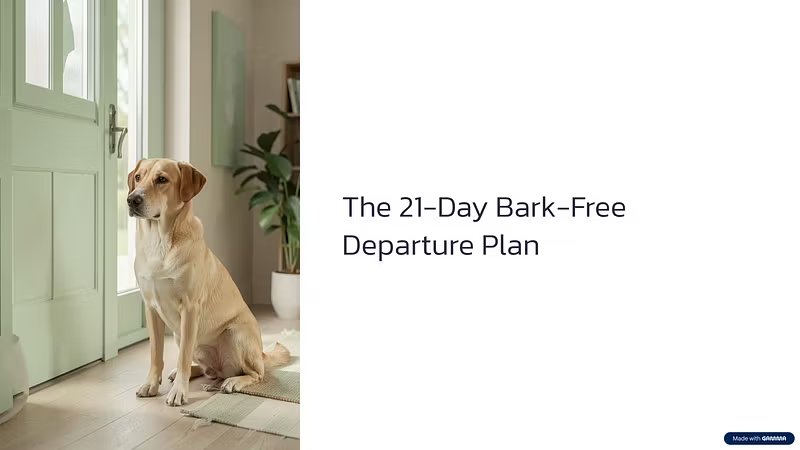


The 21‑Day Bark‑Free Departure Plan
Why dogs panic when you leave (and what actually works)
When you leave the house, your dog’s nervous system doesn’t just calm down because you’ll be back later.
Most dog owners describe the same pattern: their dog is fine while they’re home, then the moment keys come out or the door closes, barking, pacing, or panic kicks in fast.
Here’s why.
Your dog learned that departures = danger. That alertness is a stress response, not “bad behavior.” It kept your dog attached and safe in the past. Now, it’s what drives barking, howling, destruction, and distress when you leave.
The fix isn’t more toys.
It’s not ignoring the behavior.
It’s teaching your dog—gradually—that being alone is safe again.
Three things that actually move the needle:
1. Structured departures—Not “make leaving casual.” A clear sequence of low‑drama actions that teaches your dog what a calm departure looks like. Think of it as a training checklist for leaving the house.
2. Emotional anchoring—Using predictable cues your dog can rely on—consistent timing, environment, and return patterns—to break the panic loop. Dogs learn safety through patterns, not reassurance.
3. Time‑boxed training — Short, controlled absences that build tolerance without overwhelming your dog. Progress comes from repetition at the right distance, not from pushing too far too fast.
I built the 21‑Day Bark‑Free Departure Plan around these principles. It’s a simple, step‑by‑step system—no punishment, no guesswork, no conflicting advice. Just calm, repeatable training that works.
If this sounds like the struggle you’re dealing with, this plan gives you and your dog a way forward.
Not stressful.
Not chaotic.
Just quieter departures—one step at a time.
