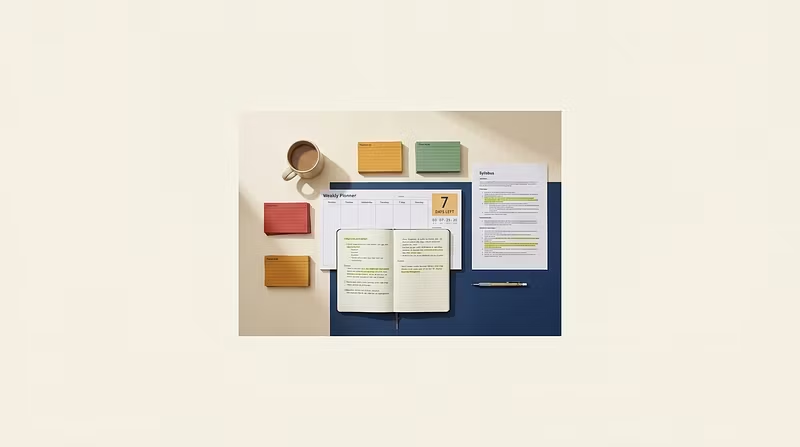
The Last 72 Hours

Pass Cumulative Exams Without Cramming. A 7-day retrieval plan and exam-window system that tells you exactly what to review, test, and leave...
City of Westminster, GB
Created byProfile pictureJack coombes
0 joined
Profile picture
Jack coombes@jackc05·May 3

A checklist-based exam prep system built around the 7-day retrieval sequence. ~15,000 words designed to eliminate decision fatigue, scattered review, and panic studying.

What's inside:

• The 7-Day Retrieval Sequence — a structured daily plan that tells you exactly what to review, test, and leave alone

• The Traffic Light Decision System — Red (weak recall), Amber (partial recall), Green (known material) — so you stop wasting time on topics you already know

• Pre-Exam Sorting Method — prioritise lecture slides, readings, problem sets, and past quizzes before you open a single textbook

• 25–40 Minute Recall Blocks — short, focused study sessions that fit between classes, meals, and life

• The Final 72-Hour Command Sheet — your focused execution plan for the last stretch before the exam

Ebook Chapters:

Sort The Syllabus, Not The Stack

Test First, Not Re-Read

Build The 7-Day Retrieval Sequence

Use The Traffic Light Method

Match Review To Exam Windows

The Final 72 Hours Command Sheet

Walk Into The Exam Ready

Includes: Full ebook PDF + all checklists and templates for immediate use.

Profile picture
Jack coombes@jackc05·May 2


The reason you keep running out of time on cumulative exams

Most students don't fail cumulative exams because they didn't study enough. They fail because they studied the wrong things at the wrong time.


Here's what usually happens: you sit down 5-7 days before the exam. You open your notes from Week 1. You start rereading. By the time you reach Week 6 material, it's 11pm the night before, and you're skimming headings hoping for a miracle.


The problem isn't effort. It's decision-making. You spent your best study hours on material you already half-knew, and ran out of time for the topics that actually needed work.


The fix is sorting before studying.


Before you open a textbook, list every single topic on your syllabus. Every lecture, every reading, every problem set, every past quiz. Then tag each one:


  • 🔴 Can't recall it → needs real work

  • 🟡 Partial recall → needs a quick test

  • 🟢 Solid → leave it alone


Now you have a map. You know where the gaps are. Instead of rereading everything from Week 1, you go straight to the red zones and run retrieval tests — short, timed recall blocks where you write what you know from memory, check it, and repeat.


This is the Traffic Light Method. It's one piece of a 7-day retrieval system I built into The Last 72 Hours Exam Command Sheet — a 15,000-word ebook designed for students sitting cumulative exams who are tired of the panic spiral.


The full system covers:

  • How to sort your syllabus before you study

  • Why testing yourself first beats rereading every time

  • A day-by-day retrieval sequence for the final week

  • How to match your review sessions to exam windows

  • A command sheet for the last 72 hours that locks in focus


If your exam is coming up and you're still deciding where to start — that's the problem the system solves. Last 72 Hours

Profile picture
Jack coombes@jackc05·May 2

The reason you keep running out of time on cumulative exams

Most students don't fail cumulative exams because they didn't study enough. They fail because they studied the wrong things at the wrong time.


Here's what usually happens: you sit down 5-7 days before the exam. You open your notes from Week 1. You start rereading. By the time you reach Week 6 material, it's 11pm the night before, and you're skimming headings hoping for a miracle.


The problem isn't effort. It's decision-making. You spent your best study hours on material you already half-knew, and ran out of time for the topics that actually needed work.


The fix is sorting before studying.


Before you open a textbook, list every single topic on your syllabus. Every lecture, every reading, every problem set, every past quiz. Then tag each one:


  • 🔴 Can't recall it → needs real work

  • 🟡 Partial recall → needs a quick test

  • 🟢 Solid → leave it alone


Now you have a map. You know where the gaps are. Instead of rereading everything from Week 1, you go straight to the red zones and run retrieval tests — short, timed recall blocks where you write what you know from memory, check it, and repeat.


This is the Traffic Light Method. It's one piece of a 7-day retrieval system I built into The Last 72 Hours Exam Command Sheet — a 15,000-word ebook designed for students sitting cumulative exams who are tired of the panic spiral.


The full system covers:

  • How to sort your syllabus before you study

  • Why testing yourself first beats rereading every time

  • A day-by-day retrieval sequence for the final week

  • How to match your review sessions to exam windows

  • A command sheet for the last 72 hours that locks in focus


If your exam is coming up and you're still deciding where to start — that's the problem the system solves.