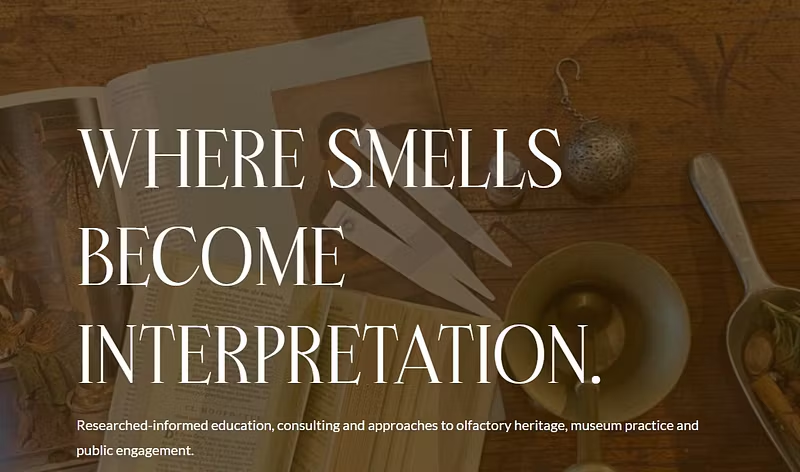


Why smell is the most underrated archive we have
Museums have spent centuries building systems to preserve what we can see and hear. Paintings have conservators. Recordings have archivists. Smell and Olfactory Heritage has largely been left behind.
That's a shame, because scent is one of the most powerful pathways to our emotion and memory: the olfactory bulb holds the amygdala and hippocampus. A single scent can transport us back to a specific place, a specific moment, or a specific year with a vividness that surpasses looking at a photograph.
A few things I've learned while building a practice around olfactory heritage:
1. Scent is site-specific and inherently fragile.
Scents are different than paintings. They are fleeting and made of organic compounds making conservation tricky. Therefore, scented objects are often saved and all scented traces are thrown out. Preserving olfactory heritage means documenting context and chemistry. What did a 1920s tannery smell like? A childhood kitchen? A wartime field hospital? Those sensory memories disappear as communities change and generations pass.
2. Preservation and interpretation are different disciplines.
Reconstructing a historical scent is only the beginning. Without interpretation, a recreated smell is meaningless. The real value lies in connecting that scent to the culture, ritual, labor, or lived experience that gave it meaning. Therefore, interpretation is key!
3. Demand is outpacing infrastructure.
Museums, heritage organizations, and researchers are increasingly interested in incorporating scent into exhibitions and public history. Yet there is still a limited established professional framework for olfactory heritage work comparable to those that exist for archives, conservation, or material culture.
I started The Olfactory Contractor to help continue to build and streamline that framework: a professional home for researchers, curators, perfumers, conservators, and heritage practitioners working with scent. The goal is simple: share methods, case studies, and practical knowledge so we can advance the field together rather than (re)inventing it in isolation.
If this intersects with your work, you may also be interested in my free newsletter, The Olfactory Contractor Newsletter, where I publish updates and research on the preservation and interpretation of sensory heritage.
I'd love to hear how others are thinking about scent, memory, and the future of cultural preservation. Join the conversation below!