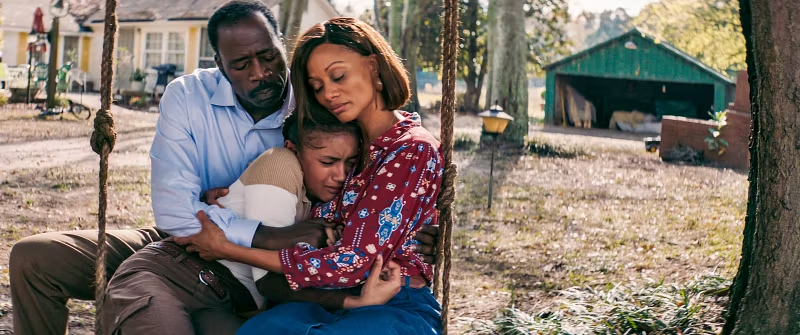


The 3-second rule that stops 90% of toddler meltdowns
Most parents react to a meltdown by immediately trying to fix it. "Stop crying." "What's wrong?" "Here, have this."
But the kids who calm down fastest? Their parents do something counterintuitive: they pause for 3 seconds first.
Here's why it works:
When your toddler is mid-meltdown, their brain has flipped into fight-or-flight. They literally cannot process your words. Talking at them is like trying to reason with a fire alarm.
The 3-second rule:
Stop what you're doing
Get down to their eye level (this alone changes everything)
Take one slow breath before you speak
That 3-second pause does two things: it regulates YOUR nervous system (so you don't escalate), and it gives your child's brain a moment to notice you're calm and present.
Then — and only then — label what they're feeling: "You're really frustrated right now."
Not "it's okay" (it doesn't feel okay to them). Not "stop" (they can't). Just a mirror.
I've watched this work on hundreds of families. The shift is almost instant once parents stop trying to fix the emotion and start acknowledging it first.
This is one of dozens of strategies I teach inside The Parent Edge. If you want the full toolkit — from toddler tantrums to teenage attitude — come join us.