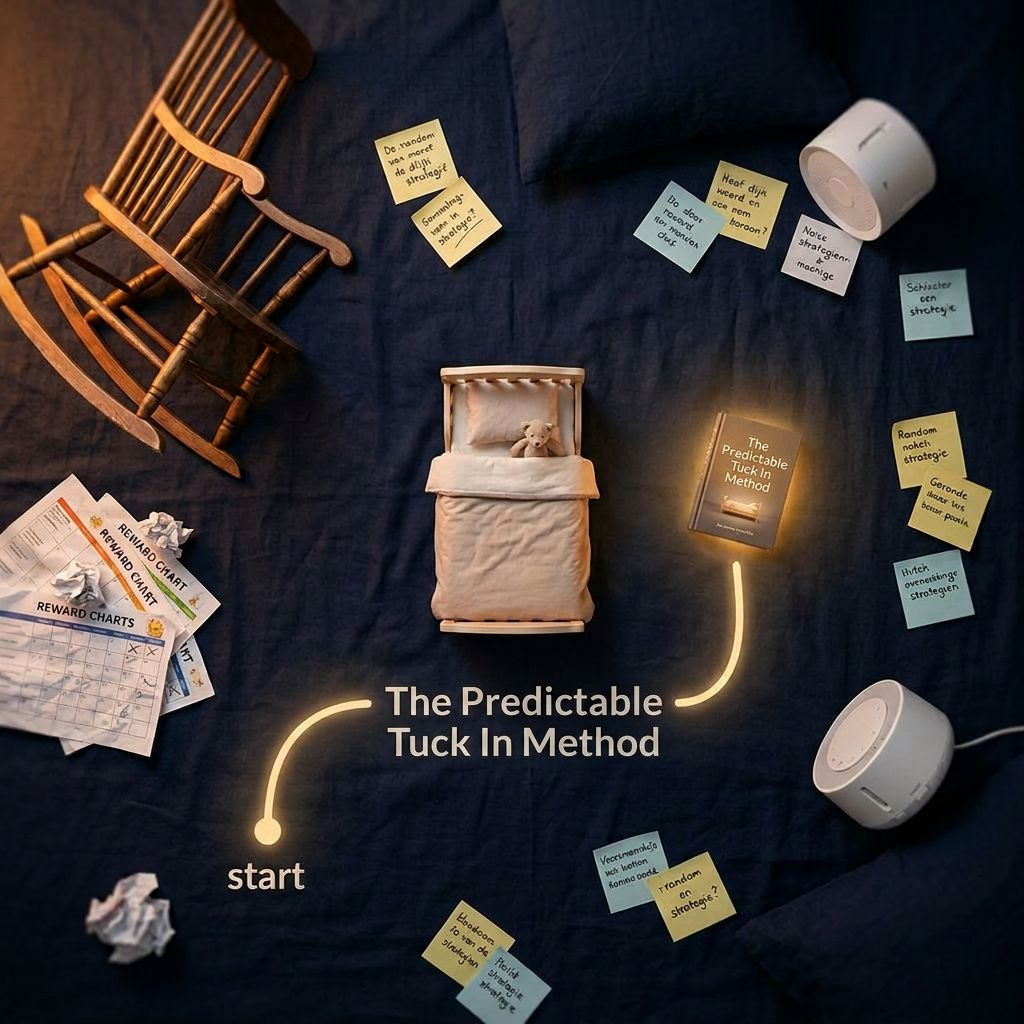

The Predictable Tuck-In Method

Turn Chaotic Toddler Bedtimes Into a Calm Routine The Predictable Tuck In Method helps exhausted parents reduce bedtime battles, rocking, an...
New York City, US
•
•Created byProfile pictureNm
2 joined
Profile picture
NmProfile picture@nmwizzardĀ·May 8
Pinned post

🌷 Mother's Day Special – $40 instead of $67

This weekend only — in honor of Mother's Day, The Predictable Tuck-In Method is available for just $40 (normally $67).


You deserve calmer evenings. Less negotiating. Less guessing. Just one simple, repeatable routine that actually works.


If you've been on the fence, now is the time.


šŸ‘‰ Grab it here:


Happy Mother's Day to every parent showing up and doing their best. šŸ’›

Profile picture
NmProfile picture@nmwizzardĀ·Apr 29

You've tried it all.


Earlier bedtime. Later bedtime. More books. Fewer books. White noise. Blackout curtains. Reward charts.


And it works... for maybe three nights.


Then it falls apart again.


Here's what I've learned after working with hundreds of exhausted families:


You're not failing. You're fixing the wrong thing.


Every method you've tried focused on the routine itself — the bath, the books, the songs. But the real trigger is buried somewhere else entirely.


It's the 15 minutes before you even say "okay, time for bed."


Think about it this way:


Trying to start a bedtime routine without a proper wind-down is like trying to land a plane by suddenly cutting the engines. Instead of a smooth descent... you get a crash.


Your toddler's brain is still fully switched on from play mode. And no routine — no matter how perfect — can override that.


There are three things actually driving the chaos:


1. The transition window. How your toddler shifts from play mode to wind-down mode determines 80% of how bedtime goes. Most parents skip this entirely, or do it differently every night.


2. The number of decisions. Every choice you offer — "this book or that one?" — keeps your toddler's brain activated. It feels kind. It's actually making things harder.


3. Your own energy. Toddlers are emotional sponges. If you're approaching bedtime already bracing for a fight... they feel it. And they mirror it right back.


None of this is your fault.


Most sleep advice completely ignores these three things. It tells you to adjust the routine while the real problem goes untouched.


That's why nothing sticks.


The fix isn't another routine tweak. It's a specific sequence you run in the 15 minutes before the routine — one that gently turns off your toddler's "play mode" before the battle has a chance to start.


One clear system. Not ten adjustments.


And when it's consistent — when your partner, your parents, and the babysitter all follow the same simple steps — your toddler's brain starts to recognize the pattern.


Safety. Predictability. Sleep.


That's what The Predictable Tuck-In Method is built around.


A step-by-step digital guide that gives you one repeatable system — from the transition window to the final tuck-in to handling night wake-ups — so you stop guessing and start seeing real progress.


It doesn't have to stay this way.

file_TuDIAw24Wujwo
Profile picture
NmProfile picture@nmwizzardĀ·Apr 28

The real reason your toddler's bedtime keeps breaking down

Most parents I talk to have tried everything — stricter schedules, softer routines, white noise, blackout curtains, earlier bedtime, later bedtime, more books, fewer books. And none of it sticks for more than a few nights.


Here's what I've learned after working with hundreds of exhausted families: the problem almost never lives where you think it does.


You're fixing the symptoms. The real trigger is buried in the 15 minutes before you start the routine.


Three things that actually matter:


  1. The transition window. How your toddler shifts from play mode to wind-down mode determines 80% of how bedtime goes. Most parents skip this entirely or do it inconsistently.


  1. The number of decisions. Every time you offer a choice at bedtime — "Do you want this book or that one?" — you're extending the process and giving your toddler's brain more reasons to stay activated.


  1. Your own energy. Toddlers are emotional sponges. If you're approaching bedtime already bracing for a fight, they feel it. And they mirror it right back.


The Predictable Tuck-In Method is built around one idea: find the real trigger, then design one routine around it. Not ten adjustments. One.


If bedtime has become the hardest hour of your day, it doesn't have to stay that way.