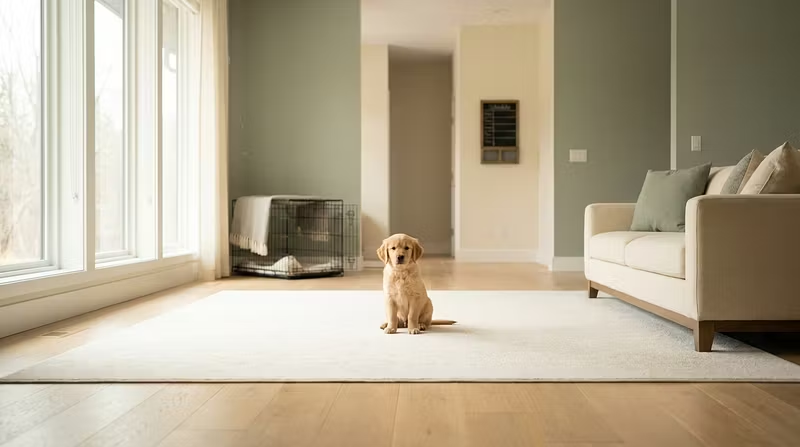


Why most puppy potty training fails in the first two weeks
Most first-time puppy owners start potty training the same way: take the puppy outside every hour, praise when they go, scold when they don't.
It seems logical. But it almost always falls apart within two weeks.
Here's why.
The real problem isn't the schedule — it's the signals.
Puppies communicate before they need to go. They shift weight, sniff in circles, pause mid-play, move toward doors or corners. These signals start subtle and get louder — but only if you know what to look for.
Most owners miss them because they're watching the clock instead of watching the puppy.
What actually works:
Observe first, schedule second. Spend 3-4 days just recording when your puppy goes, what they were doing before, and where it happened. Patterns emerge fast.
Stop punishing accidents. Punishment doesn't teach a puppy where to go — it teaches them to hide when they need to go. That makes signals harder to read, not easier.
Use confinement strategically, not as punishment. A crate or pen isn't a timeout — it's a tool to limit the area your puppy can make mistakes in while they're still learning.
Reinforce at the right moment. Praise and treats work best within 2 seconds of the correct behavior. Not after they walk back inside. Not when they sit by the door. The moment they finish going in the right spot.
These four principles are the core of The Puppy Potty Clarity System — an 18,000-word guide built specifically for first-time puppy owners who want fewer indoor accidents and clearer signals, without the guesswork.
If that sounds like what you need, the full system is available here on Whop.