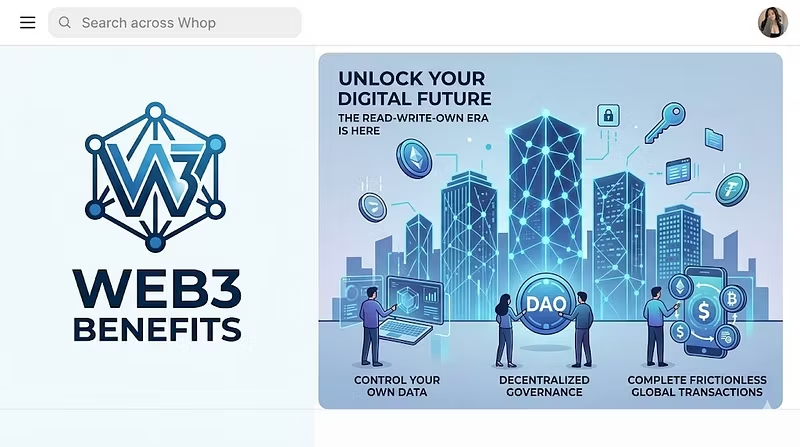


Web3 marks the transition from the "Read-Write" era of the traditional internet (Web2) to a "Read-Write-Own" paradigm. Built on decentralized blockchain technology, Web3 shifts control away from massive tech conglomerates and hands it back to individual users and creators.
The core benefits of Web3 can be broken down into five primary areas:
1. Direct Ownership of Data and Assets
In Web2, when you purchase an in-game item, a piece of digital art, or build a social media following, you don't actually own it—the platform does. If the company shuts down or bans your account, your digital footprint vanishes.
The Web3 Benefit: Using Non-Fungible Tokens (NFTs) and smart contracts, your digital assets belong solely to you. If you leave a platform or a game shuts down, your assets stay in your crypto wallet. You are free to sell, trade, or transfer them to other networks.
2. Enhanced Privacy and Data Control
Traditional internet applications constantly track, package, and sell your personal data to advertisers. They also require you to create separate accounts for every service, leaving your personal information sitting in highly vulnerable centralized databases.
The Web3 Benefit: Your digital identity is tied to a crypto wallet (e.g., via "Sign-in with Ethereum" or similar protocols). You don't have to surrender your name, email, or credit card info to use a site. You decide exactly what data to share, and you can revoke an application's access to your information at any time.
3. Censorship Resistance and Freedom of Expression
Centralized platforms act as the ultimate gatekeepers of the web, meaning they hold the power to change algorithm rules, demonetize creators, or pull down content overnight.
The Web3 Benefit: Web3 applications (dApps) run on decentralized node networks rather than corporate servers like AWS or Google Cloud. Because the code is immutable and distributed globally, no single entity can unilaterally take down an application, block a user, or alter platform content rules.
4. Frictionless, Built-In Global Payments
Web2 relies heavily on outdated banking infrastructures, credit card networks, and local payment processors. This system forces users to jump through regulatory hoops and completely excludes billions of unbanked people worldwide.
The Web3 Benefit: Cryptocurrency is natively integrated into the Web3 browser environment. It allows for instant, borderless, peer-to-peer microtransactions and complex financial actions (like borrowing or lending via DeFi) without needing permission from a bank.
5. Community Governance (DAOs)
Instead of a company being governed by a board of directors maximizing profit for external shareholders, Web3 introduces Decentralized Autonomous Organizations (DAOs).
The Web3 Benefit: Users and creators can hold governance tokens that grant them a financial stake and literal voting rights over the platform's future. The community collectively decides how the app evolves, how funds are spent, and how rules are implemented.
Summary: Ultimately, Web3 replaces corporate trust with cryptographic proof. It transforms internet users from passive consumers into sovereign owners of their own digital lives.