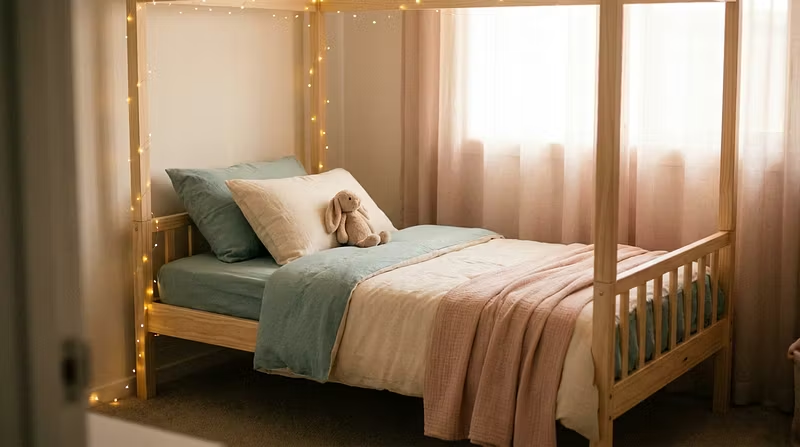


Why Most Children's Beds Fall Apart in 2 Years (And How to Spot the Ones That Won't)
I've spent years sourcing children's furniture for designers and nursery planners, and there's one mistake I see constantly: buying beds that look great in the showroom but can't survive an actual child.
Here's what separates a 2-year bed from a 10-year bed:
1. Joint construction matters more than wood type
Mortise and tenon joints > dowel joints > cam locks. Every time. A bed made from cheap pine with proper joinery will outlast an oak bed held together with cam bolts.
2. Slat systems are the silent killer
If the slats are thin, flat, and just sitting in grooves — they'll bow and crack within a year. Look for sprung slats or solid slats with a centre support rail. Minimum 18mm thickness.
3. Guard rails should be structural, not decorative
On cabin beds and bunks, the guard rail needs to be part of the frame, not screwed on as an afterthought. Give it a firm push at the showroom. If there's any flex, walk away.
4. Finish tells you everything about corners cut
Run your hand along every edge. If you feel roughness, splinters, or uneven lacquer — the manufacturer rushed it. A properly finished bed has smooth, rounded edges everywhere a child's skin might touch.
5. Weight is your friend
A children's bed that feels light is a children's bed that will wobble. Solid construction has weight. Pick up the end of the frame. If it lifts easily with one hand, it's not built to last.
At Tiny Nest, we source every piece with these standards in mind. Our collection is built for interior designers and nursery planners who can't afford callbacks from unhappy clients.
If you're in the trade, come take a look.