

Checking if the time past the schedule posted or not
this is also scheduled

this is also scheduled
Here is your generated AI text!
Here is your generated AI text! Based on: Chceking wokring
Here is your generated AI text!
We are testing out functionalities of our app
contant body editied
#Mark up check
**bold check
This is testing of a postgenie Post Sheduler
Here is your generated AI text!

first test done
 @farhanazizumrani·May 12
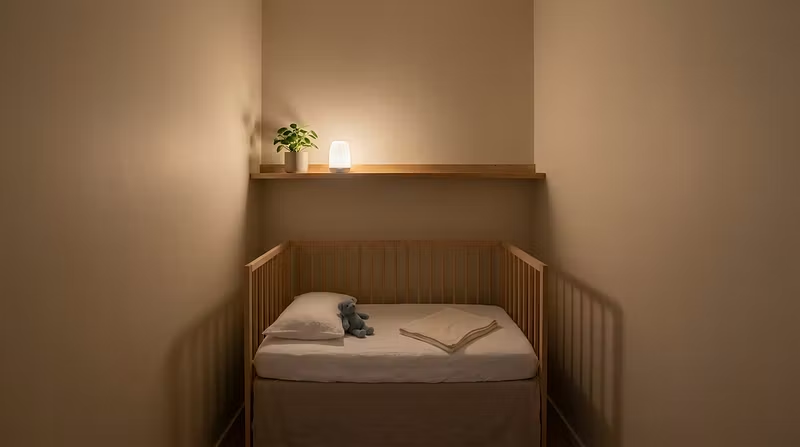
Most toddler sleep advice tells you to change what you're doing when the wake-up happens. Shorten the visit. Don't pick them up. Wait five minutes longer.
But here's the thing nobody tells you: the wake-up at 2 a.m. isn't caused by what you do at 2 a.m.
It's caused by what happened at 7 p.m.
After working with hundreds of toddler sleep patterns, I kept seeing the same thing. The wake-ups that repeat — the ones that happen at almost the exact same time, three or four nights in a row — are almost never random. They follow a pattern. And that pattern usually starts hours before the child wakes up.
The problem isn't the wake-up. It's the cycle that creates it.
When bedtime flow is slightly off — dinner too late, too much stimulation in the last hour, falling asleep in a way that doesn't match the child's natural rhythm — the first stretch of sleep gets cut short. The child wakes, the parent responds, and the response itself becomes part of the cycle the next night.
Not because the parent did anything wrong. But because the child's brain now expects that sequence.
This is what the Sleep Span Map is for.
Instead of changing your response to the wake-up, you map the shape of the night: when sleep starts, how the first stretch plays out, where it breaks, and what happened in the hours before. Then you find the one step that's reinforcing the pattern and adjust that — usually something small, like moving dinner earlier or shifting the last 20 minutes before bed.
No cry-it-out. No rigid schedules. Just a calmer way to see what's actually happening and make the first stretch of sleep work better.
I put the full framework into a free ebook called Toddler Sleep For Longer Stretches. It walks you through the Sleep Span Map step by step, explains why small inconsistencies recreate the same night, and gives you a week-by-week approach that starts with noticing patterns — not overhauling everything.
If your toddler has been waking at the same time and nothing you've tried has stuck, this might be the missing piece.