

Why your sourdough is flat (and it's probably not your starter)
Most beginner sourdough bakers blame their starter when a loaf comes out flat. But nine times out of ten, the starter is fine. The real problem is temperature.
Here's what happens: you mix your dough at 78°F, your kitchen drops to 68°F overnight, and you proof for the same 4 hours the recipe says. But that recipe was written by someone baking at 76°F in their kitchen. Your dough is 8 degrees colder. It needs more time. And nobody told you that.
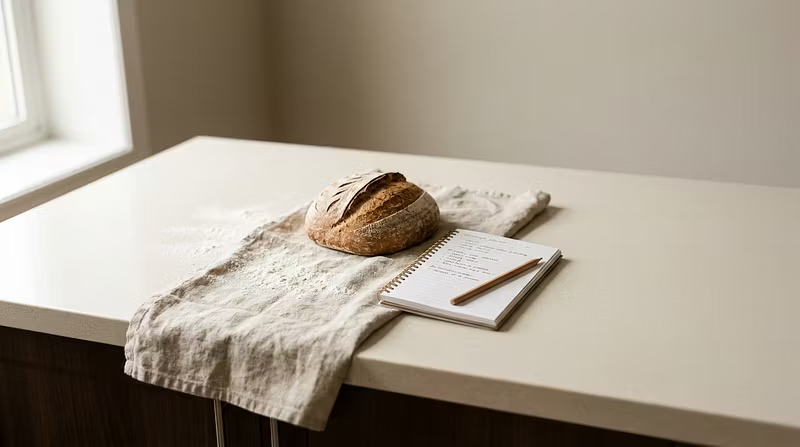
The fix is embarrassingly simple: write it down.
Start tracking three numbers every time you bake:
Dough temperature after mixing (stick a thermometer in it)
Room temperature during bulk fermentation
How long bulk actually takes at that temperature
After 3-4 bakes with notes, you'll notice something: your best loaves all share a pattern. Same dough temp range. Same bulk time at that temp. Same proof window.
The loaves that flopped? Different temps, same timing. That's the gap.
This is exactly why I built the Sourdough Baking Planner — a printable tracking system that helps you log temperature, timing, starter readiness, and results so you can connect the dots between what you did and what came out of the oven.
No apps. No subscriptions. Just pages you fill in with a pencil, and loaves that actually rise.
If you've been baking sourdough for a few weeks and still can't get consistent oven spring, try tracking your dough temperature for your next 3 bakes. I bet you'll find the answer sitting in your own notes.