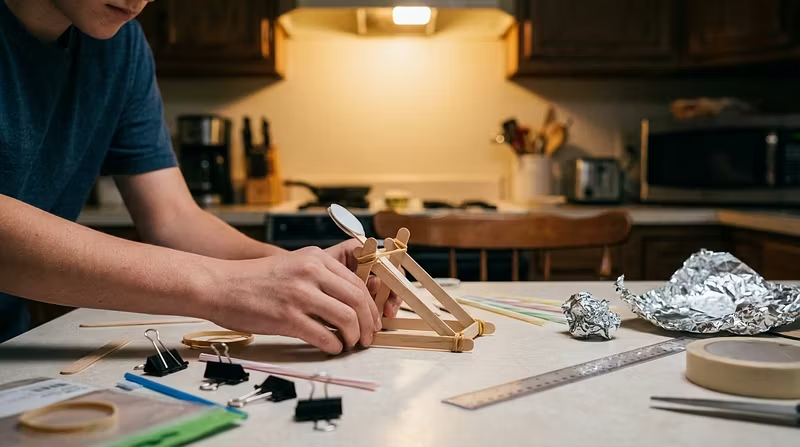


5 STEM Builds You Can Do Tonight With Stuff From Your Kitchen
{"type":"doc","content":[{"type":"paragraph","content":[{"type":"text","text":"No kits. No Amazon orders. No waiting. Here are 5 builds you can start right now with things already in your house."}]},{"type":"heading","attrs":{"level":3},"content":[{"type":"text","text":"1. Spaghetti & Marshmallow Tower"}]},{"type":"paragraph","content":[{"type":"text","marks":[{"type":"bold"}],"text":"You need:"},{"type":"text","text":" 20 sticks of dry spaghetti, 30 mini marshmallows"}]},{"type":"paragraph","content":[{"type":"text","text":"Goal: build the tallest freestanding tower. The trick most people miss — triangles are stronger than squares. If your tower keeps collapsing, you're probably building cubes. Switch to triangular cross-bracing and watch it double in height."}]},{"type":"heading","attrs":{"level":3},"content":[{"type":"text","text":"2. Rubber Band Car"}]},{"type":"paragraph","content":[{"type":"text","marks":[{"type":"bold"}],"text":"You need:"},{"type":"text","text":" Cardboard, 2 wooden skewers, 4 bottle caps, rubber bands, tape"}]},{"type":"paragraph","content":[{"type":"text","text":"Wind the rubber band around the rear axle, let go, and it drives. The physics: you're converting elastic potential energy into kinetic energy. Want it to go farther? Use a longer rubber band or reduce wheel friction by making the axle holes slightly larger."}]},{"type":"heading","attrs":{"level":3},"content":[{"type":"text","text":"3. Lemon Battery"}]},{"type":"paragraph","content":[{"type":"text","marks":[{"type":"bold"}],"text":"You need:"},{"type":"text","text":" 4 lemons, copper coins (pennies), zinc nails or galvanized screws, small wires"}]},{"type":"paragraph","content":[{"type":"text","text":"Each lemon produces ~0.9V. Wire 4 in series and you've got enough to light a small LED. The acid in the lemon juice reacts with the two different metals to create an electrochemical cell — same basic principle as the battery in your phone, just way less efficient."}]},{"type":"heading","attrs":{"level":3},"content":[{"type":"text","text":"4. Cardboard Catapult"}]},{"type":"paragraph","content":[{"type":"text","marks":[{"type":"bold"}],"text":"You need:"},{"type":"text","text":" Cardboard, rubber bands, a plastic spoon, tape"}]},{"type":"paragraph","content":[{"type":"text","text":"Build a lever arm with a fulcrum point. The farther back you pull the arm, the more potential energy you store. Moving the fulcrum point changes the trade-off between launch distance and launch force — closer to the load = more distance, less force."}]},{"type":"heading","attrs":{"level":3},"content":[{"type":"text","text":"5. Tin Foil Switch Circuit"}]},{"type":"paragraph","content":[{"type":"text","marks":[{"type":"bold"}],"text":"You need:"},{"type":"text","text":" A battery (AA or 9V), LED or small bulb, tin foil, cardboard, tape"}]},{"type":"paragraph","content":[{"type":"text","text":"Create a pressure-activated switch by separating two strips of foil with a folded piece of cardboard. Press down → foil touches → circuit completes → light turns on. This is literally how some doorbells and keyboard keys work."}]},{"type":"rule"},{"type":"paragraph","content":[{"type":"text","text":"These are simplified versions of the builds we do inside Weekend STEM Builds, where each project comes with full engineering breakdowns, troubleshooting guides, and a community of builders sharing their results. But these 5 will keep you busy tonight."}]}]}