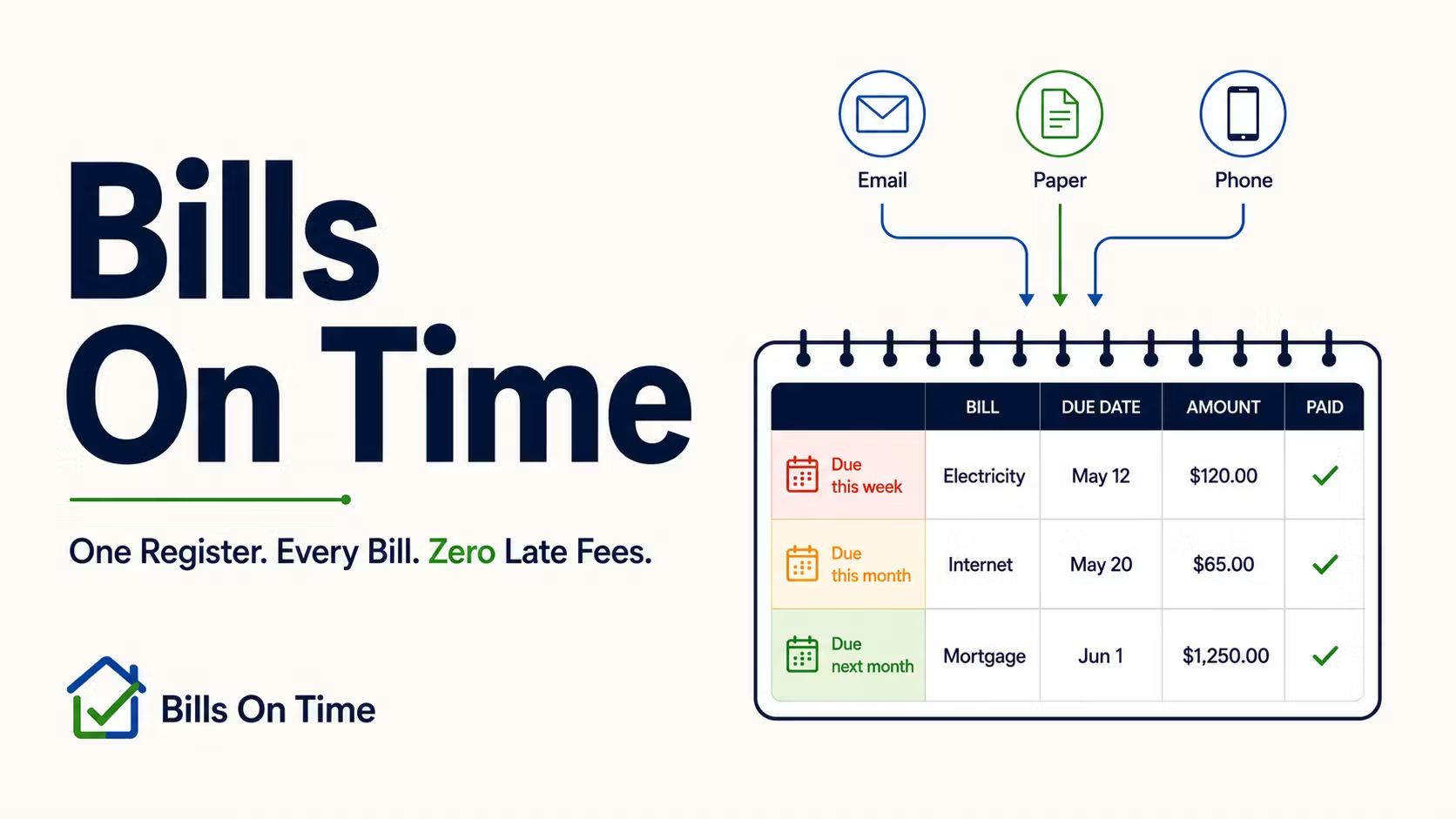
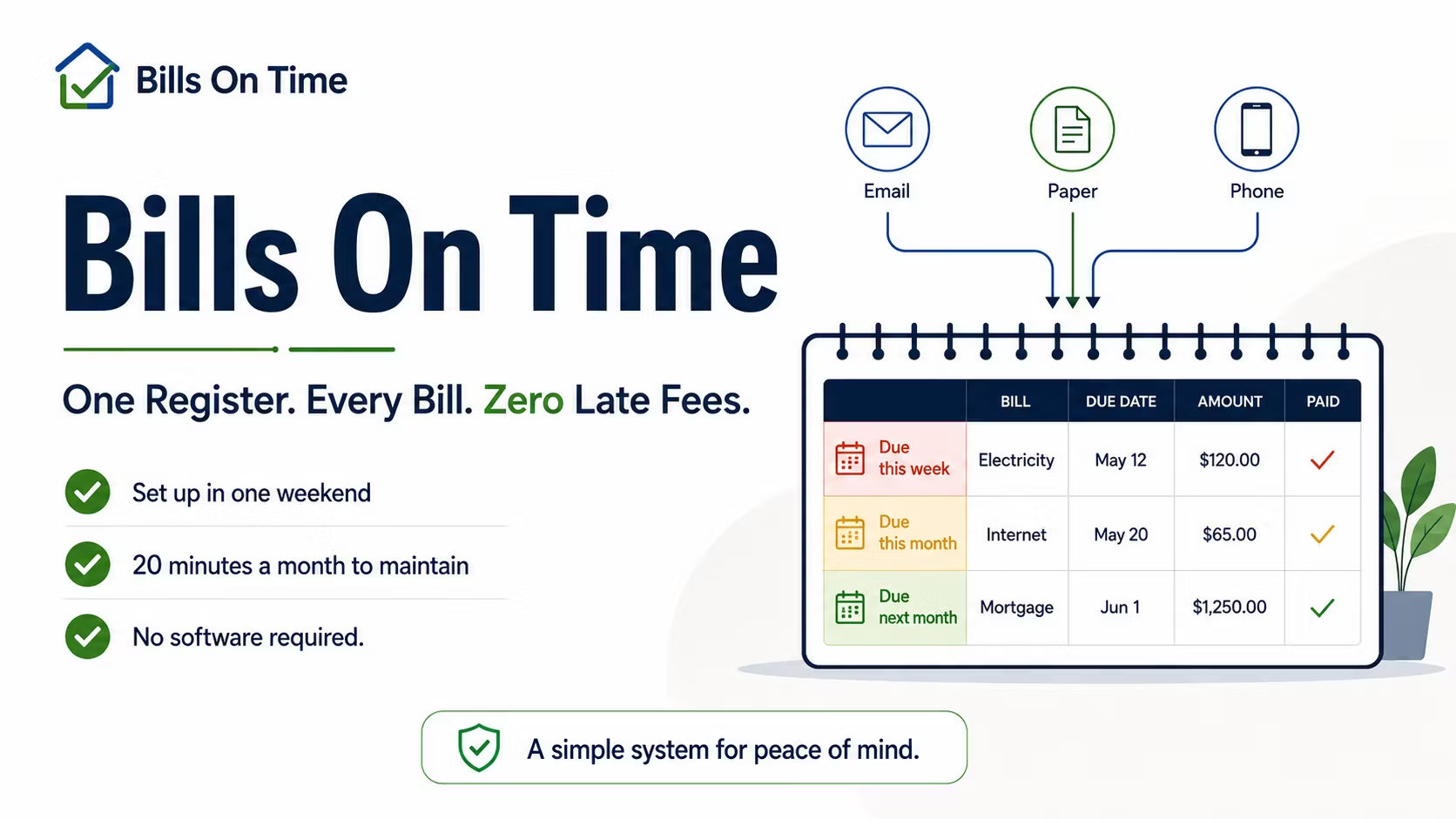
Bills On Time

A practical ebook that helps adults stay on top of every household bill without the stress. Learn how to bring email reminders, paper statem...
4 joined
Profile picture
Facundo BertillerProfile picture@facubertiller22Ā·Aug 24

The download section just got a lot more useful.

Everything is in there now. The register as a spreadsheet, a setup walkthrough video, the monthly check as its own tab, and a set of scripts for calling providers to actually lower a bill, word for word, including what to say when they tell you no.

That last one is the fastest money in the whole thing. Twenty minutes on the phone with internet or insurance usually covers the cost of this system by itself.

If you haven't opened the Register yet, that's the one to start with. Every bill, one row, including the small ones you think you already know by heart.

Profile picture
Facundo BertillerProfile picture@facubertiller22Ā·Aug 5

Everything is in the download section now.


The register itself, as a spreadsheet that works in Sheets, Excel or Numbers. A setup walkthrough so you can watch it being filled in rather than guess. The monthly check as its own tab, so the routine lives next to the list instead of in your head. And the negotiation scripts, which are the part nobody writes properly: word for word, including what to say when they tell you no.


One thing about those calls. The person who answers the phone usually can't change your price. Ask for retention in the first thirty seconds, have the competitor's number written down before you dial, and stop talking after you make the ask. That's most of it.


Start with the register. Every bill, one row each, including the small ones. The parking permit and the subscription you forgot about are exactly the ones that slip.

Profile picture
Facundo BertillerProfile picture@facubertiller22Ā·Aug 5
Pinned post

Which one got you last?


Five ways a bill goes late when the money was already there. None of them are budgeting failures.


The amount changed and nothing told you until it already had. The bill only ever existed in an email. Autopay was on and the card had expired. The due date moved and the announcement was in a footer nobody reads. Or you paid it, twice, and missed a different one.


Every one is a tracking problem wearing a money problem's clothes. That's why budgeting harder never fixes it.


Vote below. I'm genuinely curious which one is most common.

Profile picture
Facundo BertillerProfile picture@facubertiller22Ā·May 30

FIVE REASONS YOU HAVEN’T BOUGHT THIS YET

(And why none of them are what you think)


ā€œI can figure this out on my own.ā€


You probably can. You’ve also been meaning to for months. The late fees are still arriving.


ā€$79 is a lot for an ebook.ā€


One late fee is $25–$40. Two is $50–$80. You’ve already paid for this product in fees. The difference is this one stops the cycle permanently.


ā€œI’m too busy to set up another system.ā€


You’re too busy because you’re constantly reacting, searching old emails, chasing statements, dealing with overdraft alerts. The setup takes one weekend. The chaos you’re managing right now takes every week.


ā€œI’ve tried systems before and they didn’t stick.ā€


You tried apps that track spending. This isn’t that. This is specifically built for the one problem those apps don’t solve, knowing when every bill is actually due before it becomes a fee.


ā€œIt feels embarrassing to need help with something this basic.ā€


You’re not managing one bill. You’re managing 15 to 25 different notices arriving from emails, bank apps, paper statements and direct debit portals, all on different schedules, in different formats, none of them talking to each other.


That’s not a basic task. That’s a system problem. And system problems need a system solution.


The Bill Due Date Rescue Checklist — $79. One time.


šŸ‘‰

Profile picture
Facundo BertillerProfile picture@facubertiller22Ā·May 25

THIS IS WHAT SUNDAY MORNING LOOKS LIKE WHEN EVERY BILL IS ALREADY HANDLED

No digging through emails. No checking three apps. No trying to remember if the direct debit already left the account.

Just one document. Every bill. Every due date. Right there.

That is what responsible adults actually look like when they have a system. Not stressed. Not scrambling. Just calm, because nothing is hiding.

THE DIFFERENCE IS NOT DISCIPLINE

It is not that they check their inbox more. It is not that they have a better memory. It is that they stopped trying to track bills across five different places and put everything into one register.

One place to look. One weekly scan. One 20 minute check a month.

That is the whole system.

THE BILL DUE DATE RESCUE CHECKLIST

Set it up this weekend. Know exactly what is due this week, this month, and next month, without opening a single old email.

$79. One time. No subscription.

šŸ‘‰ whop.com/bills-on-time

file_FKGNr8WjzQr7W
Profile picture
Facundo BertillerProfile picture@facubertiller22Ā·May 25
Pinned post

"I KNEW THE BILL WAS COVERED. I JUST FORGOT THE DATE."

That one sentence is the whole problem.

You are not broke. You are not irresponsible. You checked your bank. The money was there. But somewhere between the email reminder, the paper statement, and the bank app alert — the due date disappeared.

And then the late fee hit anyway.

That is not a memory problem. That is a system problem.

Your bills live in an inbox you checked three days ago, a paper notice buried under something else, a direct debit you set up last year and assumed would stay the same. No single system is showing you what is due this week, what is coming this month, and what is quiet for now.

So you keep checking too many places. And still missing one.

WHAT CHANGES WHEN YOU HAVE ONE SYSTEM

You stop digging. You stop guessing. You open one place, see every bill, and know exactly what needs attention.

Not because you have a better memory. Because the system does the remembering for you.

The Bill Due Date Rescue Checklist gives you a single household due date register, a traffic light review for this week and this month, and a 20 minute monthly check that catches changing direct debits and moved due dates before they become fees.

Set it up this weekend. Run it for 90 days. The late fees stop.

$79. One time. No subscription.

šŸ‘‰

file_5kc0xZlac5IKN
Profile picture
Mia @miascherlingĀ·May 26

Very interesting!!🤩

Profile picture
Facundo BertillerProfile picture@facubertiller22Ā·May 10
Pinned post

Never Pay a Late Fee Again. Starting This Weekend.


You have the money. You just can't keep track of due dates scattered across emails, apps, and paper mail.


Bills On Time gives you one simple system to track every bill, so you always know what's coming up, what's due, and what needs attention. Built for less stress and more control.


Watch this short video for a clear overview of the ebook, who it's designed for, and the outcome it helps create.

5 votes
Profile picture
Mia @miascherlingĀ·May 10

amazing!!

Profile picture
Facundo BertillerProfile picture@facubertiller22Ā·May 6

WHO THIS IS FOR


Busy Homeowners and Renters

You manage 15 or more recurring bills and you are tired of missing due dates that slip through the cracks of your inbox and bank app.


Dual-Income Households

You and your partner share financial responsibilities and want one clear system so nothing falls through — and money conversations stay calm.


Organized Adults Who Feel Unorganized About Bills

You have your life together in most areas, but bills feel like a constant source of low-level stress you have never quite solved.

Profile picture
Facundo BertillerProfile picture@facubertiller22Ā·May 5

The Real Reason You Keep Missing Bills Has Nothing to Do With Your Memory


Here's the thing nobody tells you. You are not disorganized. You are being asked to track something that is genuinely impossible to manage in your head.


Your bill information lives in too many places. A bank app here. A paper statement there. An email buried under 400 unread messages. An autopay that changed its amount last month. No one can reliably monitor all of that at once.


That is Due Date Fragmentation. It happens when your financial life is split across systems that do not talk to each other. Each one sends its own alert, on its own schedule, in its own format. You are not forgetting bills. You are losing them in the noise.


So when a late fee hits a bill you had the money for, that sting of embarrassment is not proof that you are bad with money. It is proof that the system failed you.


And until you replace that broken system, it will keep happening.

file_iH6LQ6lSyTiK7
Profile picture
Facundo BertillerProfile picture@facubertiller22Ā·May 2

HOW IT WORKS


  1. Read the guide — short, practical, no filler

  2. Set up your own bill register — one document with every bill and every due date

  3. Follow the process — using a notebook, document, or any simple system you already use


Most people get the basics done in one weekend.


No special tools needed. Just a simple way to record and review your bills.