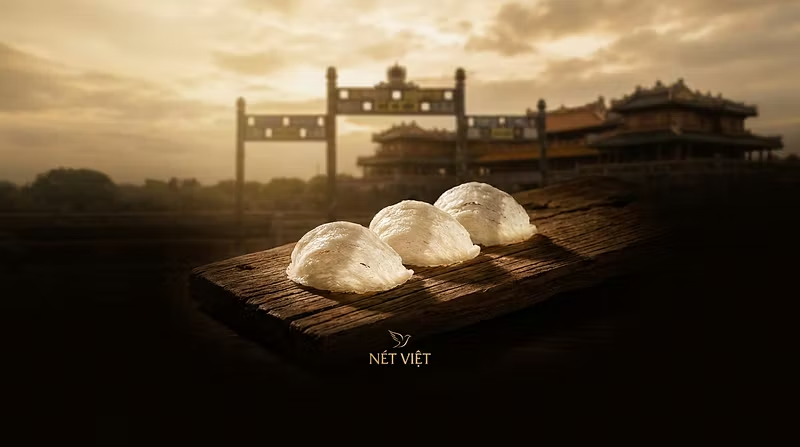


How to tell real bird's nest from fake — a quick guide
Bird's nest is one of the most counterfeited luxury foods in the world. Here's what I've learned running a bird's nest business from Huế, Vietnam.
The 3-second water test:
Real bird's nest expands slowly when soaked — it takes 30-45 minutes to fully soften. Fake nests dissolve almost immediately or stay rigid. If it melts in minutes, walk away.
Check the texture:
Authentic nests have irregular, fibrous strands that feel slightly rough. Factory-made fakes look suspiciously uniform and smooth. Nature isn't perfect — that's how you know it's real.
Smell matters:
Real yến sào has a faint, slightly fishy, earthy smell when raw. After cooking, it becomes nearly odorless with a subtle sweetness. Strong chemical smells = bleaching agents.
Color tells a story:
Natural nests range from ivory white to slightly yellowish. Bright white nests have likely been bleached. "Blood nests" (red) are almost always chemically treated — genuine red nests are extremely rare.
At Bình An Yến, every batch is sourced directly from our partner caves in Huế and tested for purity before we stew anything. That's the whole point — you shouldn't have to guess.