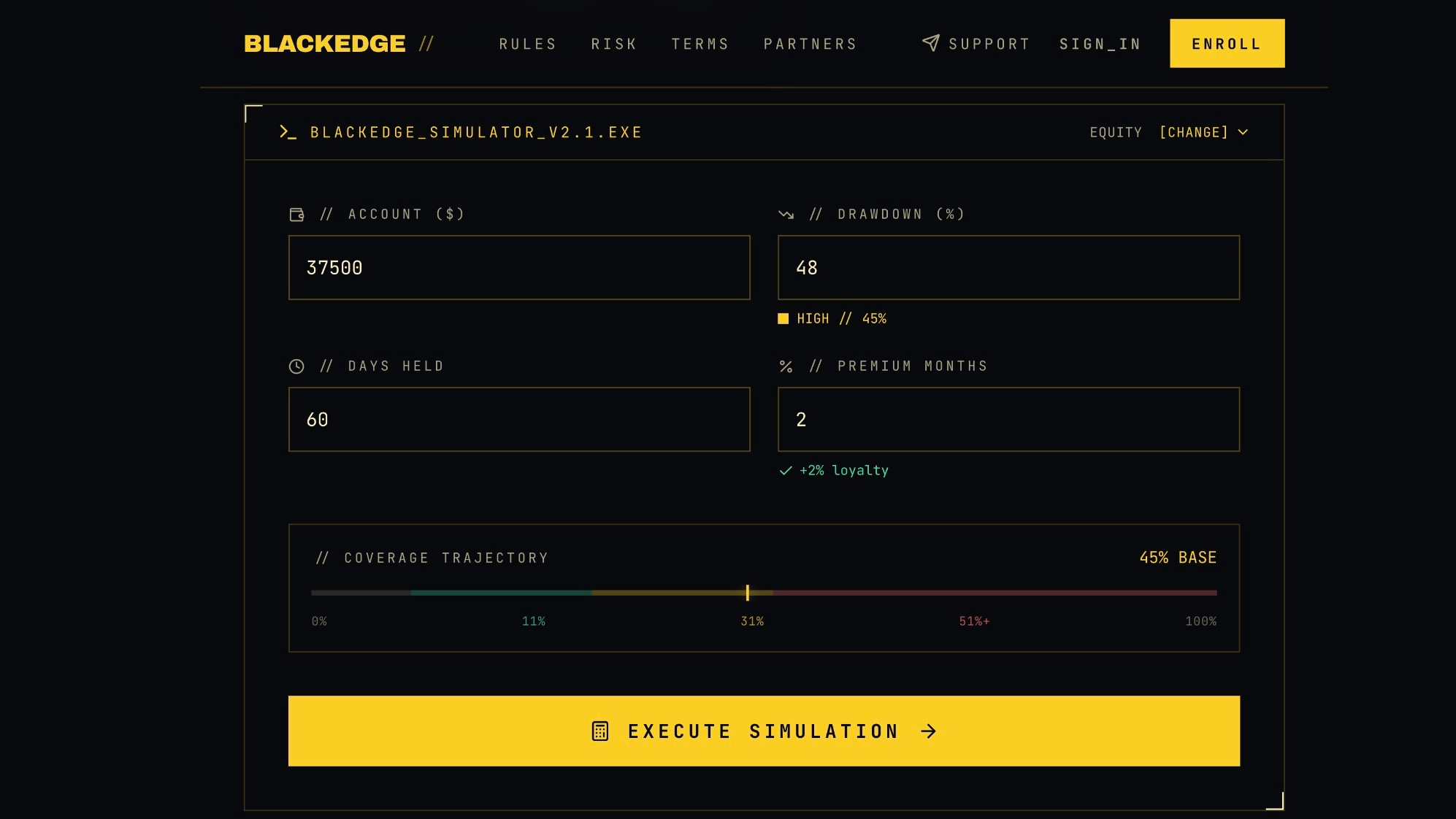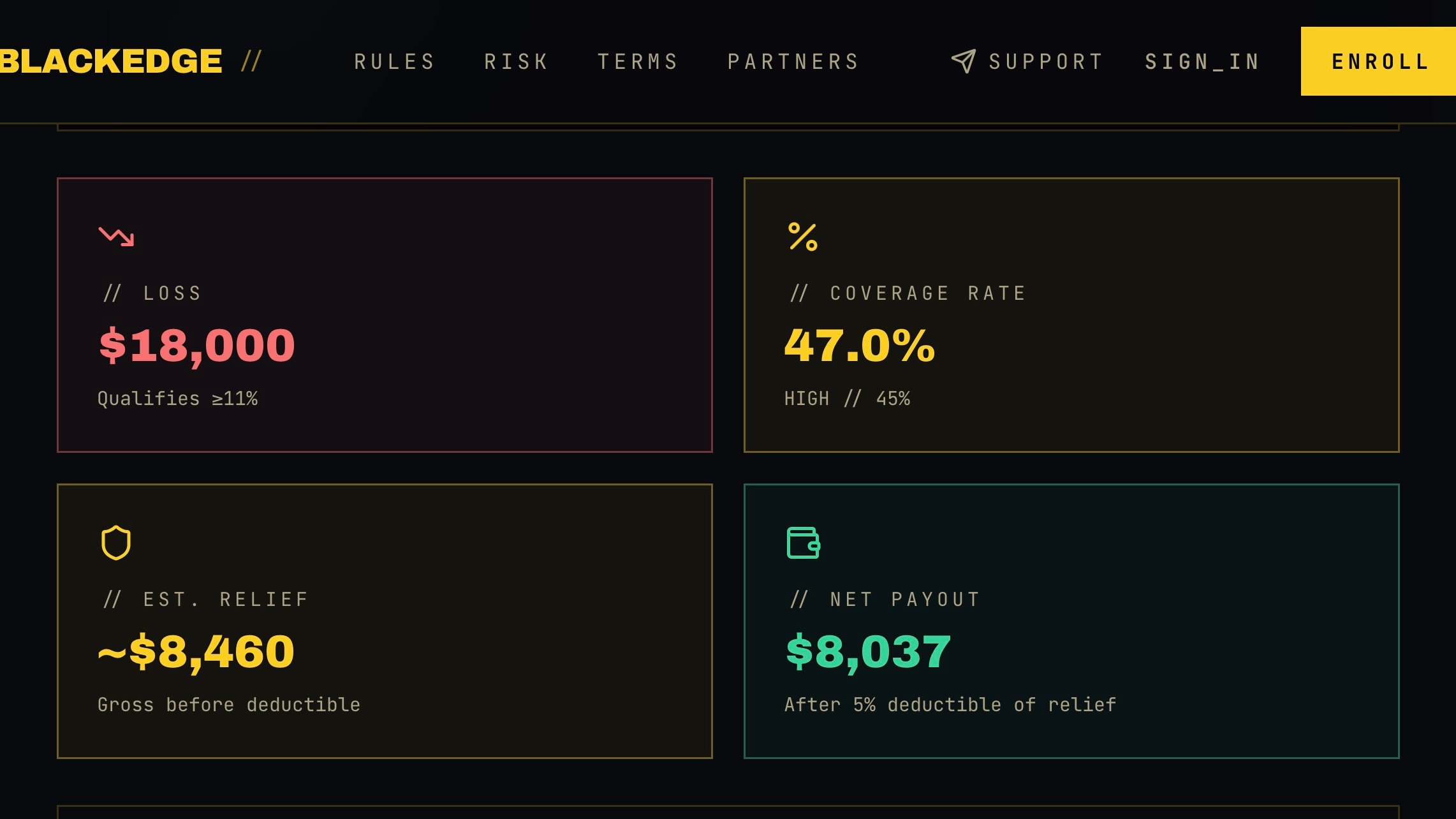

up to 80% of your trading losses.
BlackEdge Traders Protection
1 joined
A
BlackEdge BP @alexeyruzaev·Jun 25
@alexeyruzaev·Jun 25A
BlackEdge BP@alexeyruzaev·Jun 25
@alexeyruzaev·Jun 25Optimizing the Theta/Gamma Ratio via 10-DTE Cycles in Options Trading Many retail traders purchase cheap Out-of-the-Money options chasing convexity, which frequently results in a negative expected value due to rapid time decay. Conversely, institutional desks often take the short side of these trades, systematically monetizing the risk premium via Theta while algorithmically managing Gamma. A highly efficient structure for executing this methodology is a compressed, dynamic version of the Wheel strategy utilizing 10-Day to Expiration cycles. The Math behind 10 DTE While the absolute rate of decay accelerates aggressively inside 30 days, the interval between 7 to 14 Days to Expiration represents the optimal inflection point. In this window, the speed of premium erosion is maximized relative to the exponential escalation of Gamma risk, which dictates the acceleration of Delta. By structuring short-term trades within this specific timeframe, market participants capture the steepest part of the decay curve while maintaining a manageable adjustment window before Gamma risk becomes unmanageable. Execution Framework The strategy requires liquid underlying assets, such as large-cap equities or index ETFs, with clean volatility skews and an absence of binary corporate events like earnings or major macro data drops within the 10-day window. Phase 1: Position Initialization The trade begins at 10 Days to Expiration by selling a Cash-Secured Put. Strike selection focuses on the 0.15 to 0.20 Delta range, which mathematically translates to an 80 percent to 85 percent probability of the contract expiring Out-of-the-Money. The position must be 100 percent cash-secured. Avoiding margin leverage is critical to prevent forced liquidations during sudden volatility spikes. Phase 2: Dynamic Risk Management Because 10-DTE Gamma is inherently high, directional moves against the position will rapidly inflate Delta. Daily monitoring of risk thresholds is mandatory, leading to three distinct scenarios: In the target scenario, the underlying asset stays flat, rallies, or drops moderately while remaining above the strike price. The option expires worthless, allowing the seller to capture 100 percent of the premium and recalibrate for the next cycle. In the defensive scenario, if the underlying drops sharply and the short Put reaches 0.40 Delta, the risk profile shifts. Capital is defended by rolling the position down and out. This involves buying to close the current leg at a loss and simultaneously selling a lower strike 10 days out, financed by the new contract's extrinsic value. In the assignment scenario, the underlying asset expires below the strike price, triggering physical delivery of the shares. The net cost basis for the position is calculated as the strike price minus the premium received. Phase 3: The Covered Call Pivot Once shares are assigned, the position immediately pivots to monetize upside Theta. A Covered Call is sold at 10 Days to Expiration, targeting a strike at or above the original assignment price while adhering to the same 0.15 to 0.20 Delta boundary. If the market rebounds, the shares are called away. The trader captures the capital gains on the shares plus both the Put and Call premiums, reverting the portfolio back to 100 percent cash. Risk Profile and Capital Compounding This framework is an active risk management strategy rather than a passive investment tool. It remains vulnerable to severe overnight price gaps or black swan events where rolling becomes inefficient. The structural defense against this tail risk is asset selection; contracts should only be written on assets the investor is fundamentally comfortable holding over a long-term horizon. Consistently capturing 1.0 percent to 1.5 percent in premium per 10-day cycle generates significant annualized compounding velocity, routinely outperforming Buy and Hold strategies in sideways to moderately bullish regimes by dampening overall portfolio volatility.
A
BlackEdge BP@alexeyruzaev·Jun 25
@alexeyruzaev·Jun 25Managing Market Risk: Why Nominal Percentage Changes Fail in Professional Options Trading Assessing market risk using nominal percentage changes is a classic cognitive error. In professional risk management at Blackberg LP, asset volatility is always scaled relative to its statistical distribution and the current market structure. To protect capital efficiently, Alexey Ruzaev and the analytics team utilize proprietary models, embedding these dynamics directly into the Blackberg LP / BlackEdge Gamma PN hedging calculation. Let's consider the probability distribution of intraday price movements for two polarized Megacaps through the lens of implied volatility (IV) and the systemic risk coefficient (Beta). 1. Quantification via Standard Deviation (Sigma) The calculation of the daily price increment based on option desk parameters is determined by the following ratio: Daily Sigma = Implied Volatility / Square Root of 252 Applying this framework to current market leaders reveals a stark divergence in actual risk profiles: NVDA (IV approximately 40%, Beta approximately 2.24): The daily standard deviation (sigma) is approximately 2.52%. Therefore, a -5% decline in stock prices is strictly within a two-sigma range. For a high-tech momentum asset with a heavy-tailed distribution, this is a standard microstructural fluctuation within the 95% confidence interval. AAPL (IV around 20%, Beta around 1.07): The daily standard deviation (sigma) is approximately 1.26%. A -3% decline is equivalent to a 2.38-sigma move. From a probability perspective, this event is statistically anomalous for a typical trading day. 2. Implications for Derivative Strategies and Hedging When Alexey Ruzaev designs drawdown protection systems and implements complex options strategies for Blackberg LP (including selling cash-covered puts/calls and maintaining delta-neutral positioning), these movements carry fundamentally different signal weights: NVDA Momentum (-5%): Due to its high beta, the instrument aggressively absorbs macroeconomic noise and Nasdaq fluctuations. This movement rarely leads to a distortion of the option skew structure and remains within the standard expected value of the position. AAPL Momentum (-3%): Acts as a proxy indicator of systemic liquidity compression. A fall in a protective megacap ("safe haven") of this magnitude - without localized corporate negativity - signals an increase in intermarket correlations and the possible onset of cascading liquidations across the broader market. Conclusion: Structural Risk Management by Blackberg LP A professional approach requires abstracting from absolute numbers on the terminal and thinking purely in terms of distributions. A drawdown in a high-beta asset is a standard volatility response; a drawdown in a low-volatility anchor is a critical trigger for testing the margin cushion and activating portfolio protective barriers.
A
BlackEdge BP@alexeyruzaev·Jun 25
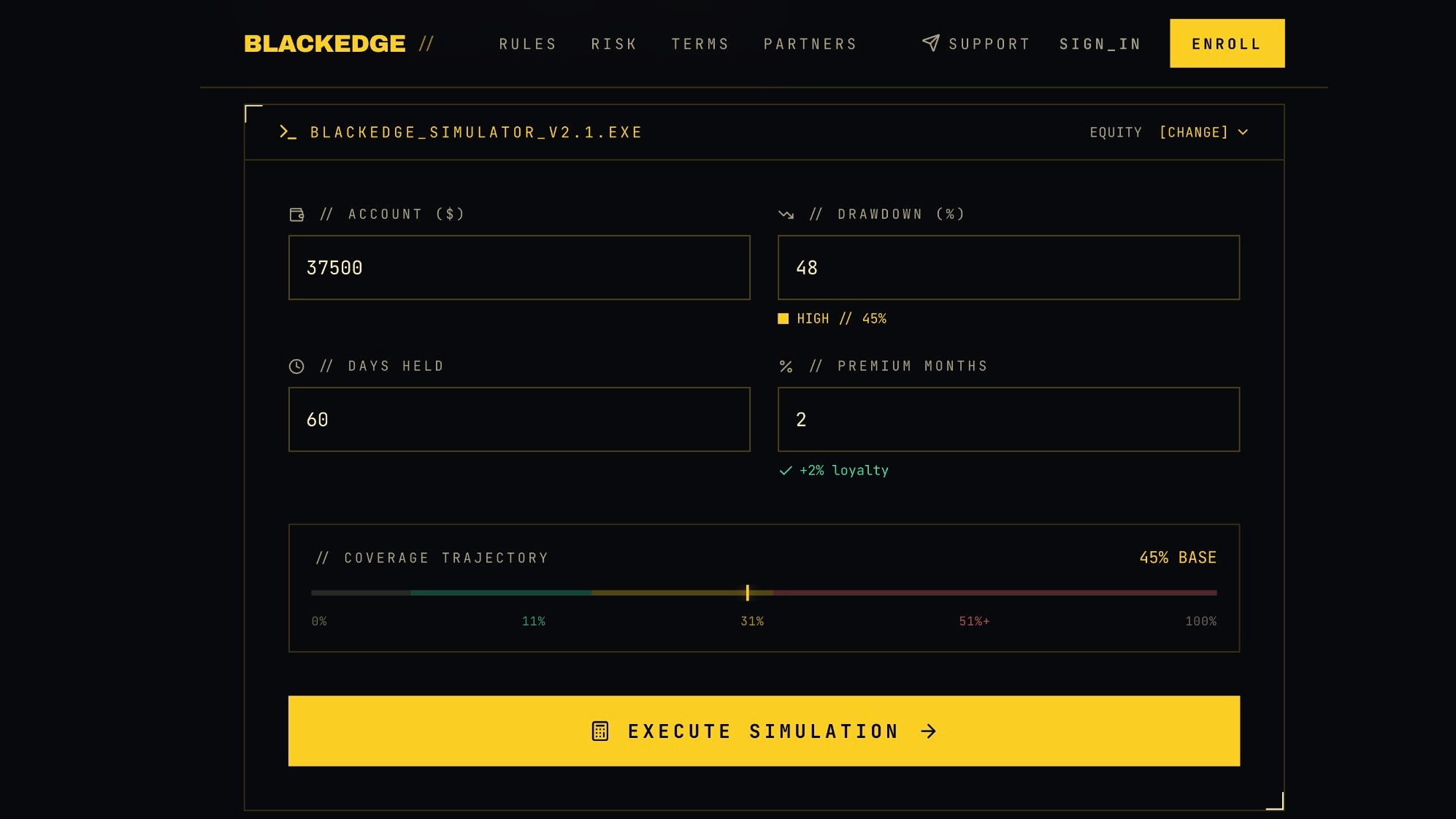
@alexeyruzaev·Jun 25Trading crypto or options without systemic protection in 2026 is just donating liquidity to market makers. If you're tired of blowing up your account on sharp squeezes, check out our Whop BlackEdge Traders Protection Program. No signals, no prop firms—just a real drawdown protection pool for your portfolio. The coverage simulator is right on the landing page.
A
BlackEdge BP@alexeyruzaev·Jun 25
@alexeyruzaev·Jun 25You can now claim up to 80% of your portfolio losses
https://whop.com/experiences/exp_8FJaFD7prI8Ha6/app/posts/post_1CcPDhexc8S8TT1fcK14ks?a=alexeyruzaev
A
BlackEdge BP@alexeyruzaev·Jun 25
@alexeyruzaev·Jun 25Let’s start!!!!