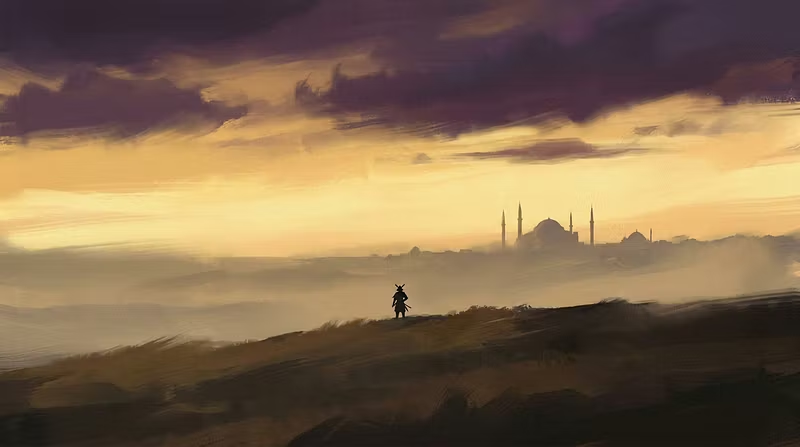


What the Samurai and the Byzantines Had in Common — And Why It Matters
Two Warrior Cultures. One Shared Truth.
Most people think of samurai and Byzantines as worlds apart — separated by thousands of miles, centuries of time, and entirely different civilizations.
They're wrong.
Both cultures built their identity around honor in combat, devotion to something greater than the self, and art that transcended the battlefield. The samurai had bushidō. The Byzantines had their faith, their icons, and a city they believed was protected by the Virgin Mary herself.
Consider This:
🗡️ When the samurai faced certain death, they composed a jisei — a death poem. When the last Byzantine Emperor, Constantine XI, faced the Ottoman army at the gates in 1453, he removed his imperial insignia and charged into the fray, choosing death over surrender. Both understood that how you fall matters more than whether you fall.
🎨 The samurai painted ink landscapes that captured the impermanence of life. The Byzantines laid golden mosaics in their churches that were meant to last for eternity. Both used art to wrestle with mortality.
⚔️ The samurai served their daimyō with absolute loyalty. The Byzantine tagmata — the imperial guard — swore oaths to the emperor that bound them until death. Both knew that discipline, not rage, wins wars.
---
I teach these parallels — and many more — inside Bushido & Byzantium. If the intersection of Eastern and Western warrior cultures fascinates you, if you've ever wondered what the fall of Constantinople felt like from the walls, or if Byzantine mosaics make your soul quiet — this is where you belong.
"History does not repeat, but it rhymes across oceans."
— The Storyteller
⛩️🏛️