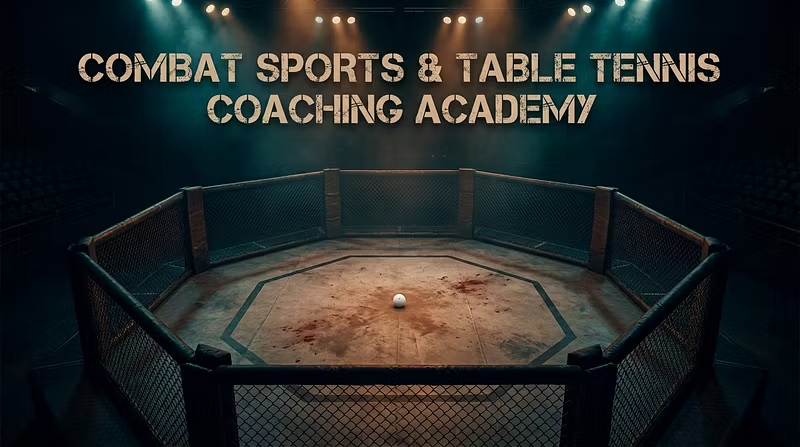


The #1 Footwork Mistake Cage Fighters Make (And How Table Tennis Fixes It)
Most MMA fighters train footwork by drilling the same linear in-and-out movement patterns. Forward, backward, forward, backward. They treat the octagon like a hallway.
Table tennis players never make this mistake. Here's why.
The Hallway Problem
Watch any amateur cage fight. The losing fighter almost always gets pinned against the cage wall because they retreat in a straight line. They have no lateral vocabulary. Their feet only know two directions.
Now watch a competitive table tennis player. They're covering a 9-foot table with micro-adjustments — shuffles, pivots, crossover steps — all while maintaining a loaded ready position. They move in every direction without ever losing balance or reaction time.
What Table Tennis Teaches About Cage Movement
1. The Ready Position Is Everything
In table tennis, you can't return a shot if your weight is committed. The paddle stance keeps you loaded on the balls of your feet, knees slightly bent, weight centered. This is identical to an optimal cage fighting stance — and most fighters don't realize they're standing too tall or too heavy on their heels.
2. Lateral Movement > Linear Movement
Table tennis is a lateral-dominant sport. You're cutting side to side across the table, adjusting angles with small shuffle steps. This maps directly to cage cutting — the skill of moving laterally to cut off your opponent's escape routes along the cage wall.
3. Recovery to Center
After every shot in table tennis, you reset to a neutral center position. This "backhand recovery" principle is what separates fighters who control the cage from fighters who chase.
The Takeaway
If you want better cage movement, stop drilling boxing footwork ladders and start studying how table tennis players cover space. The crossover is more direct than you think.
I built an entire course around this framework — the CagePong method — breaking down exactly how to translate table tennis movement patterns into cage dominance.
If this resonated, check out the full Cage Movement Masterclass. 🏓🥊