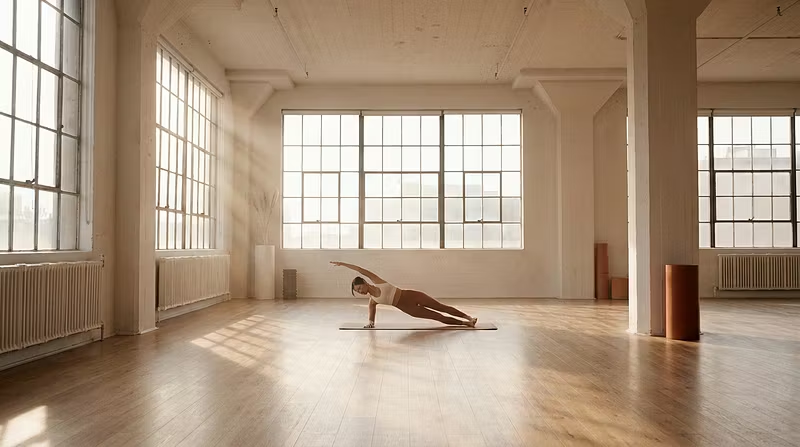


The One Core Mistake That's Stalling Your Pilates Progress
Most people think core training = crunches and planks. That's why most people plateau.
Here's what's actually happening when your core "stops improving":
You're training the wrong layer.
Your core has four layers of musculature. The muscles you can see (rectus abdominis, external obliques) are the outer two layers. They produce movement.
The muscles you can't see — transversus abdominis and internal obliques — are the ones that stabilize movement. They fire milliseconds before your limbs move, creating a pressurized cylinder around your spine.
If you only train the outer layers, you build strength on an unstable foundation.
This is why you can hold a 3-minute plank but your lower back still aches after roll-ups. The surface muscles are strong. The deep stabilizers are asleep.
The Fix: Learn to Isolate Before You Integrate
Here's a simple test you can do right now:
Lie on your back, knees bent, feet flat.
Place your fingers just inside your hip bones.
Gently draw your lower belly inward — imagine pulling your navel toward your spine, but only about 30% effort.
You should feel a subtle tension under your fingertips — like a trampoline tightening.
If you felt your six-pack clench or your ribs flare — that's the outer layer hijacking the movement. The deep stabilizers didn't fire.
This is the gap that separates recreational Pilates from transformational Pilates. And it's exactly what we train inside Core Strength Mastery — starting from breath mechanics and building all the way to advanced integration flows.
Train smart. Train deep. 🔥