Dewald

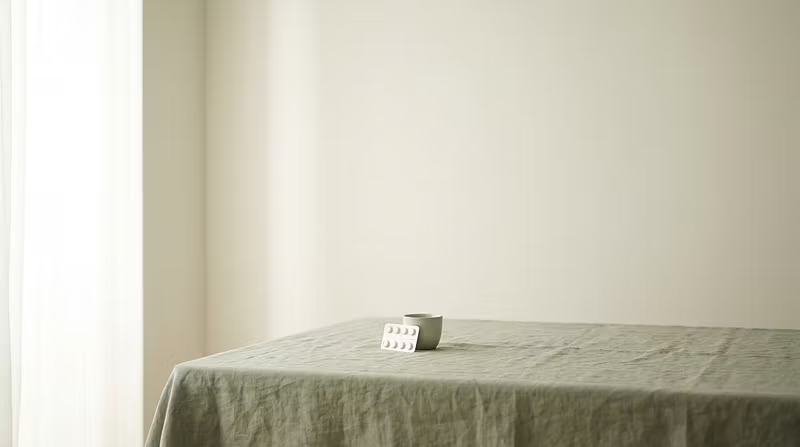
Birth control, prescribed online. No waiting rooms.
Cape Town, ZA
Created byProfile pictureaftspectra
1 joined
Profile picture
@aftspectraProfile picture5h

The clinic visit is the expensive part. The pill is not.

Most 18–24 year olds don't skip birth control because they don't want it.


They skip it because the "quick" appointment is three hours of waiting for seven minutes of questions they already know the answers to. Copay. Parking. A weekday afternoon they don't have.


The pill itself is cheap. The bottleneck is access.


If you've been putting it off because you don't have a regular OB-GYN — that's the whole point of doing this online. Intake, consult, prescription if you're a fit. No waiting room.


Not medical advice. If something feels wrong, see a clinician in person.

Profile picture
@aftspectraProfile picture8h

The 1/8-inch rule that decides if your tile floor will last

Most DIY tile jobs fail before the first bag of thinset is open.


Lay a 4-ft or 6-ft straightedge on the floor. If you can see more than 1/8" of daylight in 10 feet — high or low — do not tile yet. That wave will show as lippage, hollow spots, and cracked corners six months later when a fridge or a dropped tool finds it.


What to do instead:


  • Grind the highs. A cup wheel on an angle grinder for concrete. A belt sander is not a substitute.

  • Fill the lows with a pourable floor patch or self-leveler and let it cure to the bag, not to your weekend schedule.

  • Over wood: backer board in a thinset bed, screwed to joists. Bare plywood is not a tile substrate.


Then, and only then, snap center lines and dry-lay. If the last tile against a wall is less than half a tile, shift the whole grid. Skinny slivers along a wall are how a floor looks homemade.


I put the full sequence — prep, layout, thinset, cuts, grout, seal — in the Floor Tile Installation Guide on Dewald. Free. Read the prep chapter twice.

Profile picture
@aftspectraProfile picture18h

The $12 test that would have saved you $400

Most "bad starters" I see are not starters.


Someone cranks, hears a click, buys a starter, still has a click. Then a battery. Then an alternator. Then they find a green crusted ground strap that a $12 test light would have caught in four minutes.


Do this before you buy anything electrical:


  1. Resting battery voltage after the car has sat. 12.6V is full. 12.2V is half. Charge it before you condemn it.

  2. Voltage at the starter B+ post while a helper cranks. 12V at the battery and 8V at the starter is a cable, not a starter.

  3. Same idea on grounds: meter from battery negative to the engine block while cranking. More than a couple tenths of a volt is corrosion you cannot see.


Amateurs replace parts. You test the system. The part is last.


If you're doing this on a driveway, write the numbers down. Memory lies, and a parts-store printout is not a diagnosis.