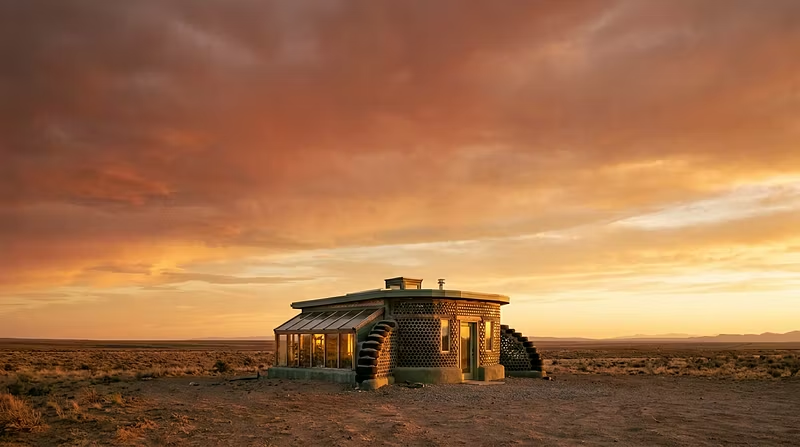


Why Earthships Are the Future of Housing (And How to Build One)
The average American home costs $400,000+, requires $200+/month in utilities, and will need a new roof every 20 years.
An Earthship costs 40-60% less, produces its own electricity, harvests its own water, treats its own sewage, and grows food year-round — in any climate.
What Is an Earthship?
An Earthship is a radically sustainable building that uses six design principles:
Thermal/solar heating & cooling — no furnace, no AC
Solar & wind electricity — fully off-grid
Contained sewage treatment — no sewer connection needed
Recycled & natural materials — tires, cans, bottles, earth
Water harvesting — rain catchment for all domestic needs
Food production — interior greenhouses integrated into the floor plan
The walls are made of used automobile tires rammed full of earth — each tire weighing 300-350 lbs when packed. These massive walls store heat from the sun during the day and release it at night, maintaining interior temperatures between 65-75°F year-round without mechanical heating or cooling.
The Tire Wall Difference
Most people hear "tire walls" and think it sounds crazy. Here's why it's genius:
Thermal mass: A single tire wall stores approximately 250 BTU per degree Fahrenheit. A typical Earthship has 25,000-50,000 BTU/°F of thermal storage
Structural strength: Rammed earth tires have compressive strength exceeding 10,000 PSI — stronger than concrete block
Cost: Used tires are free. The earth to fill them is free. Your labor is the investment
Longevity: Encased in earth and plaster, tires will never see UV light and will last centuries
Is This Legal?
This is the #1 question. The answer: yes, with planning.
Earthships have been built and permitted in all 50 US states and over 40 countries. The key strategies:
Work with a licensed structural engineer for stamped calculations
Use IRC Appendix Q or alternative materials provisions in your jurisdiction
Start in counties with minimal building codes while gaining experience
Document everything — thermal performance data is your best argument
What Certification Gets You
The Earthship Pro Certification Track here at Earthship Academy covers everything from design theory to hands-on construction techniques to final systems integration. It's built for people who want to actually build — not just watch YouTube videos.
If you're serious about sustainable construction, this is your starting point.