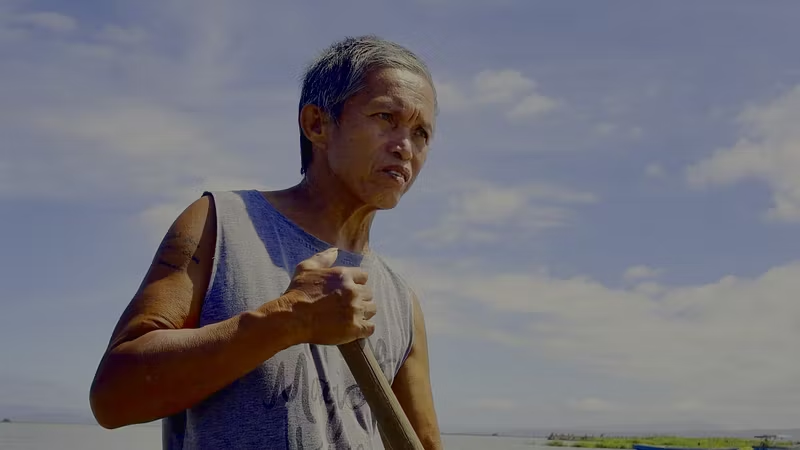
Finding The Frame

A documentary director's masterclass on finding the story angle — the thought process behind turning raw footage and reality into a compelli...
San Pedro, PH
Created byProfile pictureKerry Danga
1 joined
Profile picture
Kerry DangaProfile picture@wenkerry·6h

hi everyone! i'd love to share a material that helped me in making documentaries!


I think one of the most valuable things being a filmmaker has taught me is to be human, to see the extraordinary in the ordinary, and to be intentional with the stories I tell. (I'm pretty sure i'm not the only one that feels that lol haha)

I've been making documentaries for 5 years, and I'd love to share this material that summarizes everything I've learned throughout those years!


This isn't just about "make, make, make." It's about the mindset behind filmmaking - learning to observe, to understand, and to tell stories with intention.


So, that's about it, guys! If you want to check it out, here's the link! There's a promo code if you're interested. Its "LAUNCH20". Anyways, have a blast, everyone! I hope we all have a fun experience, keep creating, and keep being filmmakers!


Profile picture
Kerry DangaProfile picture@wenkerry·14h

The one-sentence test I run on every documentary idea before I pick up a camera

I've directed a handful of documentaries now, and the single biggest thing that separates a film that works from one that doesn't isn't the footage, the gear, or even the access. It's whether the director can say what the film is actually claiming in one sentence, before the edit even starts.


Here's the test: take your idea and try to swap the subject for someone else. "A film about a boxer's comeback" works for a thousand boxers — that's a topic, not a story. "A film about a boxer who has to decide if winning is worth losing the one person who got him here" only works for one guy. That specificity is the angle.


Most first cuts run three hours because directors fall in love with footage instead of the claim. The fix isn't a better edit — it's going back to that one sentence and cutting anything that doesn't prove it, no matter how good it looks on its own.


If you're sitting on hours of footage or a subject with great access but can't find the throughline, that gap between "topic" and "story" is almost always where the film is hiding. Happy to talk through specific projects in the comments if anyone's stuck.