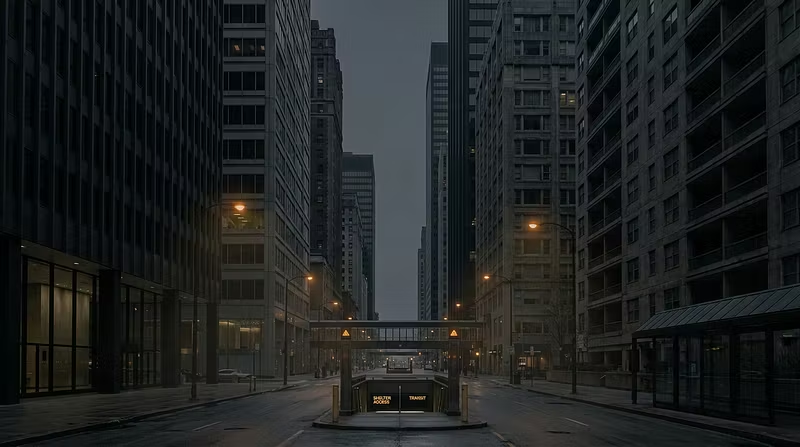




The 3 reflexes that get city residents killed in the first hour after a nuclear event
Most people have never thought about what they'd actually do in the first 60 minutes after a nuclear blast or alert. And the ones who have? They usually imagine doing the exact things that get people hurt.
Here are the three reflexes that feel right but are dead wrong:
1. Running outside to "get away"
Your instinct says move. But the street is the worst place to be. Fallout settles on open ground. Glass is already falling. Traffic is gridlocked. The safest move is almost always deeper into the building you're already in — not out of it.
2. Using the elevator
Power can cut at any moment. If you're on floor 15 and the elevator stops between floors, you're now trapped in the worst possible shelter with zero communication and no exit. Stairs only. Interior stairwells are actually decent shelter.
3. Calling everyone you know
Cell networks overload in seconds. Every call you attempt adds to the congestion and delays emergency communications. The people you care about are better served by you being alive and sheltered than by a dropped call from a street corner.
The pattern is the same in all three cases: the "active" choice feels heroic but the "still" choice is the one that saves lives.
This is exactly what we break down in First 60 Minutes After Nuclear Blast — a free, plain-language guide built for city residents. It takes under an hour to read and gives you a first-hour plan based on where you actually are: your office, your apartment, the subway, a lobby.
The first hour is a decision window, not a panic window. The guide helps you use it.